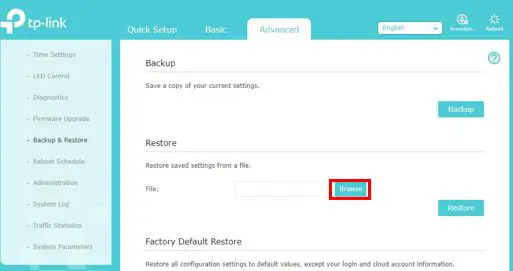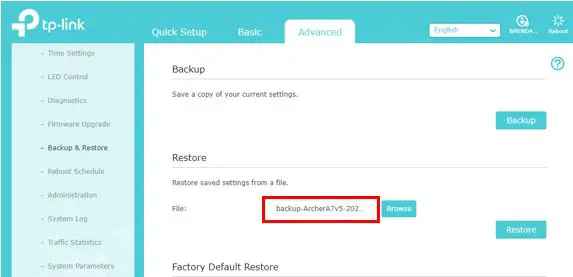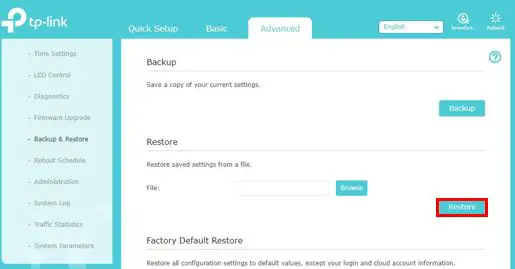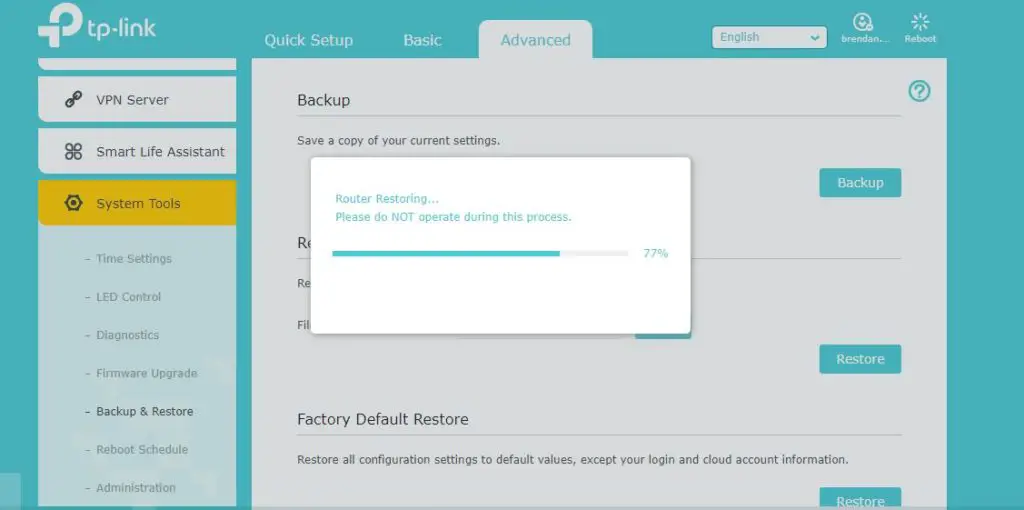
Category: Routers

This category pertains to content related to routers

  • Should Your Router and Modem Be Close Together?

    Should Your Router and Modem Be Close Together?

    Should Your Router and Modem Be Close Together

    Let me start by saying, I get it.

    Setting up your home internet is a big deal. There’s a lot at stake here.

    If you don’t get it right, you’ll have a lot of angry customers to deal with (like your family members, roommates, guests, etc.).

    It seems like every decision you make can have an impact on your internet. The truth is, a lot of the decisions you make will impact your internet connection in one way or another.

    Which brings us to the topic of your modem and router.

    A common question that gets asked during home internet setup is if your router and modem should be positioned closely together in your home. Thankfully, the answer is pretty straightforward:

    Your router and modem don’t need to be close to each other. As long as they’re connected to each other with an ethernet cable, they can be up to 328 feet (or 100 meters) apart before you’ll notice an impact on your internet speed.

    In other words, you most likely won’t have any problems with your modem and router being too far apart. On the other side of the coin, you don’t want to put your modem and router too close to each other either.

    In this post, I’ll detail everything you need to know about where you should place your modem and router.

    As a disclaimer, this post was written for people who have separate modem and router devices. If you have a modem and router combo, you don’t have a choice. Your modem and router will be combined into the same device and you won’t have to worry about how close or far apart to place them.

    Why your modem and router need to be connected

    In order to determine where your modem and router should be placed, you should first understand how they work together.

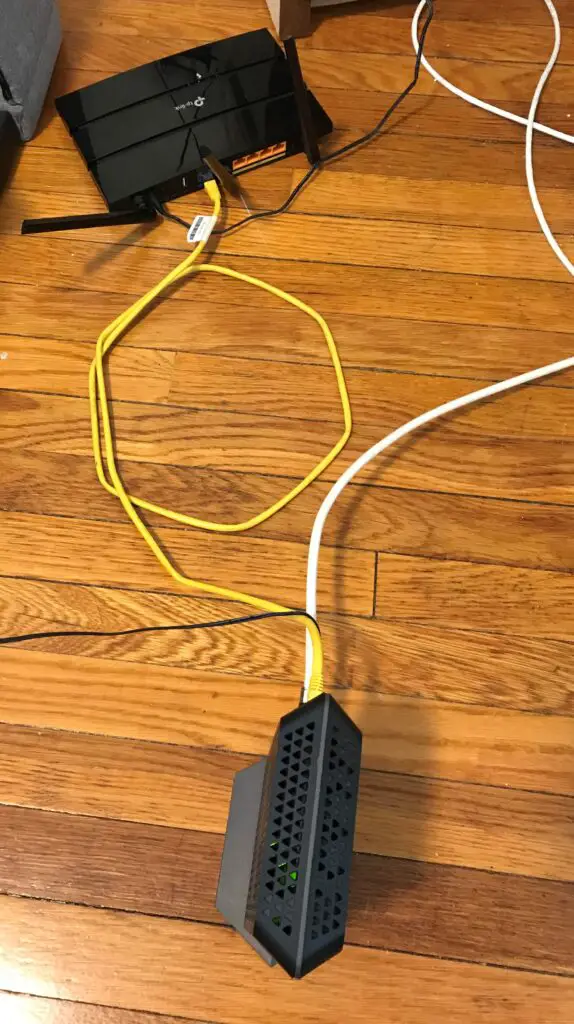
    If your modem and router are separate devices, they’ll need to be connected so they can communicate with each other. They should be connected with a Cat5e or Cat6 ethernet cable.

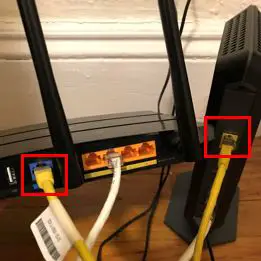
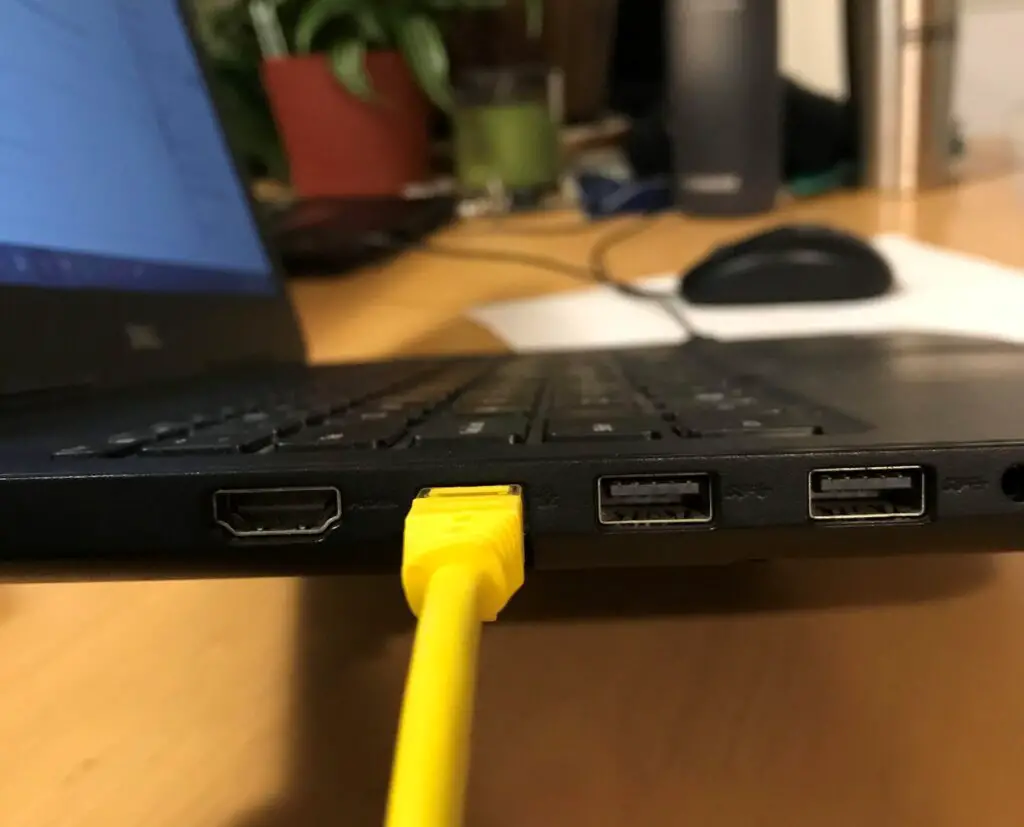
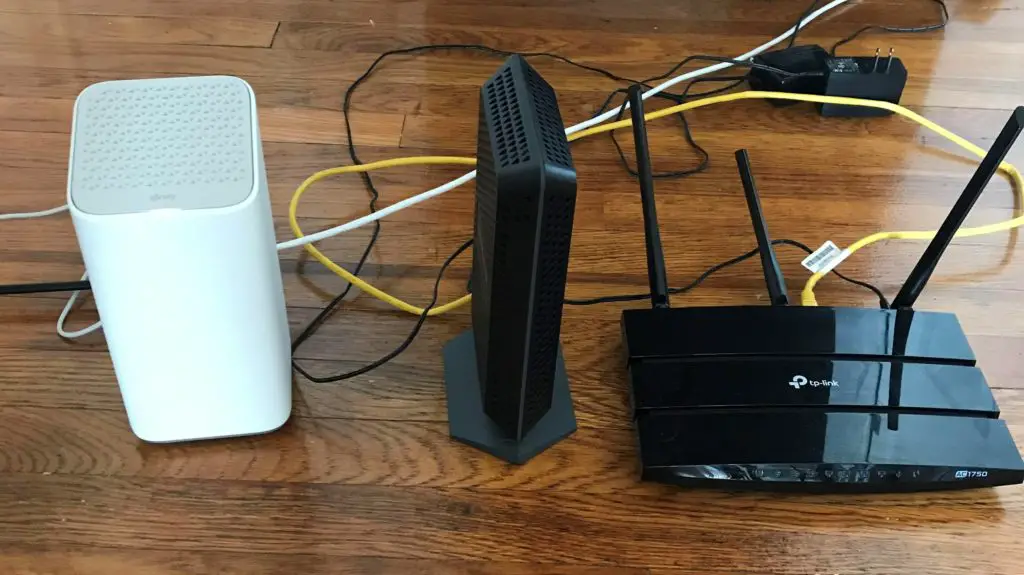
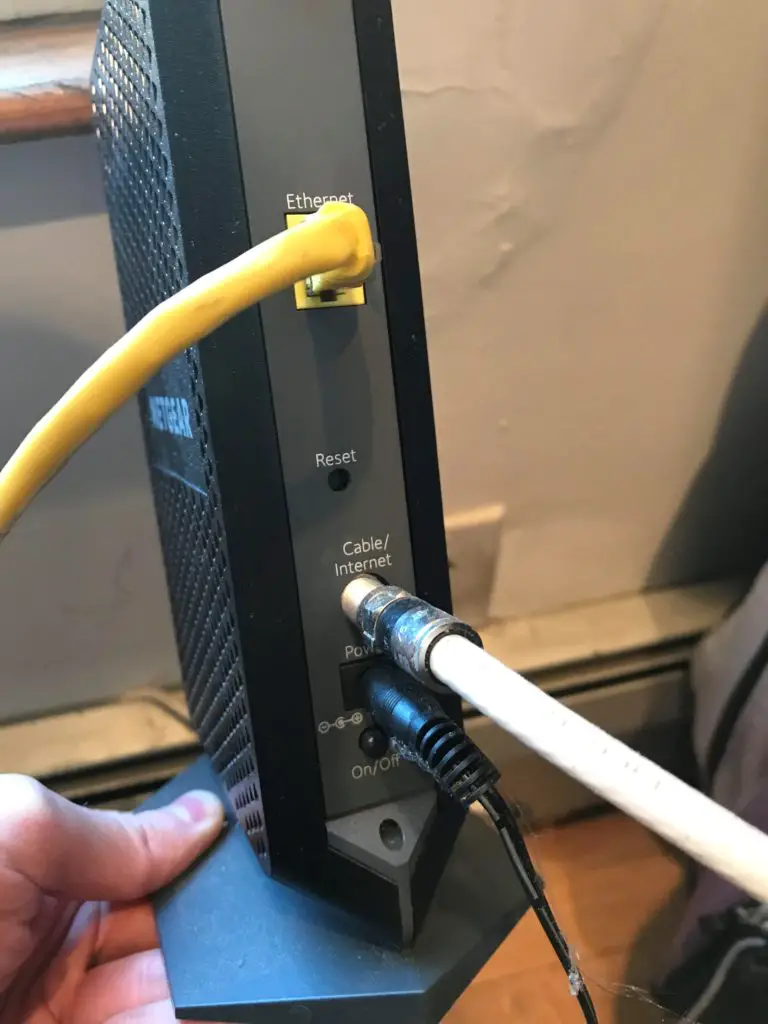
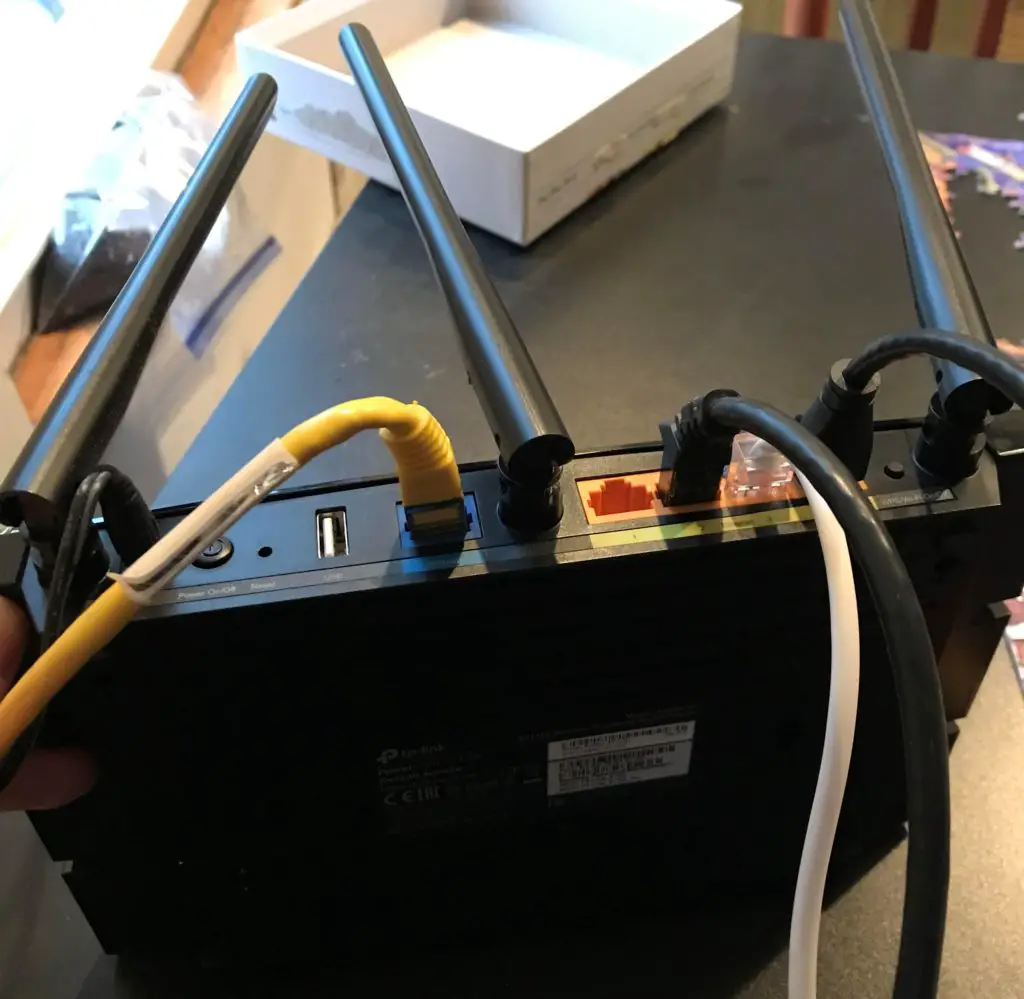
    For a visual, the yellow cable in the picture below is the ethernet cable connecting my modem and router.
    So why do your modem and router need to talk to each other in the first place?

    This is because they have two different (but important) roles when it comes to your internet connection.

    I’ll keep this at a high level.

    Your router is responsible for making sure the devices on your home network receive the data they ask for. For example, let’s say you’re on your tablet and you want to pull up a webpage. Your router will make sure that the webpage you requested gets sent to your tablet and not your iPhone or laptop.

    What about your modem? What part does it play in all of this?

    Think of your modem like a bridge to the internet. Your modem is responsible for maintaining your home’s connection to the internet. This connection is what your devices use to access the internet.

    Together, your router and modem provide your devices with all they need to use the internet. Your router sends and receives the data that your devices request over the internet connection that your modem establishes.

    This is why your modem and router need to communicate with each other.

    If your had a router without a modem or a modem without a router, you wouldn’t have a useful internet connection.

    Do your modem and router need to be close to each other?
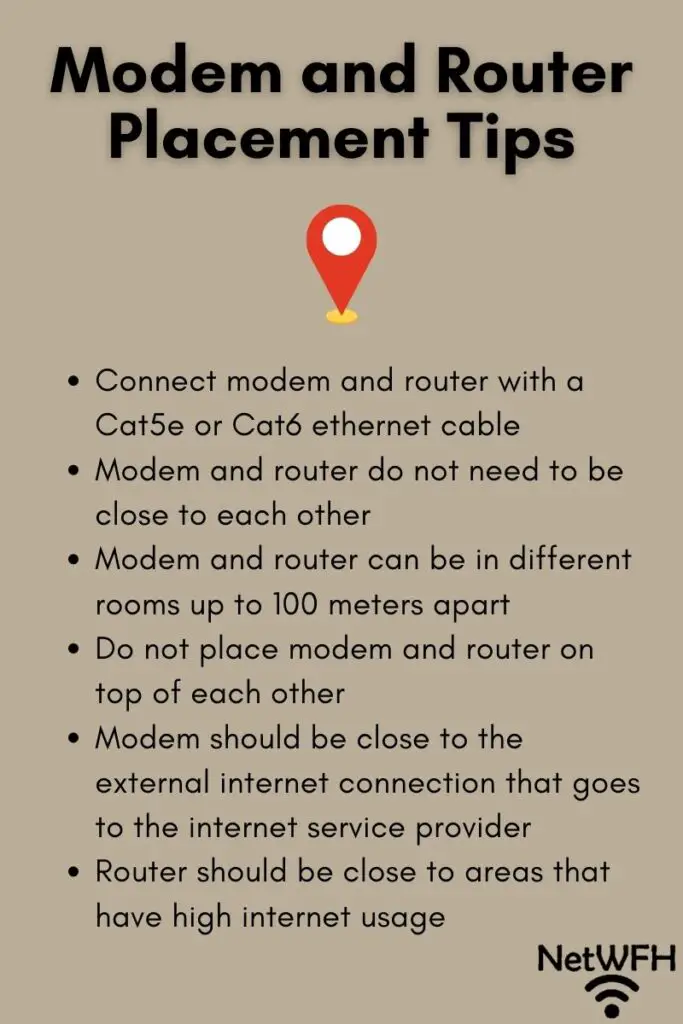
    Modem and router placement tips

    As we previously discussed, your modem and router need to be connected with an ethernet cable. That information alone leaves some questions unanswered.

    Will any length of ethernet cable work here? Can you just get an ethernet cable that’s as long as you want so you can place your modem and router far apart?

    Unfortunately it’s not that limitless. With that said, you can spread your modem and router pretty far from each other if you want to.

    Ethernet cables transmit data by sending electrical signals over copper wiring. They do a pretty good job of transmitting data at a fast rate, but there are limits to this.

    If an ethernet cable is too long, the signal over the wire will start to weaken. When this happens, the speed of data transfer slows down.

    What does this mean for you?

    This means your internet connection will slow down.

    The rule of thumb with ethernet cables is that data transfers rates will start to slow if the cable is over 100 meters long (328 feet). This means you could theoretically place your modem and router 100 meters apart without experiencing any issues.

    This amount of distance between a modem and router may be overkill for most people, but it’s possible nonetheless.

    When it comes to your home internet speed, you won’t notice a difference in speed if your modem and router are 10 feet apart or 300 feet apart. This gives you a lot of flexibility when designing your home network.

    Can a router be too close to a modem?

    When it comes to modem and router placement, the maximum distance they can be from each other is about 328 feet.

    What about the other end of the spectrum? Can a modem and router be too close together?

    When it comes to internet speeds, the answer here is no. If you place your modem and router right next to each other, you’ll experience about the same internet speed as if they were 328 feet apart. You won’t be able to notice a difference

    With that said, there are some other factors you need to account for if your modem and router are close to each other.

    You need to keep in mind that your modem and router are electrical devices. When they are powered on, they generate heat.

    If your modem gets too hot, it will overheat. The same goes for your router. When these devices overheat, your internet connection will slow down, or you might lose your connection entirely.

    You need to consider this if your modem and router are right next to each other. The heat from your router can make your modem hotter, and vice versa. As long as both devices are off the floor and in a room with good airflow (or climate control), you shouldn’t have any issues.

    Just make sure you don’t stack your modem and router on top of each other. That would be the only scenario where you really have to worry about your modem and router being too close to each other.

    Can a modem and router be in different rooms?

    When it comes to designing your home network, you can place your modem and router wherever you want as long as they’re connected with an ethernet cable.

    In some cases, it may be better for your WiFi coverage if your modem and router are in different rooms.

    How so?

    There are a few things to keep in mind when determining the location of your modem and router in your home.

    Where to place your modem

    The first item to consider is that your modem will need to be connected to the internet connection that’s coming from the street. That internet connection from the street allows your home to connect with the rest of the internet.

    Most people have cable internet connections, so you’ll most likely have a coaxial cable jack on your wall. It should look something like this:
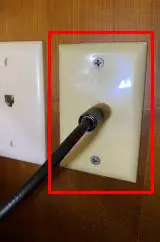
    Coaxial cable wall jack

    Your modem needs to connect to the coaxial cable jack (with a coaxial cable) because that’s how it connects to the internet. When determining where your modem should go, you probably want it to be somewhere close to a coaxial cable jack. That way, you won’t need to lay out a long coaxial cable to connect your modem to the cable jack.

    Where to place your router

    The next piece you need to think about is the room in your home that gets the most internet use. You’ll want to put your router as close to this location as possible. In many homes, the living room area is where people are most often using the internet.

    This also may be where you keep your:

    • Online gaming system
    • Smart TV
    • Desktop computer
    • Tablet

    Placing your router in the area where most of these devices are located will ensure they get a strong internet connection.

    Where most people keep their modem and router

    If you have cable internet, most cable jacks are located in the living room of the house. This makes it easy when deciding where to put your modem and router. You can put both of them in your living room and not have to think twice about it.

    With that said, if your situation is different you should change your design accordingly. If your internet connection from the street is in a bedroom and your game room is where you most frequently use the internet, you may want your modem in the bedroom and your router closer to the game room.

    Be practical here. You just want your router to be close to the areas of your home where the internet is used. It doesn’t necessarily have to be in that exact room if it means your modem and router have to be far apart. The last thing you want is a long ethernet cable strung throughout your house.

    If you want to have your modem and router really far apart in your home, you could always look into wiring the ethernet cable through your walls. This can get complicated quickly so I wouldn’t recommend it unless you know what you’re doing.

    In summary, you may benefit from keeping your modem and router in different rooms if your home has a unique setup. Make sure you’re considering where your connection point to the internet is, and where the internet will get used in your home.

    Taking a few minutes to think about this can have a large impact on the internet experience in your home.

    Recommendations

    In most applications, my recommendation for the distance between a modem and router is pretty easy. If you have cable internet and the internet jack is in the living room of your home, grab a 5 foot or 7 foot ethernet cable to connect your modem and router. You can keep both devices in the same room and you won’t have to think twice.

    It’s a different story if you’re going to have your modem and router in different areas of your home.

    For some people the optimal distance between your modem and router will be 10 feet.

    For others it will be 30 feet.

    Unfortunately I can’t give a standard answer here. You’ll need to use the information I provided above to figure out the best layout for your home internet.

    If you get stuck or have any questions, feel free to contact me in the comments section. I will certainly try to help where I can.

    Wrap up

    When it comes to the placement of your modem and router, they don’t need to be close to each other. What’s more important is that they’re placed in a way that maximizes the internet coverage of your home.

    The layout of every home will be slightly different. Regardless of your home layout, your modem and router can be placed just about anywhere as long as they’re connected to each other with an ethernet cable. Just don’t stack your modem and router on top of each other.

    If you found this information useful, here are some related posts that I’ve written:

    Can a Modem Overheat? What to Look For

    Can a Router Overheat? A Detailed Analysis

    Can I Take My Internet Modem to Another House?
    Can I Use a Router Without a Modem?

    Can You Use a Modem Without a Router?

  • Does Any Router Work With Any Internet Provider?

    Does Any Router Work With Any Internet Provider?

    Any Router Work With Any Internet Provider title page

    I’ve previously written about how you need to be careful when changing your internet service provider (ISP) or buying a new modem. If you don’t do your homework, your modem won’t be compatible with your ISP and you won’t be able to connect to the internet.

    How careful do you need to be with your router? Will a router work with any internet provider, or are routers similar to modems when it comes to compatibility?

    I’d love to say that all routers are compatible with all ISPs. Unfortunately it’s not that simple.

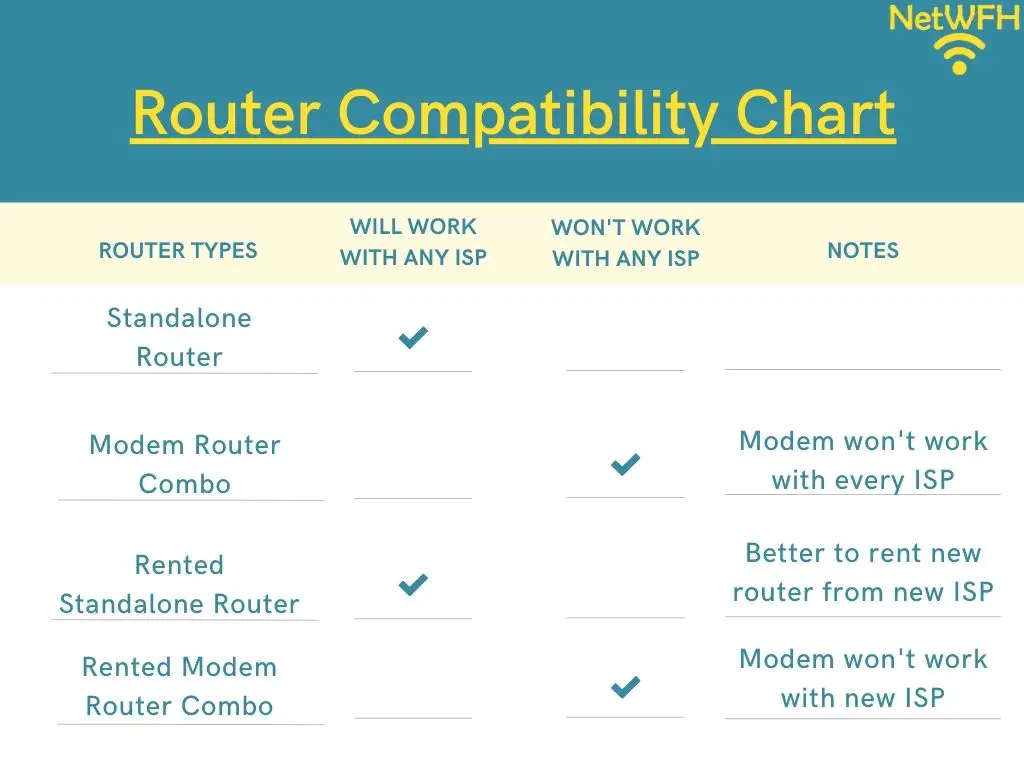
    If your modem and router are standalone devices, your router will always be compatible with your internet provider. If you modem and router are combined into one device, you need to be more careful.

    In either case, as long as your modem is compatible with your internet connection your router should work just fine.

    In this post, I’ll detail everything you need to know about router compatibility.

    When will a router work with any internet provider?

    Router compatibility chart

    First, let’s talk about the the cases where a router will work with any ISP.

    Fortunately for you, this is the situation that applies to most people.

    If your router is a separate device from your modem, you’re in good shape. Your router will be compatible with any internet service provider.

    But why is this? How can I make such a general statement?

    I can say this with confidence because your router doesn’t communicate directly with your internet provider. Although your router and ISP communicate with each outer, there’s a lot that happens between the two.

    All that heavy lifting I’m referring to is done by your modem.

    How your router communicates with your ISP

    Let’s start with the basics here.

    At a high level, your router allows your internet devices to access the internet. It does this by managing all the internet traffic that comes from your home and making sure that the traffic goes to the right place on the internet.

    Essentially, your router interacts with the internet on behalf of your devices.

    When your router sends these internet requests to your internet provider, they don’t go straight to your ISP.

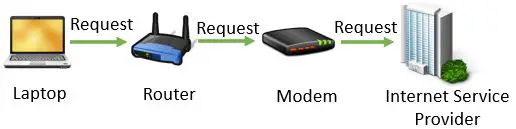
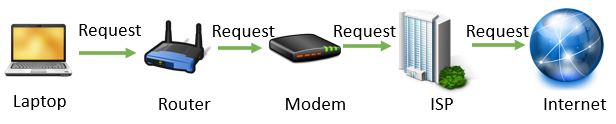
    The request will first go to your modem. Your modem then translates your request and sends it to your internet provider.

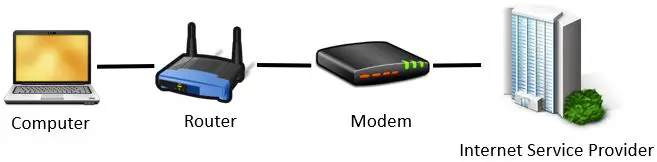
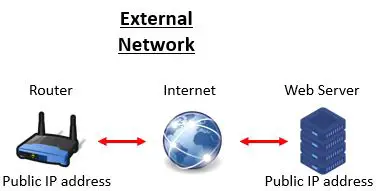
    To look at it visually, the path of your internet requests looks like this:

    Path of internet request

    As you can see, your modem is the middleman between your router and ISP.

    So what is your modem’s role?

    Your modem is responsible for establishing a connection with your internet provider, which your router then uses to send internet requests.

    Because your modem is responsible for your home’s connection to your ISP, you don’t have to worry about your router being compatible with your ISP. With that said, you do need to make sure your modem is compatible with your internet provider.

    If your modem can’t establish an internet connection with your ISP, your router won’t be able to communicate with the internet either.

    As long as your modem and ISP can communicate with each other, your router won’t have any issues sending requests to your internet provider. This is why a standalone router will work with any internet provider.

    So if you’re looking to buy a standalone router, feel free to grab the one that best fits your internet needs. Just make sure your modem is compatible with your internet provider.

    When won’t a router work with any ISP?

    Ok, so if you have a standalone router it’ll work with your ISP. You just need to make sure your modem is compatible with your internet provider.

    What are the cases where your router won’t work with your ISP? When do you have to worry about that?

    This’ll be an important consideration if you have a modem and router combo device.

    In a modem and router combination device, your modem and router are combined together into one piece of equipment.

    I’m stating the obvious there.

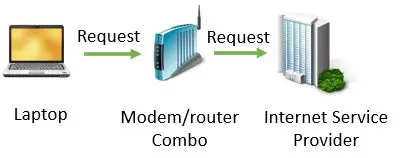
    With a modem and router combo, the device provides the functionality of both a modem and a router. In other words, it provides your connection to your internet provider, and it’s also responsible for sending your devices’ requests to the internet.

    Here’s a visual of your internet requests using a modem and router combination device:

    Internet request with modem router combo

    Why would a modem and router combo not be compatible with your internet provider?

    For the same reason that I detailed in the section above.

    Due to the fact that a modem and router combo device is responsible for your connection to your ISP, if the modem portion of the device isn’t compatible with your ISP it won’t work.

    If the modem portion doesn’t work with your internet connection, neither will the router functionality.

    In a way, this has nothing to do with the router portion of the device at all. The compatibility really has everything to do with the modem.

    Regardless of whether you have a standalone router or a modem and router combination device, you need to make sure the modem works with your internet provider. If it does, your router will work no matter who the ISP is.

    Will any router work with any modem?

    We’ve already identified that your router isn’t ISP specific. As long as you have a modem that’s compatible with the ISP (as either a standalone device or part of a modem and router combo), you can use any router with any internet provider.

    The next logical question is regarding your router and modem.

    If my router will work with any ISP, is it safe to assume it will work with any modem?

    In this case, that assumption is correct. Your router will be compatible with any modem.

    The one caveat here is if your router is a standalone device, your modem needs to be a standalone device as well.

    You don’t want to try to connect your router to a modem router combination device. That would be redundant because your modem router combo already has router functionality.

    If you have a modem and router combination device in your home, this isn’t a concern either. It wouldn’t make much sense for a manufacturer to make a modem and router combo with components that didn’t work together.

    How a modem and router communicate

    Your router will be compatible with any modem because of the standard way that they communicate with each other.

    If you have a standalone modem and router, take a look at them to see what I mean.

    How are they connected?

    As an example, here’s how my modem and router are connected.

    Modem and router connection

    That yellow cable in the picture above is an ethernet cable. Ethernet cables are used to allow modems and routers to talk to each other.

    I’m willing to bet your modem and router are connected the same way.

    How can I be so confident?

    Because all modems and routers are connected the same way.

    Without going into too much detail, modems and routers communicate over digital signals. Every time an internet request is sent from one of your devices, your router will send the request to your modem as a digital signal using the ethernet cable connecting them.

    When your modem receives a response from the internet, it sends it to your router via digital signal. From there, the response is passed to the device that sent the request.

    No matter where you are or what type of router you have, this is how it’ll communicate with your modem. In the end, you can rest easy knowing that your router will be compatible with any modem or ISP that you are using.

    Can I use my ISP provided router with a different ISP?

    One situation I haven’t covered has to do with renting your router from your internet provider.

    It’s pretty common to rent your router (and your modem) from your ISP.

    One reason for this is because it makes the process of setting up your home internet much easier. You don’t have to spend time researching what kind of internet equipment to get.

    In addition, if you rent a modem and router combination device from your ISP you don’t have to worry about your modem not working with your internet provider. They’ll provide you with a modem that’s compatible with their service. It’s a much more stress-free internet setup.

    When it comes to people that rent their internet equipment from their internet provider, one question that often gets asked is if the router they rent from one ISP can be used with another ISP.

    From a technical standpoint, it depends.

    Renting a modem and router combo

    If you’re renting a modem and router combo from your current ISP, it won’t work with a different ISP. The modem you’re renting will most likely only be compatible with the internet provider that you rent it from.

    As we previously discussed, if the modem isn’t compatible with the internet provider, it won’t work.

    Renting a standalone router

    What about if you’re just renting a router from your ISP? Can you use the rented router from one ISP for an internet connection with a different ISP?

    Theoretically, it’ll work with any ISP as long as your modem is compatible with the new ISP. Unfortunately there are other issues that complicate matters here.

    The larger issue has to do with the logistics of using a rented router from one ISP to get internet from another.

    If you’re changing your internet provider, you usually have to return any equipment you rented from them. If you don’t, the ISP will charge you for it. The charge is usually high enough that it would benefit you just to return it.

    To avoid this extra fee, you’re better off renting a new router from your new ISP. It’s usually an easy process to rent equipment from an ISP, and your wallet will thank you.

    Wrap up

    Your router is designed to work with any internet provider you choose. The key to your internet connection, however, is your modem.

    As long as you have a modem that works with your ISP, your router will work just fine.

    If you have any questions about this information, please drop a comment below. If you’d like to read more about similar topics, check out the following posts:

    Can I Move My WiFi Router to Another House?
    How to Automatically Reboot Your Router for Better Internet Connections

    Does Any Modem Work With Any Internet Provider?

    How to Update Your Router: The Ultimate Guide

    Can I Use a Router Without a Modem?

  • How to Connect a Computer to a Router

    How to Connect a Computer to a Router

    Connect Computer to Router title page

    If you want your computer to be able to access the internet in your home, you need to connect it to a router.

    The same applies for your home network. You need to connect your computer to your router if you want it to be able to communicate with other devices on your home network.

    There are two ways to accomplish this. You can either connect your computer to your router directly through a wired connection, or you can connect the two devices wirelessly.

    The good news is, both of these procedures are pretty easy. Each one should take you less than a few minutes to complete.

    You should know both ways of connecting your computer to a router. There are situations where one way of connecting to your router will give you better performance than the other connection method.

    When connecting to your router with a wired connection, you just need an ethernet cable. The ethernet cable connects your computer and router so they can directly communicate with each other.

    All you have to do is connect the ethernet cable to the right ports on your computer and router.

    In a wireless connection, your computer will connect to your router over WiFi. This allows them to communicate without an ethernet cable.

    For this type of connection you’ll need to connect to the wireless signal that’s coming from your router. You won’t be able to do this without the password for your router’s wireless network.

    In this post I’ll go into detail about the procedures for connecting your computer to your router. I’ll also explain the benefits of each type of connection.

    Why you need to connect to a router

    You may be wondering: why does my computer need to connect to a router in the first place?

    To answer that question, we need to look at what a router does.

    The purpose of a router

    I will keep this at a high level.

    Your router is responsible for directing the traffic between the devices on your home network. If you have an internet plan (as I assume you do if you’re reading this), your router also manages traffic between your internet devices and the internet. When your devices request information from the internet, your router makes sure that the requests make it to the right place.

    When a response comes back from the internet with the requested information (like a webpage), your router ensures the device that asked for the information is the one that receives it.

    A common analogy for your router is the post office. Much like a post office makes sure your letters get to the right destination, your router does the same with your internet requests.

    Without a router, your devices wouldn’t be able to connect to the internet in the first place.

    Benefits of a router

    Ok, now we can get back to the question at hand.

    Why can’t your computer access the internet without a router?

    Although it’s possible to get internet access without a router by connecting your computer directly to your modem, it’s not secure or smart to do so.

    Your router makes your devices more secure on the internet because it has security features built into it.

    On top of that, your router allows you to connect multiple devices to the internet at the same time.

    How does it do this?

    Your router is connected to your modem (or they are combined into one device). These two devices provide you with a connection to your internet service provider (ISP).

    In turn, your ISP provides you with your internet connection.

    Here’s a diagram to help you visualize your home network connections:

    Router Modem ISP Connection Diagram

    The important thing here is that your ISP provides you with only one connection to the internet as part of your internet plan.

    If you didn’t have a router, you’d only be able to connect one device to the internet at a time because you only have one connection to the internet available.

    Could you imagine how painful that would be?

    This is the main reason why you need to connect your computer to a router. To put it simply, it’s because your router allows all of your internet devices to share one internet connection.

    In today’s society, everyone has multiple devices connected to the internet at the same time. This is normal thanks to your router.

    Without a router, you couldn’t do that.

    Hopefully you now have a good understanding of why your computer needs to connect to a router.

    With this background information, let’s look at the procedures for connecting your computer to your router.

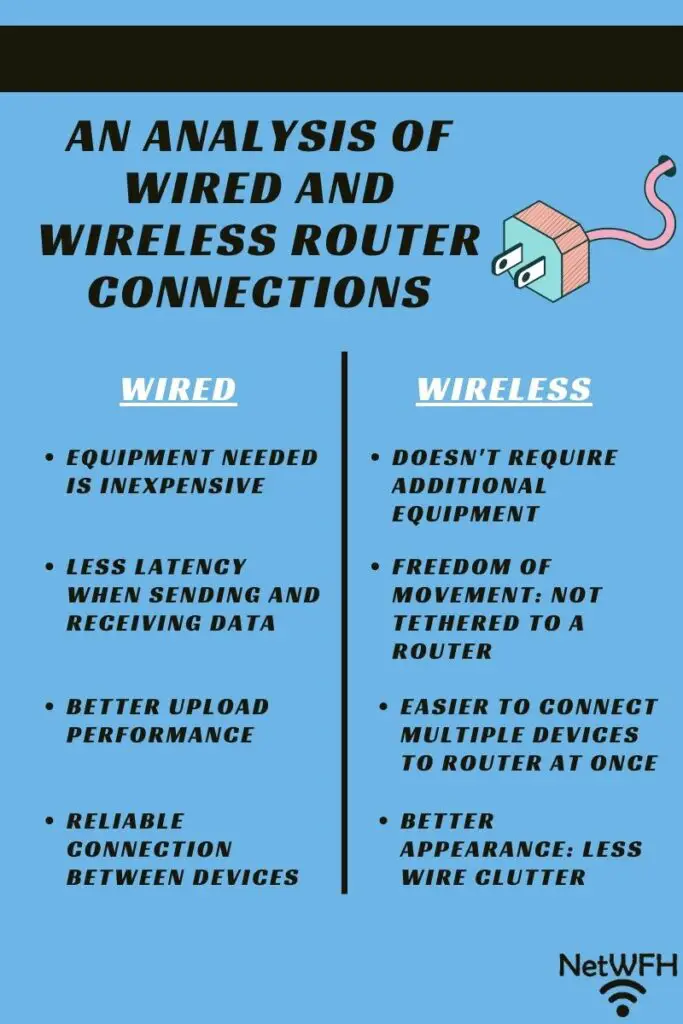
    An analysis of wireless and wired connections

    Connecting a computer directly to a router

    The first way you can connect your computer to your router is through a direct connection.

    A direct connection involves using a cable to connect your computer and router. This allows the two devices to communicate through the cable.

    Benefits of directly connecting a computer and router

    Connecting your computer and router with a cable provides multiple benefits.

    Faster performance

    For one, it’s the most straightforward way for the two devices to communicate.

    Using a cable to communicate reduces the latency in their connection. This means that data moves faster between the two devices when they’re communicating.

    In other words, when you request a website you’ll receive it a little bit faster from your router with a cable connection.

    This is also very important in online gaming. Every millisecond counts.

    When you press a key on your keyboard, the game will respond faster when you have your computer directly connected to your router. Faster reactions give you an advantage over other players who have more latency in their internet connection.

    Lastly, a wired connection will provide better performance during uploads when compared to a wireless connection. This is important when uploading large files to the internet or during video conferences.

    More reliable connection

    Connecting your computer directly to your router provides another major benefit.

    A more reliable connection.

    When you use a cable to connect these two devices, it’s unlikely that the connection between the two will drop.

    On the other hand, if you try to connect to your router wirelessly, you’re much more likely to lose your connection.

    I’m sure this has happened to every person reading this.

    Like that time you walked out of range of your WiFi signal and lost your internet connection?

    Yeah, that’s happened to me too.

    You don’t have to worry about that when connecting your computer and router with a cable.

    The only way you’ll lose the connection between the two is if something is wrong with the cable. That’s not a likely scenario as the cables are manufactured to be very reliable.

    Very rarely will you experience issues with them.

    What you’ll need to connect your computer to your router

    The only thing you’ll need to connect your computer to your router is a cable.

    These cables are called ethernet cables.

    The only thing you have to worry about is making sure you get the right cable based upon the internet connection you have.

    Thankfully, this is an easy exercise because there’s one type of cable that’ll fit all your needs. If you don’t have an ethernet cable on hand, grab a snagless Cat5e ethernet cable of the length you need. I would suggest a seven to ten foot cable, but you may need longer based upon your home layout.

    A Cat5e ethernet cable will fit your needs here regardless of the internet plan you have. On top of that, ethernet cables are inexpensive so it won’t cost you much to implement a wired connection.

    How to connect your computer to your router with an ethernet cable

    Once you have an ethernet cable to connect your computer to your router, it’s a pretty easy process.

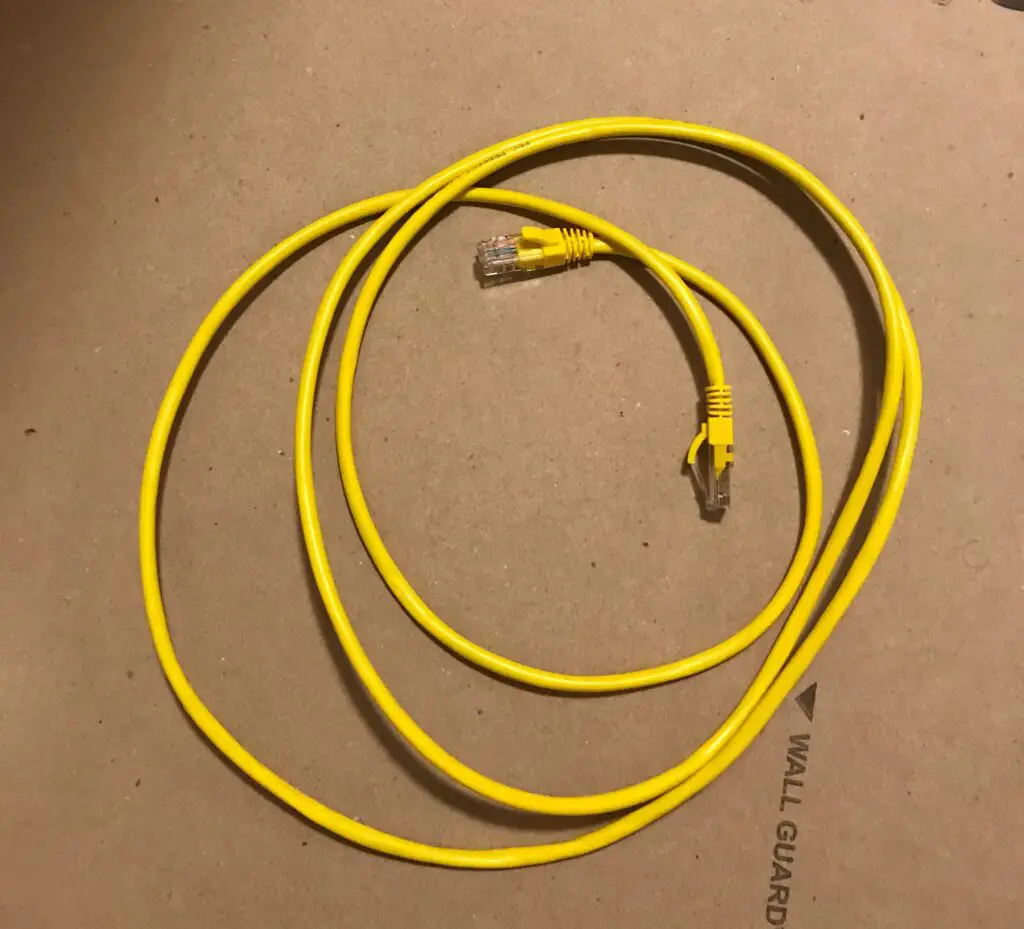
    In this example I’ll use my yellow ethernet cable.

    Ethernet cable

    Connect the ethernet cable to your router

    First, let’s find where the ethernet cable plugs into your router.

    Depending upon the type of router you have, it’ll have a certain number of ports that you can directly connect your devices to.

    These are called LAN ports. LAN stands for Local Area Network and in this case LAN is used to describe your home network.

    In most cases, there will be four LAN ports on your router.

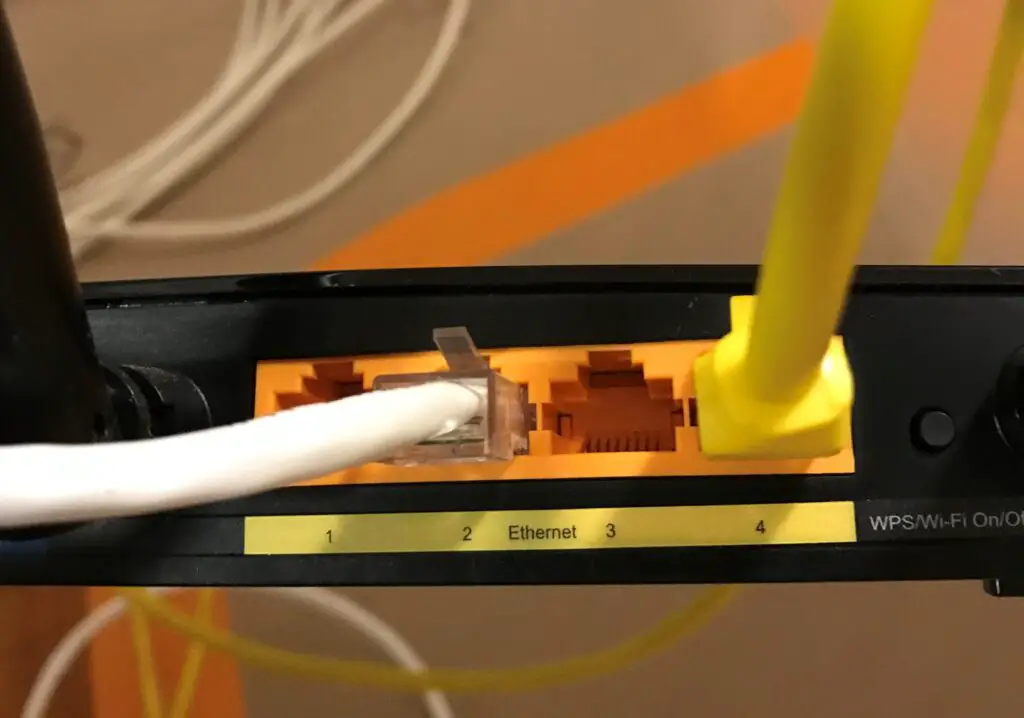
    As you can see, my router has four LAN ports that are labeled “Ethernet”.

    Router LAN Ports

    All you have to do is plug one end of your ethernet cable into an open port. The beauty is, it doesn’t matter which port you use or which end of the cable you plug in. Any open port will do.

    To prove my point, I’ll plug my ethernet cable into port 4.

    Computer to router ethernet port connection

    Connect your ethernet cable to your computer

    Ok, we’re halfway there.

    Now we just need to plug the other end into our computer.

    What does that look like?

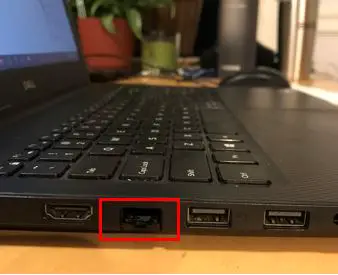
    If you look at your computer, you should have a port that looks like one of your router’s LAN ports.

    On my laptop, the LAN port is on the side.

    Computer ethernet port

    As you may have guessed, we just need to plug the other end of our ethernet cable into this port.

    Congratulations. You’ve connected your computer and router together.

    The wired connection is complete and your computer and router can now communicate over the ethernet cable.

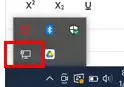
    If the wired connection is working, there should be an indicator in the corner of your computer indicating you have a wired network connection.

    Wired network connection

    So long as your router has an internet connection, you can now use the internet with a faster, more reliable wired connection.

    What if my computer doesn’t have an ethernet port?

    Recently, I’ve seen a trend of computers not having an ethernet port.

    If your computer doesn’t have an ethernet port, fear not. All is not lost.

    You can still connect an ethernet cable to your computer. You just need an adapter.

    What you’re looking for is a USB plug with an ethernet cable adapter. This’ll basically take one of the USB ports on your computer and turn it into an ethernet port.

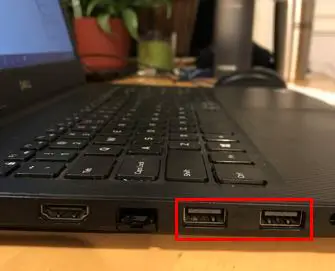
    As a reminder, the USB ports on your computer will look like this:

    Computer USB ports

    Your computer will most likely have multiple USB ports, so hopefully you have an open USB port to use.

    When looking for a USB to ethernet adapter, there are many choices online. I recommend this one from Uni. It has all the latest technology in terms of USB and ethernet connections, so you don’t have to worry about it limiting your connection.

    Grab one of those and you’re good to go. Just plug the adapter into one of the USB ports on your computer and then plug your ethernet cable into the adapter.

    It doesn’t get any easier than that.

    Connecting a computer to a router over WiFi

    Ok, now we’ve covered connecting your computer to a router with an ethernet cable.

    Let’s look at the other option: connecting your computer to a router wirelessly.

    A wireless connection allows you to connect to your router and access the internet without an ethernet cable. This happens over WiFi.

    Don’t let the term confuse you. WiFi is simply the technology used to connect devices wirelessly.

    Your router broadcasts a wireless network signal to all your wireless internet devices. Your devices receive the signal and can establish a connection with your router over this wireless network.

    Once a connection has been created, your router and devices can communicate as if they were connected to each other with an ethernet cable. The only difference is they’re sending data to each other through the air.

    Benefits of connecting a computer to a router over WiFi

    How is a wireless connection different from a wired connection? Are there any benefits to communicating wirelessly?

    You bet there are.

    Freedom from your router

    The main benefit of connecting to your router wirelessly is the obvious one.

    You don’t need a cable between the two devices in order for them to communicate. In other words, connecting to your router wirelessly can be so much more convenient.

    In fact, you don’t even have to be in the same room as your router to connect to it. You also have the ability to move around with your computer without losing a connection.

    On the other hand, if you tried to move around with a wired connection to your router you’d look like the fish on the end of a line. It’s not the easiest thing to do.

    Easier to connect multiple devices to your router at the same time

    Wireless connections also allow you to connect more devices to your router at one time. As we saw above, most routers only have 4 ethernet ports on them. If you have a lot of internet devices you want to connect to your router with a wired connection, things can get messy.

    Even with an ethernet switch, there’s only so many devices you can connect to your router before the wiring gets really confusing.

    Less clutter

    For those concerned with appearances, this is another benefit of connecting to your router wirelessly. The less ethernet cables you have coming from your router, the cleaner your home will look.

    You don’t have to worry about trying to hide the rats nest of ethernet cables coming from the back of your router. For some, this is more important than others.

    The last thing I’ll say is that although a wireless connection may have higher latency than a wired connection, this doesn’t mean you can’t or won’t have a fast internet experience.

    We are talking about a difference of milliseconds here. Unless you’re measuring it you probably won’t be able to notice.

    What you’ll need to wirelessly connect your computer and router

    Compared to a wired connection, you need even less to connect your computer and router wirelessly.

    All you need is a computer and a router.

    The only situation where you may need another item is if your computer doesn’t have WiFi capability.

    This is unlikely as your computer would have to be really old for it to not have wireless technology.

    If for some reason this is the case, you just need a wireless adapter. It plugs into one of your computer’s USB ports and it enables your computer to communicate with other devices over WiFi.

    If you need a wireless adapter, check this one out. It should provide you all you need to wirelessly connect to your router. It’ll also support any internet plan so you don’t have to worry about it slowing down your internet speed.

    How to connect your computer and router over WiFi

    Let’s say your computer and router are both powered on and ready to go.

    Now what? How do we get them to connect to each other?

    Determine the SSID you want to connect to

    To make things easy on you, the remaining steps can be done from your computer.

    All you have to do is connect to your router’s wireless network. Another name for your router’s wireless network is its Service Set Identifier, or SSID.

    Your SSID will be the custom name you chose for your network when setting up your router.

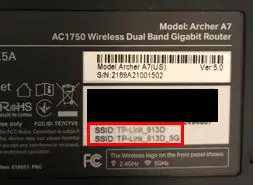
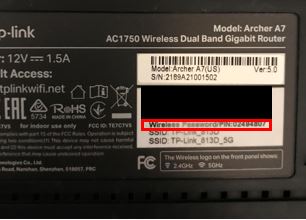
    If you haven’t created a custom SSID, your router’s SSID will be the default one that it came with. You should be able to find the default SSID information on a sticker on your router.

    For example, here’s the default SSID information on my router’s sticker.

    Router default SSID information

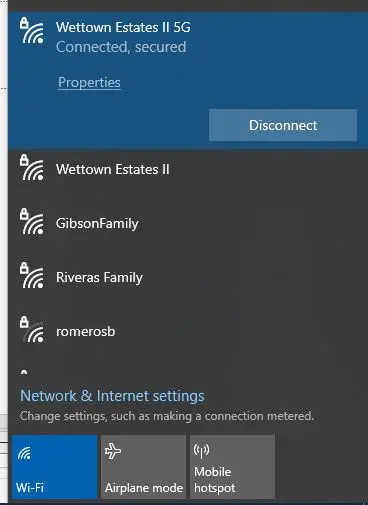
    Once you’ve determined the SSID you’re looking for, you need to find it in your computer’s Network and Internet settings.

    Find the desired SSID in your computer’s internet settings

    As a disclaimer, the following instructions are for Windows computers. The steps will be slightly different for Mac users.

    Ok, let’s find the Network and Internet settings on your computer.

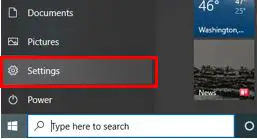
    First, click the little Windows icon in the corner of your computer. This’ll pull up a list of options. Select “Settings”.

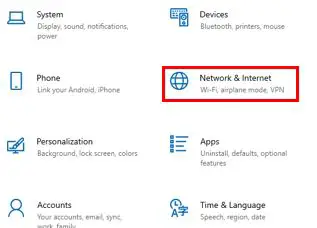
    In the window that opens, you need to select Network & Internet. This’ll show you all your network options and settings.

    Windows network and internet settings

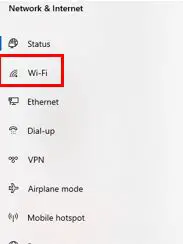
    A new window will open. Select “Wi-Fi” in the side toolbar. Clicking it will show you all your WiFi options.

    Windows network and internet settings Wi-Fi Settings

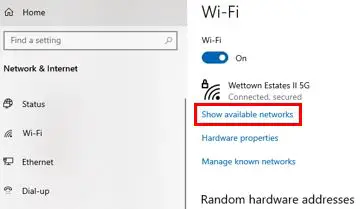
    In the WiFi settings page, the last thing you need to do is select “Show available networks”.

    Windows network and internet settings show available networks

    When you select “Show available networks”, a list of available wireless networks will be listed for your computer.

    Available wireless networks

    Make sure your computer is close to your router at this time so its SSID shows up in the list of available options.

    If you see your router’s SSID in the list of available networks, select it and you’ll be prompted to enter the network’s password.

    Enter the password for your SSID

    If you’ve set up a custom SSID for your network, you’ll probably have created a custom password for it as well. Enter this custom password here to connect to your wireless network.

    If you haven’t created a custom SSID and password for your router’s network, you can find the password for the default SSID on the sticker on your router. It may be listed as either “Wireless Password”, “Wireless Pin”, or “Wireless Passcode”.

    Here’s what it looks like on my router.

    Router default SSID PIN information

    Upon correctly typing in the SSID’s password, you’ll be connected to your router’s WiFi network.

    Well done! You’ve successfully connected your computer to your router over WiFi.

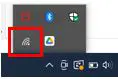
    You’ll know you have a wireless connection if you can see the little WiFi icon in the corner of your computer near the date and time information.

    Wireless network connection

    Wrap up

    You’re now armed with the ability to connect your computer to your router. You can either connect the two devices directly with an ethernet cable, or you can connect them wirelessly.

    If you have any trouble connecting to your router or you have any questions about the information I provided, please leave a comment below. I’d love to help.

    If you found this information interesting, check out some other posts I’ve written about similar topics:

    What Do My Router Lights Mean?

    Can I Use a Router Without a Modem?

    Can I Move My WiFi Router to Another House?
    What Is the WAN Port for on a Router?

    Does a Router Affect Your WiFi Speed?

  • How to Update Your Router: The Ultimate Guide

    How to Update Your Router: The Ultimate Guide

    Update Router Ultimate Guide title page

    Everyone should update their router.

    The problem is, it’s not always clear how to update your router. On top of that, you may not be sure why you even should be updating it in the first place.

    The good news is that the process itself isn’t very complicated.

    You essentially have to log in to your router’s settings to see if there are updates available for your router. If there are, it only takes a few clicks and your router will have the latest and greatest software version.

    The hardest part about it is making sure you don’t update your router over a WiFi connection. Your computer should be plugged directly into your router to make sure the updates install smoothly.

    Updating your router only takes a few minutes of your time and it’s well worth it.

    In this post I’ll break down all you need to know about updating your router. Everything from what your router firmware is, the benefits of keeping it updated, and how often you should be checking for updates.

    Let’s take it from the top.

    What is router firmware?

    When you update your router, you’re actually updating the firmware on the device.

    So what is firmware?

    Firmware is just a fancy term for the software that comes with the router when you buy it. It’s installed on the router hardware itself, and you’re not allowed to change any of its settings.

    In other words it’s considered read-only memory, or ROM.

    The only way you can change your router’s firmware is by installing an update for it, or by installing new firmware on the device entirely.

    So what does it do?

    Your router’s firmware is responsible for making sure the device runs properly.

    In fact, a lot of the firmware works behind the scenes and you hardly even notice it.

    For example, it allows your router to communicate with your devices so they can talk to each other and access the internet. This includes assigning IP addresses to your devices when they’re connected to your router.

    On top of that, it makes sure your router starts properly when you turn it on and reboot it.

    Your router’s firmware also includes the interface that allows you to log in to your router and change its configuration settings.

    To put it simply, without firmware your router would just be a paperweight.

    Why should you update your router’s firmware?

    There are two main reasons why your router’s firmware needs to be updated.

    A good analogy here is if you think about an application on your smart phone.

    Why do your smart phone apps need to be updated?

    Better performance

    For one, the creators of your smartphone applications are constantly making improvements to make it run faster and more efficiently.

    This goes hand in hand with advancements in technology. As new technologies are developed, the code of these applications can be written to utilize these new technologies. As technology improves, so too can applications that have already been created.

    In addition to new ways of developing apps, there are always bugs that are found after software is released. The only way for application developers to fix these bugs is to issue new versions of their software.

    This is why you get application updates so frequently for your phone. There are always changes that can be made to write better applications.

    The same principle applies if an application has a new capability or feature the developers want to add. In order to roll out the new feature or capability, an update needs to be issued.

    The examples above for applications are all applicable to your router firmware as well.

    There’s always room for improvement of your router’s firmware. If you look at the notes for a router firmware update you’ll usually see that bug fixes are addressed in the update:

    Router firmware update bug fixes

    There’s a lot at stake here, because improving your router’s firmware can cause all of your devices to communicate better and have faster internet speeds.

    I don’t think anyone would complain about better performance from their router.

    More secure

    Updating your phone’s applications also makes them more secure from hackers.

    Just like fixing bugs in an application, it’s completely normal for developers to notice security flaws in their software code.

    In order to fix these flaws and close the security holes, updates are issued for the application.

    Unfortunately, there’s another factor at play here as well. Hackers are finding new ways to hack applications just as quickly as old security issues are being fixed.

    This results in an arms race where hackers find a new way to hack into software, then the application developers write code to fix the security issue.

    Then hackers find another way in.

    Then developers fix the code of their application to close that door.

    I’m sure you can see where this is going.

    It’s a never-ending battle between developers and hackers. This is another reason why your applications are getting updated so frequently.

    Your router is no different. As security vulnerabilities are discovered, your router manufacturer issues fixes to secure the router firmware.

    This is why you’ll usually see “Enhance Device Security” in the notes when you update your router.

    Router firmware update security fixes

    Your router’s manufacturer is constantly improving the firmware of its devices to keep you safe from hackers.

    The only way you get these benefits is if you’re updating your router.

    Is that convincing enough?

    How do you update your router’s firmware?

    https://youtu.be/HJeLqDlm8tM

    Now that you know how important updating your router is, let’s discuss how you actually go about updating it.

    There are two ways to update your router. You can either update your router by having it automatically install the latest firmware version, or you can manually download the firmware update yourself and install it on your router.

    Let’s walk through both methods so you have your bases covered.

    I will be describing the steps for updating my TP-Link Archer A7 router. Don’t worry if you have a different router because the steps for your router will most likely be similar.

    How to automatically install router updates through the router’s settings

    The first method for updating your router is the easiest. It’s also the method you’ll need to use the vast majority of the time.

    When you log in to your router’s settings, you’ll be able to automatically check if a new version of firmware is available.

    To do this, you first need to log in to your router’s settings.

    Access your router’s login page

    To log in to your router’s settings, you’ll need to know the IP address or default location for your router.

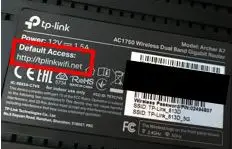
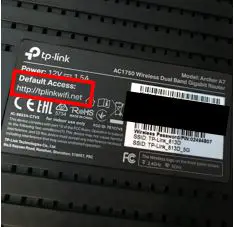
    The easiest way to determine this will be to look at the sticker on your router. The sticker will usually provide the default location for your router’s settings.

    Let’s take a look at the sticker on my router as an example:

    Archer A7 Default Access Location

    The default access location for my router’s settings is http://tplinkwifi.net. If I type this location into my internet browser, it’ll take me to my router’s login page.

    The other option here is to use your router’s IP address.

    If you don’t know your router’s IP address, you can find it through the command line of your computer.

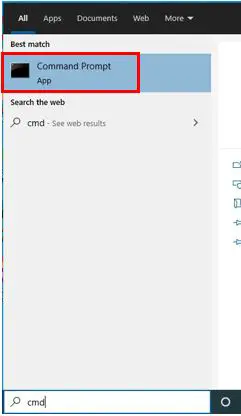
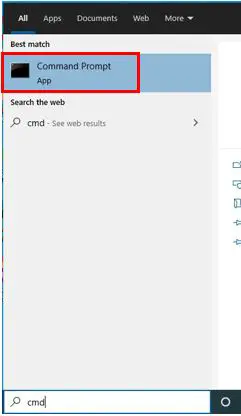
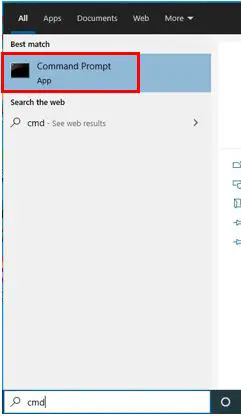
    If you have a Windows computer, type “cmd” in the Windows search bar and press enter.

    Command Prompt Search

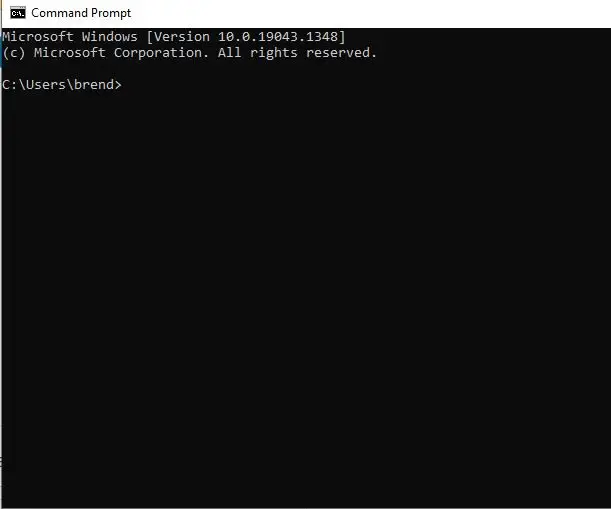
    This will open a command prompt window.

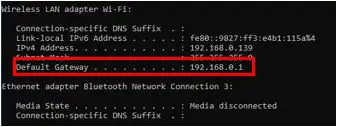
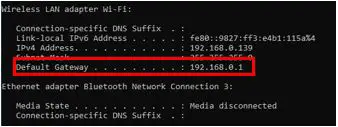
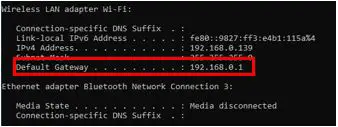
    In the command prompt window, type “ipconfig” to bring up the IP address information for your computer. If you have a Mac or Linux operating system, use the “ifconfig” command.

    If you look at the IP address next to “Default Gateway”, that’ll be your router’s IP address.

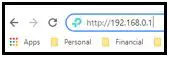
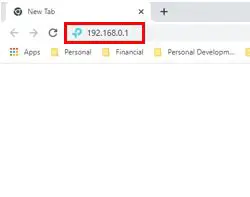
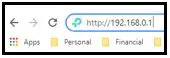
    From this information I can tell my router’s IP address is 192.168.0.1. If I type my router’s IP address into my browser it will bring up my router’s login page as well.

    Router IP Address In Browser

    Log in to your router

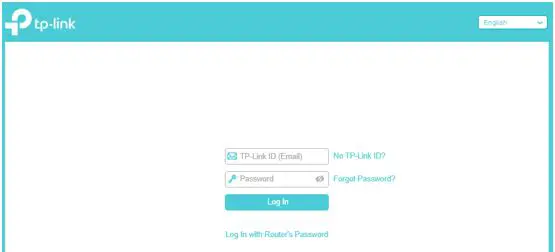
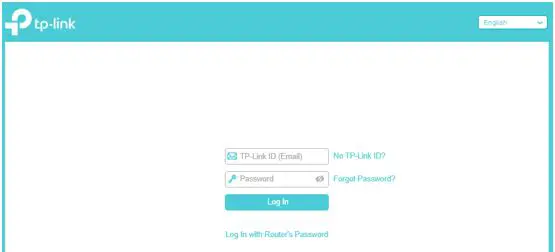
    At your router’s login page, you’ll need to enter the username and password for your router.

    Router login page

    Your password will be whatever you previously chose for your router login.

    Note, this password is not the same as your WiFi network password.

    If you haven’t set up a unique password for your router yet, you can log in to your router with the default credentials that came with it. These can be found in your router’s user manual, or you can look them up online.

    If you haven’t set your password to something other than the default password, you need to.

    It’s a huge security risk for your router to have the default password set. Anyone can look up the default username and password for your router online. You don’t want anyone to have access to your router’s settings other than you.

    If you’ve changed your router’s password away from the default value but you don’t remember it or you’re unable to log in, you might want to thinking about performing a factory reset of your router.

    Access your router’s firmware upgrade page

    Now that you’ve logged in to your routers settings, you’ll be brought to the main settings page.

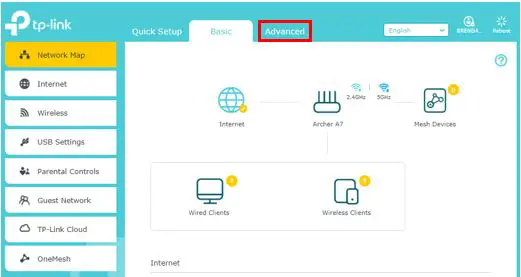
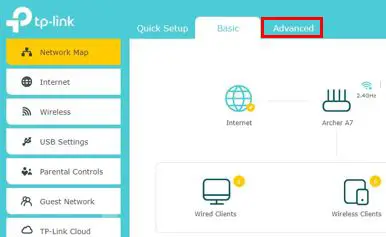
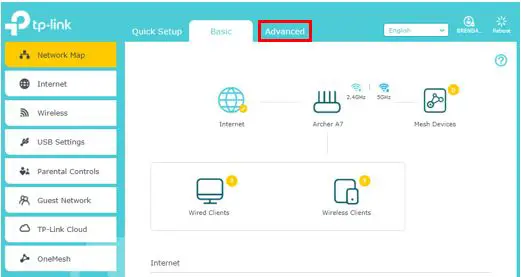
    In order to get to the firmware upgrade page, you need to find the advanced settings. For my router, I need to click the Advanced tab at the top of the page.

    Router Advanced Settings Tab

    This’ll bring you to a new page with advanced settings options for your router.

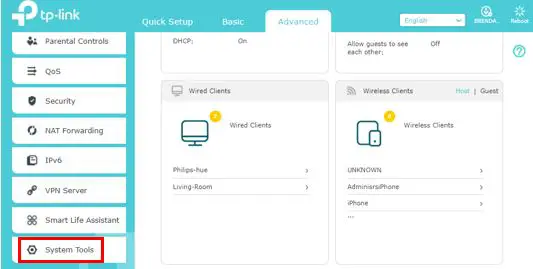
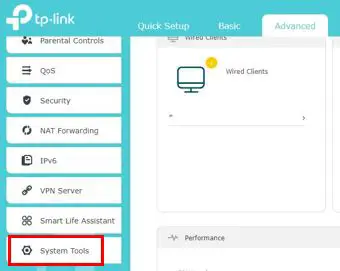
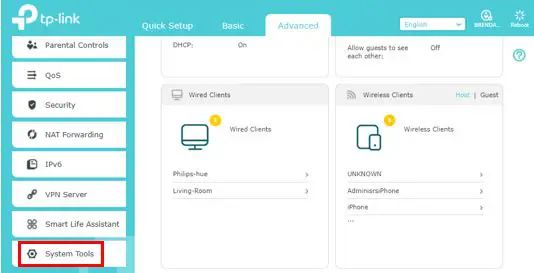
    To get to the firmware upgrade option, I need to click the System Tools tab.

    Router Settings System Tools Tab

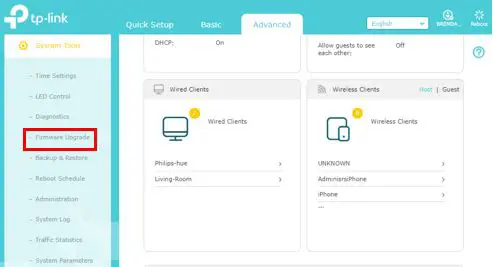
    Upon clicking the System Tools header, a list of further options is provided.

    It’s pretty easy from here, as I just need to select the Firmware Upgrade option.

    Router Settings Firmware Upgrade

    The resulting page will show everything you need to know about your router’s firmware.

    You’ll see details about the current version of firmware installed, as well as the hardware version of the router.

    Router firmware upgrade device information

    Check for a router firmware update

    The router Firmware Upgrade page also provides the option of checking to see if there’s a newer firmware version available for your router.

    Here’s what it looks like for my router:

    Router firmware update settings check for upgrade

    Upon clicking the “Check for Upgrade” option, your router will automatically check to see if a newer version of firmware is available.

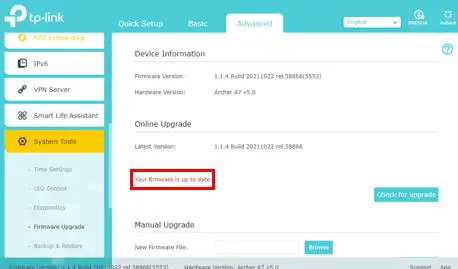
    If no firmware update is available, you’ll be notified that your firmware is up to date.

    Router firmware update settings firmware is up to date

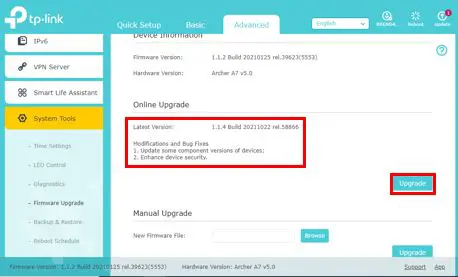
    If a firmware update is available for your router, details about the firmware update will be provided. You’ll also be given the option to upgrade your router’s firmware.

    Router firmware update available

    Important notes before upgrading your router

    Before you upgrade your router’s firmware, you need to connect your computer to your router with an ethernet cable. This is very important.

    Connecting your computer to your router will ensure the firmware upgrade completes. If you try to upgrade your firmware over a wireless connection you could lose your internet connection. If this happens during the upgrade it may not complete, and it can break your router.

    This has happened to me before and I had to get a replacement router. I can’t stress this enough. Connect your computer to your router with an ethernet cable when you upgrade its firmware.

    If you don’t have an ethernet cable to connect your computer and router, grab a 7 foot Cat5e ethernet cable here.

    It’s also recommended that you unplug any USB devices from your router while you update its firmware. USB devices can sometimes get wiped of all their data during a firmware upgrade.

    Upgrade your router

    Once your computer is connected to your router and any USB devices have been removed from your router, select “Upgrade”. This will start the firmware update process.

    Another important note is to make sure you aren’t using your internet connection while your router is updating. This can also break your router update while it’s in progress.

    You just need to be patient here because the upgrade can take a few minutes. Your router will need to install the firmware update and restart before it’s up and running again.

    During the update you may see a status bar to show the progress of the update. This will make it easy to determine where your router is in the update process.

    Once the update is complete your internet connection will be stored and you’ll be able to use the internet again as usual.

    The only difference is you’ll have better firmware working behind the scenes to give you a better experience.

    Now let’s look at the process for manually updating your router.

    How to manually install a router’s firmware update

    In most cases, automatically updating your firmware through your router’s settings will be your best bet. However, sometimes you may want to perform a manually update.

    For example, this is the best method if you want to download a specific version of firmware.

    By downloading your router’s firmware update manually, you can select the version you want. When you automatically update your firmware, it’ll just update to the most recent version.

    So how do you manually update your router’s firmware? The process is a little different from the automatic update.

    Go to the manufacturer’s support page

    In order to manually update your router’s firmware, you’ll first need to download the firmware that you want to upload to your router?

    Where do you find your router’s firmware?

    As an example, I’ll walk you through the process I followed for manually updating my router. If you have a different router manufacturer your process will probably be a little bit different, but the main steps will be the same.

    You’ll need to navigate to the downloads section of the support page for your router. This can be found somewhere on the manufacturer’s website.

    In my case, the manufacturer of my router is TP-Link. To get to the downloads page, I first need to navigate to TP-Link’s website.

    On TP-Link’s website, I was able to find the download center from a dropdown on the main page. From there, all I had to do was select the model of my router (TP-Link Archer A7).

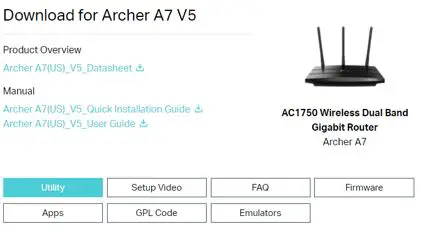
    The resulting page provided me with everything I’d ever need for my router.

    TP-Link Website Download Page

    I can download my router’s user manual, view the router overview, and access frequently asked questions all from this page. In addition, users are able to download different versions of firmware for their router.

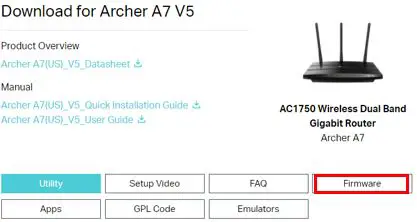
    I selected the firmware header to get to the firmware downloads page.

    TP-Link website firmware download page

    Download the firmware version you want

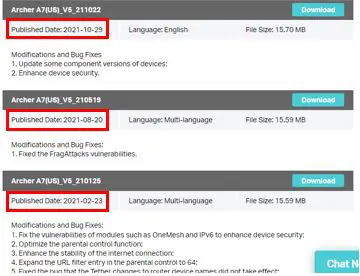
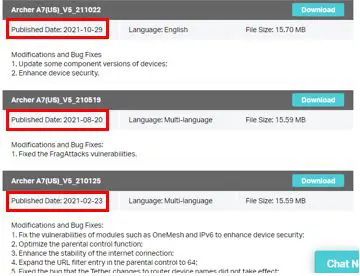
    On the resulting page, important steps to take when manually updating your firmware were provided. There were also multiple versions of firmware that were available for download.

    Router firmware download versions

    As you can see, the published date identifies when the firmware update was first released.

    In my case, I wanted to download the most recent version of firmware.

    I downloaded the firmware version with the most recent published date.

    This downloaded a zip file that I saved in my documents. A zip file is just a group of multiple files that are compressed to take up less space on your computer when you download them.

    Archer A7 firmware update zip file

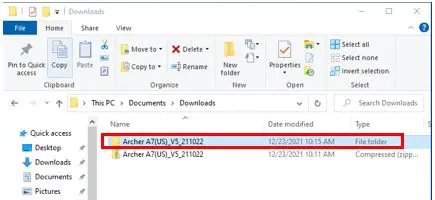
    The instructions on the firmware download page said I had to unzip the file before I uploaded it to my router. This is an easy process, but if you’re unfamiliar with unzipping a file you can follow these steps. Once unzipped, the folder looked like this:

    Archer A7 firmware update unzipped folder

    Once I unzipped the folder, I was able to see the files inside it.

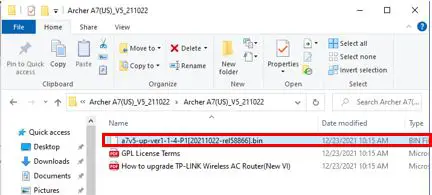
    I noticed there was a binary file in the folder (ending in .bin). The other files were PDF documents so I knew this was the file I needed to use to update my router’s firmware.

    Archer A7 firmware update binary file

    At this point I had all I needed to update my router.

    Update your router’s firmware

    As noted previously, before I began the firmware upgrade process, I plugged my computer into my router with an ethernet cable. Again, this is very important.

    To upload this binary file to my router, I had to log in to my router as detailed in the steps to automatically update my router.

    On the Firmware Upgrade page, there’s a section for manually upgrading your router.

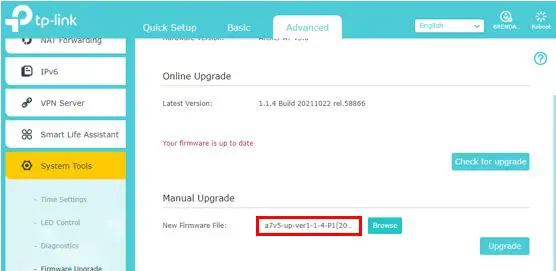
    I clicked the “Browse” button and navigated to the location of the binary file I recently downloaded. After highlighting the binary file I clicked “Open”.

    I could tell the binary file was properly selected because the name of the firmware file was listed next to the “Browse” button.

    Router firmware manual upgrade file selected

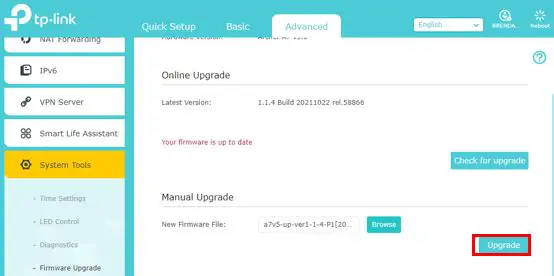
    From there, all I had to do was select “Upgrade” on the Firmware Upgrade screen.

    Router firmware manual upgrade button

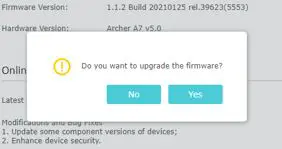
    A window popped up confirming that I wanted to upgrade my router’s firmware.

    Router firmware upgrade confirmation

    I selected yes and the firmware update process began.

    Once the firmware was uploaded to my router and it reset, the update process was complete.

    How do I update my router if I have a modem router combination device?

    If your modem and router are combined into one device, the process for updating your router is different.

    With a modem router combination device, no action is needed on your part to install updates.

    Why’s that?

    When your modem and router are combined, your internet service provider (ISP) is responsible for updating your device. Your ISP is responsible for pushing updates to your modem if your modem and router are separate devices, so when your modem and router are combined they’re responsible for your router’s updates as well.

    As a result, your ISP will push updates to your modem and router device when they become available. In fact, you probably won’t even notice when your router gets updated.

    Although this may sound great, it’s still important for you to make sure your modem router combo is being updated. I’ve seen many cases of ISPs not updating their users equipment as often as they should (if at all).

    If your ISP isn’t updating your modem and router device, you’ll need to contact them to make sure they’re aware of this issue.

    How do I know if my router’s firmware is up to date?

    When it comes to checking for newer versions of router firmware, there’s no easy way out.

    The best way to check for router updates is to log in to your router and select the “Check for Upgrade” button.

    I know what you’re thinking.

    It’s a pain to log in to your router and manually check for updates. There must be an easier way.

    Some manufacturers offer e-mail lists that’ll send you notifications when updates are available, but from what I’ve read these notifications are unreliable. In some cases it took months for users to get notified that a new firmware update was available.

    When it comes to firmware updates that could impact your router’s security, you want to make sure you install them soon after they’ve been released. You don’t want your router to spend months without an important security update.

    So my advice is as follows: every month or two, log in to your router and check for firmware updates.

    It takes less than a minute to log in to your router. It’s well worth your time to make sure your router is upgraded.

    After all, the firmware updates can only help you. Not only from a security perspective, but from a performance perspective as well. If you’re going to pay good money for a router, you might as well get the best performance out of it.

    Updating your router will ensure it’s both safe and fast.

    How often should you update your router’s firmware?

    The simple answer here is: as often as you can.

    Unfortunately you can’t update your router on a set schedule. Manufacturer’s don’t put out router updates on a consistent basis.

    That’s because they issue updates whenever they discover bugs or security issues that need fixing.

    This adds a layer of complexity to updating your router. It makes it much harder to update your router when you don’t know when updates will be published.

    Take my TP-Link router for example. Let’s go back to the latest three firmware updates for my router:

    Router firmware download versions

    In 2021, TP-Link issued updates for my router in February, August, and October.

    See? That doesn’t exactly follow a consistent schedule.

    Your best bet is to just make it a habit to check for router updates. Whenever an update is available, update your firmware by following the processes I detailed above.

    Wrap up

    In conclusion, you need to make installing router updates a habit. Updating to the latest firmware for your router will guarantee that your router is running smoothly and in a secure manner.

    If you have any questions about the information I provided, or if you’d like to share your router update experiences, please drop a comment below.

    If you found this information useful, check out similar topics that I’ve previously written about:

    Can I Use a Router Without a Modem?

    How to Save and Restore Your Router Configuration

    Can I Move My WiFi Router to Another House?
    Does a Router Affect Your WiFi Speed?

    How Many IP Addresses Should a Router Have?

  • Can I Use a Router Without a Modem?

    Can I Use a Router Without a Modem?

    Use a Router Without a Modem title page

    Your modem and router are the two most misunderstood devices in your home network. In fact, these two terms are often used interchangeably by mistake.

    A cause of this confusion is that your modem and router can come in different configurations.

    Usually, your modem and router will be separate devices in your home network. In some cases, however, your modem and router can be combined into one device.

    These different configurations make it hard to understand what roles your modem and router play in your home internet. Most notably, it leads to questions about what each of these devices does on its own.

    For example, let’s talk about your router.

    Is your router all you need in your home network, or do you need a modem as well? In other words, can you use a router without a modem and not have any problems?

    A router can be used without a modem, but the capability of the network will be greatly limited. If a router is used without a modem, the devices on the network will not have access to the internet. Despite this limitation, a router operating on its own still has some functionality.

    In this post we’ll dive into why you can’t access the internet without a modem, and the different ways you can use your router if you don’t have a modem.

    What Is the Purpose of a Router?

    Before we dive into how a router can be used without a modem, let’s make sure we have a clear understanding of what routers are used for.

    Routers Allow Your Devices to Communicate With Each Other (And the Internet)

    First and foremost, routers are responsible for directing communication between devices. This may be communication between devices on your home network, or between your devices and the internet (if you have an internet connection).

    How does this work?

    Every time one of your connected devices wants to send a request or message to another device, the request first goes to your router. It’s then your router’s job to forward the request to the right place.

    If you didn’t have a router in your home network, your devices wouldn’t be able to talk to each other.

    So your router is basically the central device of your home network. It handles all of the information coming in to and out of it.

    It’s perfect for the job because of it’s second main function. Your router keeps an address book of all the devices connected to your network and where they’re all located.

    Routers assign IP addresses to your connected devices

    In order to direct traffic on your network, your router must know where all your devices are located.

    It does this by assigning IP addresses to all of your devices. If you connect a device on your network, it’ll have an IP address. That IP address will be assigned by your router.

    An IP address is a label that is used to identify your device’s location, much like the address of your home.

    Without getting into too much detail, your router assigns your devices with IP addresses using the Dynamic Host Configuration Protocol, or DHCP. This happens as soon as a device is connected to your network.

    In addition to assigning IP addresses, your router keeps track of the IP addresses of the devices on your network as well. By keeping a record of the IP addresses of your devices, it can easily send your device’s requests to the right location.

    Let’s look at an example.

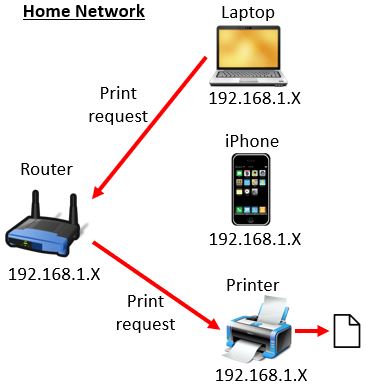
    Say you want to print something wirelessly from your laptop.

    Your laptop will send that print request to your router. Your router will then look up the location of your printer by its IP address. Once it determines the IP address of your router, it forwards the request from your computer to the printer at its IP address.

    Magically, your printer will receive this request and start printing the requested document.

    This works the same way if your devices are connected to the internet.

    The process starts when a device sends a request for a web page. Your router will look up the IP address of the web page and forward the request to the right location. When the requested web page gets returned to your router, it knows where to send it based upon the IP address of the device that requested it.

    I’m simplifying things a bit here, but you get the picture.

    Can I Use a Router if I Don’t Have a Modem?

    Let’s say you buy a router but you don’t own a modem. Is your router any good, or do you need a modem for it to work?

    The answer to this question depends upon how you want to use your router.

    You Need a Modem if You Want to Have Access to the Internet

    Unfortunately your devices can’t access the internet without a modem.

    In order for your devices to be able to communicate with the public internet, they need an internet connection.

    The trouble here is that an internet connection isn’t possible without a modem.

    Modems are responsible for establishing a connection with your internet service provider (ISP). Once a connection is established, your router can send and receive data through your modem.

    Your modem allows your router’s requests to reach the public internet through its connection with the ISP. The traditional path of an internet request is as follows:

    Internet request with modem

    Now what would this look like if you didn’t have a modem?

    Without a modem in place that connection to your ISP is lost, and so is your ability to access the internet.

    Internet request without a modem

    The good news here is that all isn’t lost if you want internet access.

    If you have a router and you don’t own a modem, all you have to do is buy one. You just need to make sure that the modem is compatible with your router. If your modem isn’t compatible with your router, it can slow your internet speed.

    As a side note, if you’re interested in learning about how choosing the wrong modem can affect your internet speed, check out the article I wrote about this very topic.

    Once you have a modem, you can sign up for an internet plan with a local ISP. When you’ve configured your modem and have a connection to your ISP in place, your devices will be able to access the internet.

    Your Home Network Devices Can Communicate With Each Other Without a Modem

    What if you have a router and you don’t need an internet connection? Will you still be able to use the router without a modem?

    The answer here is a resounding yes.

    As I previously mentioned, a router is responsible for directing traffic on your network. If that traffic doesn’t have to leave your network to get to another network such as the internet, you have no need for a modem.

    The reason for this is because of the built-in capabilities of your router.

    As devices are added to your home network, they’re assigned IP addresses by your router. Your router keeps a list of all the IP addresses for these devices in case they need to communicate with each other.

    When one device on your home network wants to communicate with another, it sends its request to your router. Once your router receives the request, it’s able to pass the request to the appropriate device because it knows the locations of all the devices on your network.

    All of this happens without the use of the internet.

    Let’s go back to our wireless printing example from earlier. A request from your laptop to wirelessly print to a printer on your network would look something like this:

    Home network request without a modem

    Your laptop’s request will go to your router, which will then pass the request to the printer to start the print job. This can all be accomplished because the printer and laptop are both connected to your router’s network.

    Although you can’t access the internet if you have a router and no modem, your router can still be useful if you just need your internal devices to be able to communicate with each other.

    What Can I Use a Router for if I Don’t Have a Modem?

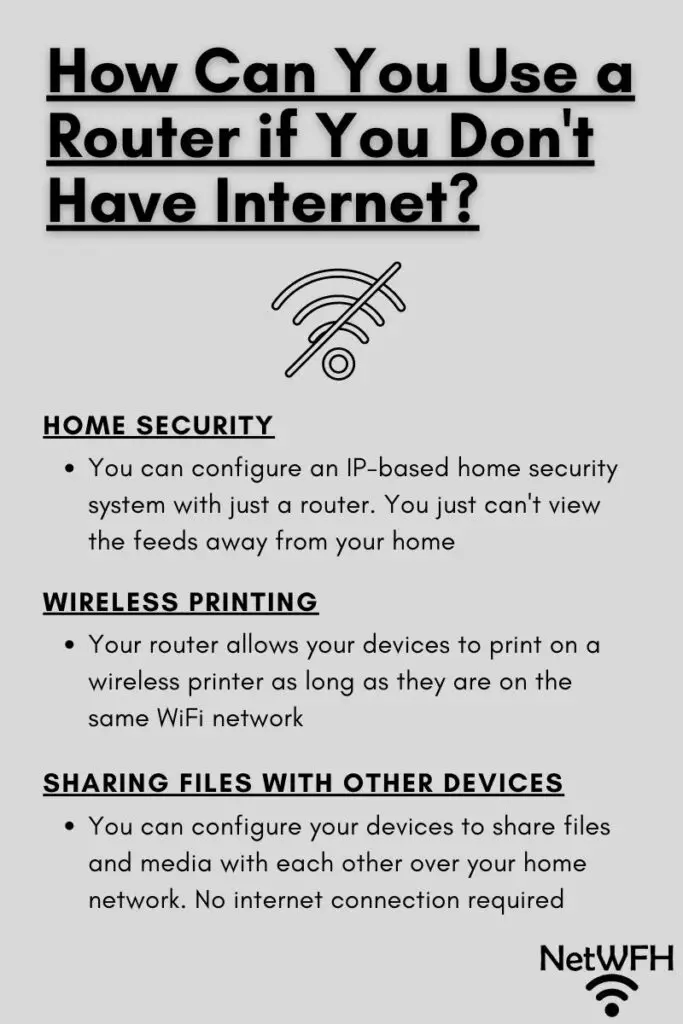
    How Can You Use a Router if You Don't Have Internet

    Let’s say you have a router but you don’t have a modem.

    Before you run out and get a modem and internet plan, it’s important to understand how you can still use your router without a modem.

    In most cases, you’ll probably want to be able to access the internet, but your should know your router’s capabilities in either case.

    Let’s walk through a few examples of how your router can be used without an internet connection.

    You Can Set up a Home Security System

    Home security cameras are becoming more popular these days.

    If you buy an IP-based security system that uses Power over Ethernet (PoE) like this one, you can configure your security cameras with your router.

    Your router will assign IP addresses to all of your cameras as you connect them to your home network. This’ll allow you to view the video feed from these cameras while you’re on your home network.

    As a reminder, you won’t be able to view the camera’s feeds away from your home because they won’t be connected to the public internet. In some cases the footage only needs to be reviewed from your home network, so this may not be a big deal.

    You Can Print Wirelessly

    This example has been used a few times already throughout this post.

    If you have a WiFi-compatible printer on your router’s network, your devices will be able to print wirelessly on it.

    No further explanation is necessary.

    You Can Share Files With Other Devices on Your Home Network

    Using just a router, you can share files between the systems on your home network.

    For example, if you have an external hard drive full of pictures and downloaded movies, you can make all those files available to any computer on your network. All you need to do is change the permissions on the files so that any system on your network has access to them.

    Sharing files with other systems on your home network is a really easy process that only takes a few minutes to set up.

    This is all made possible because your router allows the devices on your network to interact with each other.

    Wrap Up

    So you can’t access the internet if you have a router and no modem.

    Is that the end of the world?

    Not necessarily. It all depends upon how you plan on using your home network.

    You should now have a good understanding of what you can do with your router if you don’t have a modem to go with it. With this information, you can determine if you need to run out and buy a modem or not.

    As always, please leave a comment below if you have any questions or you want to share how you’re using your router in your home.

    If you found this post interesting, check out some of these related posts I have previously written:

    How Many IP Addresses Should a Router Have?

    Can I Move My WiFi Router to Another House?
    What is a Modem Router Combo?

    How to Automatically Reboot Your Router for Better Internet Connections

    Does a Router Affect Your WiFi Speed?

  • How to Save and Restore Your Router Configuration

    How to Save and Restore Your Router Configuration

    How to save and restore your router configuration

    Spoiler alert: saving the configuration of your router is a smart thing to do.

    The problem is, not many people do it.

    What ends up happening is people have trouble with their router or forget their password. Then they find out that they have to change each one of their router’s settings all over again after they perform a factory reset on it. This can be a painful process and consume hours of your time.

    In other words, you end up wishing you had backed up your router.

    So let’s avoid this situation entirely.

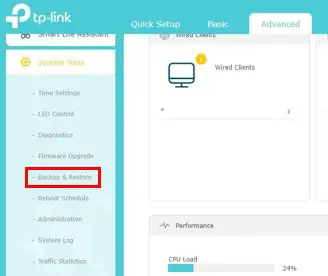
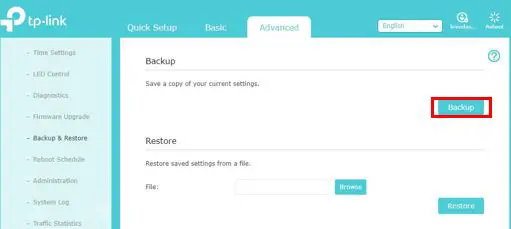
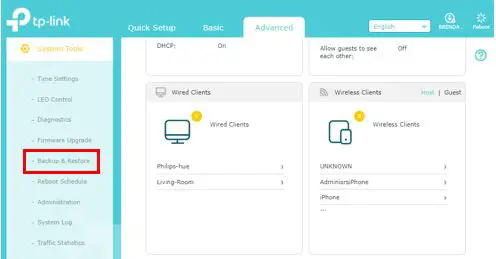
    In order to save your router’s configuration, you have to log in to it first. From there, you can access the back up option in the Advanced Settings section.

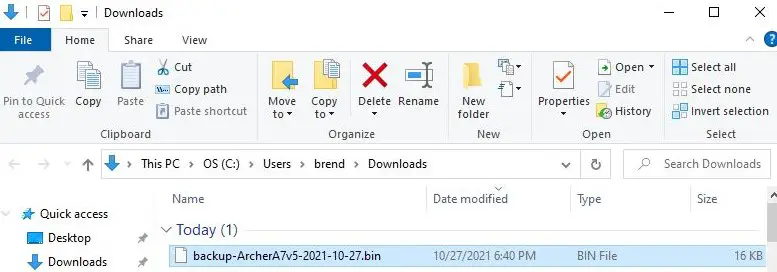
    Once you’ve saved your router’s settings to your computer, flash drive, or other storage device, you can restore them any time you want.

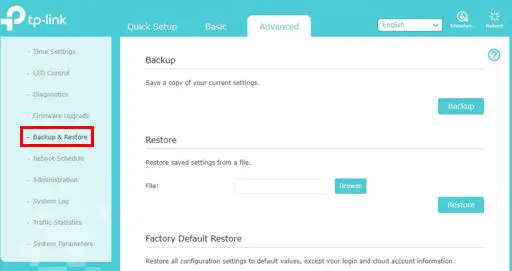
    The good news here is restoring your router’s settings is just as easy as saving them. All you have to do is access your router’s advanced settings again.

    In total, it only takes a few minutes to back up or restore your router.

    Did I mention it could save you hours of frustration?

    Yeah, it’s totally worth doing.

    In this post I’ll break down the steps you need to take to back up your router. I’ll also detail why you should take the time to do it.

    Let’s dive in.

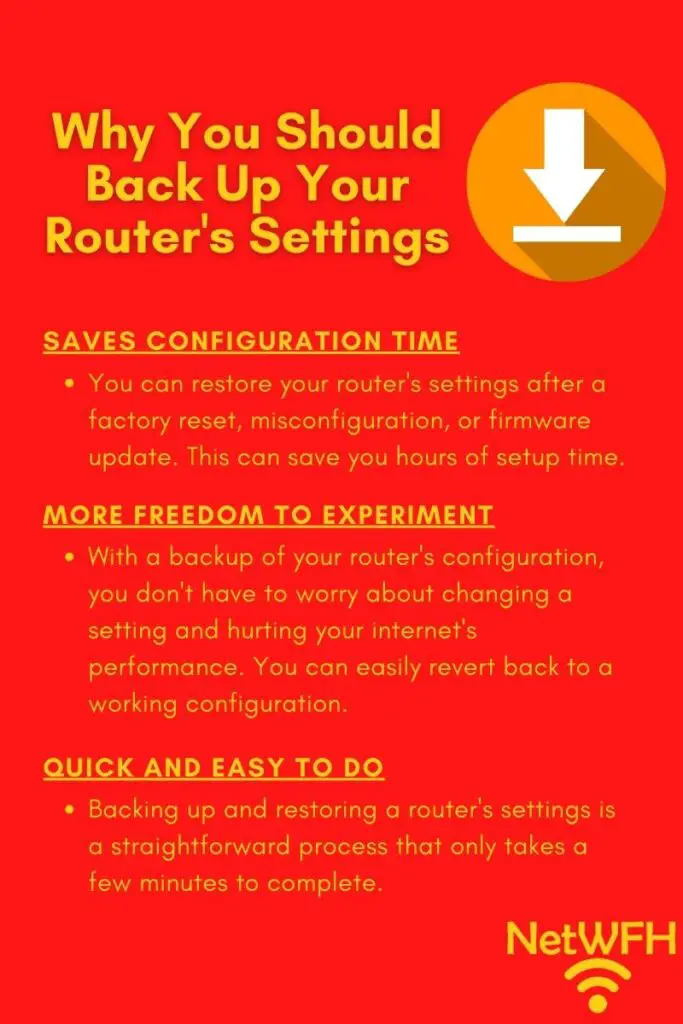
    Why should I save my router’s configuration?

    Why you should back up your routers settings

    I get it.

    You might be hesitant.

    “Why would I save my router’s configuration when I never have problems with my router?”

    The thing is, it’s good to have a backup of your router even when you’re not having problems with it.

    Let’s look at the cases where saving your router’s settings will come in handy.

    When you have to factory reset your router

    If you have to perform a factory reset of your router, it’s helpful to have a backup of your settings.

    Completing a factory reset will return all your router’s settings to what they were when you first got it.

    In other words, a factory reset will return your router to its brand new condition.

    There are a few main reasons why you would need to factory reset your router:

    • You forgot your router’s login password
    • When your router isn’t working properly and you’re not sure why

    Both of these cases are possible scenarios.

    Who hasn’t forgotten a password before?

    In either case, you need to bring your router back to square one. This is something a lot of people are hesitant to do. They don’t want to lose all the hard work they’ve put in to set their router up.

    I get it.

    This would be a lot less scary if you knew you could return your router’s settings to what they were before in a matter of minutes. That’s where a backup comes in handy.

    If you have a backup of your router’s settings from a time when it was firing on all cylinders, you have nothing to worry about. You can rest easy knowing that you can factory reset your router and have it back in a working condition in a matter of minutes.

    When upgrading your router’s firmware

    Any time your router needs an update, it can be a good idea to have a saved copy of your configuration files before you perform the upgrade.

    In fact, some router manufacturers will request that you save your routers settings before an update. That way, you’ll be able to restore any custom settings to your router after a major firmware update if they’re not correctly carried over.

    For example, I have a TP-Link router. In the documentation for my router it says to save my router’s settings before the firmware update.

    The reason for this is that the firmware update may remove any custom settings I previously had on my router.

    If that happens, it’ll be much faster to restore my previous settings after the update instead of manually changing each setting back to what it was before.

    Take note that this may not be the best practice for all routers. Make sure you read the documentation for your router before restoring saved settings after a firmware update. Sometimes the new firmware that you just installed won’t work properly with old firmware settings that you’ve saved.

    In other cases, your router settings will be saved after a firmware update and you won’t have to take any further action.

    It’s better to be safe than sorry. Make sure you do your homework before restoring your settings after a firmware update.

    When you want to test out new settings on your router

    Routers can be complex devices.

    They offer a lot of choices when setting them up. This allows you to customize your router to your unique internet situation at home.

    For the technically savvy, your router can be a playground for tinkering and optimizing your internet experience.

    What’s bad about this is that not every change you make will work out in your favor. If you make a mistake or change the wrong setting, it can hurt your internet’s performance.

    Wouldn’t it be nice to have a saved copy of your router’s configuration from a time it was working well?

    I thought so.

    With a good backup of your router, you can try out new settings as much as you want. Worst case scenario, you can return your router’s settings to what they were before by restoring the backup.

    In this sense, a good backup of your router serves as a great safety blanket.

    How comforting.

    What settings are saved when I back up my router?

    Before I answer this question I’ll start by giving a little background information.

    I’ll start by explaining the components of your router.

    Inside your router it has a processor and memory, among other things.

    Some of your router’s memory is dedicated to saving your router’s settings. That way, if the power goes out or your router is turned off, it’ll have the same configuration when you restart it.

    Why’s this important?

    It’s important because when you back up your router, you’re essentially taking a snapshot of the memory that stores your router’s settings. In other words, your router’s memory from that moment in time will be copied to your computer’s hard drive or other storage device.

    Ok, so a copy of your router’s memory will be saved. What sorts of settings does your router store in memory?

    The easy answer is, just about all of them.

    Essentially any configuration change you make to your router will be saved if you back it up.

    To give a few examples, your router stores the following in memory:

    • Your router’s settings password
    • Your wireless network names (i.e. SSIDs) and passwords
    • The type of encryption your router uses
    • The default Domain Name Server (DNS) you’re using
    • Quality of Service (QOS) settings
    • Parental settings

    The list goes on and on.

    Think of it this way: Anything you’ve changed on your router will be saved if you back it up.

    This is important information to know. If you plan on performing a factory reset of your router and you have a backup you’re planning on restoring after the reset, you need to know what to expect.

    The good news is, all the settings that were in place when you performed the back up will be restored.

    How to save your router configuration

    Ok, now we have all the background we need. We’re ready to back up our router’s settings.

    So how do we do this?

    There’s only one way to back up your router, and that’s through your router’s settings.

    As a note, I’ll perform these steps on my TP-Link Archer A7 router. Even if you have a different router, the steps you need to take will likely be similar to mine.

    Let’s take it from the top.

    First you need to get to your router’s login page.

    Accessing your router’s login page

    If you don’t know how to get there, you have a few options. The first one is to physically inspect your router. There should be a sticker on it that tells you the address of your router’s login page.

    Here’s what the sticker on my router says:

    Archer A7 Default Access Location

    As you can see, I can access my router’s login page at http://tplinkwifi.net.

    The second option is to enter the IP address of your router into your browser’s search bar.

    You can find out your router’s IP address by using the ipconfig command on a Windows computer that’s connected to your home internet.

    Start by typing “cmd” in your computer’s search bar. In the results that pop up, select “Command Prompt”

    Command Prompt Search

    When the Command Prompt window opens, type “ipconfig” and press enter.

    In the results that pop up, search for “Default Gateway”. That’ll give you the IP address of your router.

    Default gateway IP address

    From the results above, you can see that my router’s IP address is 192.168.0.1.

    You can access your router’s login page by entering your router’s IP address in your browser search bar.

    As a note, if you have a Mac or Linux computer the steps are very similar but you need to use the “ifconfig” command instead of “ipconfig”.

    Logging in to your router

    Ok now you should be on your router’s login page.

    Log in to your router with your username and password. If you haven’t set a personal password for your router, you should be able to log in to it with its default username and password. This information can most likely be found on the sticker that’s on your router as well.

    As a side note, if you haven’t changed your router’s password away from the default, I suggest you do so immediately. It’s a great security risk to keep the default password for your router.

    Ok back to the task at hand.

    Now you should be logged in to your router. What’s next?

    Back up your router

    Now that you’ve logged into your router’s settings, you need to find the option for backing it up.

    This will most likely be on the Advanced Settings page.

    I can access my Advanced Settings tab from the main settings page.

    Router Advanced Settings tab

    On the page that pops up, there are categories of advanced settings on the left-hand side. I need to select the “System Tools” option.

    Router advanced settings options

    When I click the System Tools option, a list of settings is shown. One of the options is the Backup and Restore settings category. This is what we’re looking for.

    Router system tools settings

    This brings us to the Backup and Restore settings page.

    On this page, it’s pretty easy to see where I need to go next. I need to select “Backup”.

    Router backup setting selection

    After selecting “Backup”, you’ll have the option of selecting where you want to save your router’s settings. You have a few options here.

    You can save your router’s settings somewhere on your computer, or if you have one you can save it on a portable flash drive.

    Another option would be to store your router’s settings on the cloud or an external hard drive if you want to get really crazy.

    Once you’ve determined a location to save your router’s settings, press “OK”. Almost as soon as you’ve done this, the file will be saved to the location you chose.

    Here’s what my backup file looks like:

    Router settings backup file download

    The settings file is a binary file that doesn’t take up hardly any space at all. As you can see it’s only 16 kilobytes in size. For those that are not technically-savvy, that’s really small.

    At this point the process is complete.

    Congratulations, you’ve officially saved the configuration of your router.

    How do I restore my router’s settings?

    Now that you’ve backed up your router, how do you load these saved settings back onto your router?

    After all, that file you saved is no good unless you can actually put it to use.

    You’ll be happy to hear the process is very similar to the steps you followed for backing up your router. Basically, you need to get back to the “Backup and Restore” settings menu in the Advanced Settings tab of your router’s settings.

    Let’s recap. Here are the cliff notes to help you get back there:

    • Log in to your router
    • Access the “Advanced Settings” tab from your router’s main settings page
    • Select the “System Tools” settings heading
    • In the dropdown selections that appear, select the “Backup and Restore” settings page

    Restoring your saved file

    If you followed the steps above, your screen should look like this:

    Backup and Restore Settings Page

    From here the steps are pretty simple.

    First, you want to select the “Browse” button under the Restore header. This will allow you to select the router backup file you want to restore to your router.

    Router restore settings browse button

    Once you’ve navigated to the location where you saved your router’s configuration file, select it and press “Open”.

    You should see the name of your router’s settings file in the text box.

    Router Configuration File Selected

    Now you’re ready to restore your settings to your router. Select the “Restore” button.

    Router restore settings restore button

    This will kick off the process of restoring your settings. It’ll take a few minutes for this task to complete, because your router will need to:

    • Load the settings from the file you selected
    • Write the settings from your backup file to the router’s memory
    • Reboot with the settings from the backup file

    During this process, you’ll see a status bar indicating how the restoration is going. Here’s an example:

    Router restoring progress bar

    Once the status bar reads 100%, the process will be complete. Your router will have a connection to the internet and it’ll have the same settings as it did when you backed it up.

    In performing this process, you’re ensuring that all the time you spent configuring your router wasn’t a waste.

    You should also have peace of mind because you have an insurance policy in case you ever need to factory reset your router in the future. Hopefully that day never comes, but at least you’ll be prepared if it ever does.

    Wrap up

    Congratulations, now you know how to back up and restore your router’s configuration.

    I know I’ve said this before, but I feel like I need to hammer the point home: Take a few minutes to save your router’s settings. You won’t regret it.

    If you have any questions or you’d like to share your experiences with backing up and restoring your router’s settings, please leave a comment below.

    If you found this post interesting, check out some similar posts that I’ve written:

    Can I Move My WiFi Router to Another House?
    How to Factory Reset Your Router

    How to Automatically Reboot Your Router for Better Internet Connections

    Does a Router Affect Your WiFi Speed?

    What Do My Router Lights Mean?

  • How Many IP Addresses Should a Router Have?

    How Many IP Addresses Should a Router Have?

    IP Addresses Should a Router Have title page

    Your router isn’t like the other internet devices in your house.

    It’s the gateway that allows the devices on your home network to access the internet. Without one, you wouldn’t be able to check your email, stream your favorite show, or post on social media.

    Your router is vital to your internet connection, but it’s unique for another reason as well.

    Let’s talk about how many IP addresses a router has.

    Routers have two IP addresses: One private IP address that is used when the router is communicating with the private home network it is connected to, and one public IP address that is used when the router is communicating with the broader internet.

    This makes a router unique because the rest of your internet devices will only have one IP address.

    So why does a router have two IP addresses while your other devices have one?

    Read on to find out all you need to know about your router’s IP addresses.

    What Are IP Addresses Used For?

    Let’s go through a quick refresher of IP addresses.

    IP addresses are unique sets of numbers that are used to identify your internet devices. Think of them like your phone number or home address. Each phone or house gets a unique number so phone calls or packages get sent to the right place.

    Your internet equipment works the same way.

    Each device in your home network will have an IP address so it can easily be identified. This includes your:

    • Cell phone
    • Smart TV
    • Modem
    • Router
    • Laptop

    The list goes on and on. Any device in your home that connects to the internet will have an IP address.

    Why Are IP Addresses Important to Routers?

    Without IP addresses, your router wouldn’t be able to do its job.

    Routers are in charge of making sure your data gets to the right place. In this sense, they’re kind of like the post office.

    Every time your laptop sends a request to the internet, your router makes sure the request goes to the right website.

    The same goes for your internal network. Every time your wirelessly print something, it’s your router that allows that to happen.

    How does this work?

    Much like the post office, your router has an address book of all the devices in your network. Whenever your laptop says “I need to print out this document”, your router makes sure that request goes to the address of the printer.

    The same goes for a request to the internet. When one of your devices tries to access a website, your router makes sure that the request goes to the location of the web server that contains the requested page. On top of that, it keeps track of the address of the device that made the request so when the website is returned from the web server, it ends up at the device that made the request.

    If our devices weren’t assigned IP addresses, our routers would have to guess where to send the data it receives.

    Could you imagine if the post office had to guess the destination of all the letters and packages it received?

    Yikes. That’s a scary thought.

    How Many IP Addresses Should a Router Have?

    Router IP Address Breakdown

    Ok so your router directs the traffic from your network to the internet using IP addresses.

    What does this have to do with the IP address of a router? And how many IP addresses does a router have?

    IP addresses affect how your router functions. Not only is your router in charge of directing the traffic on your internal network, but it’s also responsible for the communication between your devices and the public internet.

    Due to the fact that your router handles traffic on both internal and external IP addresses, it must be able to communicate with both. This impacts the number of IP addresses your router has.

    As a result of the internal and external IP addresses it needs to communicate with, your router will have two IP addresses. One internal IP address and one external IP address.

    Let’s break down each of your router’s IP addresses and the purpose of each.

    The Purpose of Your Router’s Private IP Address

    Your router needs to have an internal IP address so the devices on your home network can communicate with each other.

    Private IP Address Assignment

    Your router’s private IP address will depend upon its manufacturer. Manufacturer’s design their routers to have specific private IP addresses when they’re made. Many manufacturers use the same private IP address for their routers.

    In fact, there are many websites that list the default IP addresses of common routers.

    What Is My Router’s Private IP Address Used For?

    If routers didn’t have an internal IP addresses, home networks wouldn’t exist.

    Let’s map this out.

    Router with internal network

    Above is an example of a router and devices in a home network.

    You may notice that each device has a 192.168.1.X IP address listed. These are called private IP addresses. Each device on your home network will be assigned a private IP address by your router.

    Private IP addresses are reserved for devices on home networks. In order for a device on your home network to communicate with the other devices on your home network, it must have a private IP address.

    Also of note is that private IP addresses can’t communicate with external (or public) IP addresses. They’re reserved for internal traffic only.

    This is why your router must have a private IP address. It needs to coordinate the requests sent between the devices on the internal network. It can only communicate with these devices if it has a private IP address as well.

    For example, when your phone is on your WiFi and it sends a command to turn on one of your WiFi-connected smart outlets, your phone sends the request to your router. Your router is able to receive this request because it has a private IP address.

    Once your router gets the request from your phone, it forwards the command to the smart outlet on your network at the requested internal IP address. Your WiFi outlet will then turn on as requested.

    If your router didn’t have an internal IP address, your home network devices wouldn’t be able to communicate with each other.

    Hopefully you can see how important your router is to your home network.

    How Do I Find Out My Router’s Private IP Address?

    There are several different ways to find out what your router’s internal IP address is.

    The first (and probably easiest) way to find out your router’s IP address is by using your phone.

    With Your Phone

    I have an iPhone, but the process will be similar if you have an Android device.

    In your phone, you need to go into Settings.

    iPhone Settings

    From there, you need to go into your WiFi settings. Select your home’s WiFi network.

    iPhone WiFi

    On the next screen, select the information icon next to your home’s WiFi network that you’re connected to.

    iPhone WiFi networks information icon

    When your WiFi network screen opens, scroll down towards the bottom. You’ll see your router’s IP address listed under the IPV4 Address header.

    iPhone router ip address

    Now I know my router’s internal IP address is 192.168.0.1.

    That’s probably the easiest way to find your router’s private IP address. You can also find your router’s IP address with your computer.

    With Your Computer

    The second way to find your router’s internal IP address is to use the ipconfig (or ifconfig) command on a computer that’s on your network.

    First things first. Grab your computer and make sure it’s connected to your home WiFi.

    To start, type “cmd” into the search bar on the bottom of your computer. This will allow you to select the Command Prompt application.

    Command Prompt Search

    Once you select the Command Prompt application, a new window will open that looks like this.

    Command Prompt window

    In this window, type “ipconfig” and press enter.

    You’ll see a bunch of information pop up on the screen. Look for the “Wireless LAN adapter Wi-Fi” header.

    Under this header you’ll see Default Gateway. The IP address next to Default Gateway will be your router’s internal IP address.

    Default gateway IP address

    As you can see, my router’s internal IP address is 192.168.0.1.

    If you have a Mac or Linux computer, the above steps will be very similar. The only difference will be that you need to use the “ifconfig” command instead of the “ipconfig” command.

    If you have any trouble with this, please leave a comment below this post.

    The Purpose of Your Router’s Public IP Address

    Ok, so your router’s internal IP address allows your home network’s devices to communicate with each other.

    What about its external IP address?

    Public IP Address Assignment

    Your router’s public IP address is assigned by your Internet Service Provider (ISP). When you set up an internet plan and connect your modem and router to the internet, the ISP will give your router a unique IP address that hasn’t been used yet.

    What Is My Router’s Public IP Address Used For?

    Your router’s external IP address is used for communication with the internet. In other words, it allows the devices on your home network to access the internet.

    Let’s take a look at an example.

    Router with external network

    Unlike your home network, all websites on the internet have a public (external) IP address. This public IP address is what your devices use to identify the location of a website they want to access.

    If you can remember from above, internal IP addresses can’t communicate with public IP addresses.

    So how do your devices with internal IP address communicate with websites that have external IP addresses?

    As you may have guessed, your router can help with that.

    By having both an internal and external IP address, your router can communicate with both your internal network and the external internet.

    If a device on your internal network wants to access a website, it reaches out to your router indicating the external location of the site it wants to access.

    Your router receives this request on its internal IP address. It then passes the request out to the public internet from its public IP address.

    Here’s an example of an internet request from one of the internet devices on your home network:

    Router internal and external network diagram

    As you can see here, your router is bridging the gap between your internal network and the rest of the internet. It needs an IP address that can communicate with both in order to do that.

    That’s why it must have a public IP address.

    How Do I Find Out My Router’s Public IP Address?

    You’ll be happy to hear that finding your router’s public IP address is less complicated than determining its private IP address.

    All you need is a device connected to your home internet and an internet browser.

    Open up your internet browser (e.g. Chrome) and Google “what is my IP address?”

    The top result in Google should indicate your router’s public IP address.

    Here’s what it looks like when I google “what is my IP address?”:

    Router public IP address

    As you can see, my router’s public IP address is 73.X.X.X (I have blocked my full IP address for security reasons).

    See? Simple as that.

    This public IP address will be the location that websites use to send your internet devices the data they request. This can be websites, video streams, email, etc.

    Without a public IP address, any request you send to the internet wouldn’t be returned to your devices.

    Going back to the mail analogy, if a package doesn’t have a return address, you’d have no idea where it came from. Without a public IP address showing where the internet request came from, a web server wouldn’t know where to send the website that was requested.

    Wrap Up

    Routers have two IP addresses so they can bridge the gap between your internal home network and the public internet. They allow your devices to not only communicate with each other, but with the internet as well.

    Hopefully you realize what an important role your router plays in connecting your devices.

    If you found this information useful, check out the following related posts:

    Can I Move My WiFi Router to Another House?
    What is a Modem Router Combo?

    Can a Router Overheat? A Detailed Analysis

    Why Do Routers Have Multiple Antennas?

    What Do My Router Lights Mean?

    If you have any questions or would like to share your experiences with your router, feel free to drop a comment below.

  • Can I Move My WiFi Router to Another House?
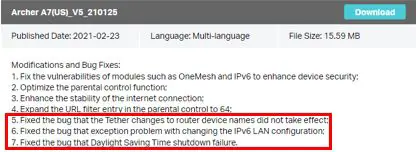
    Can I Move My WiFi Router to Another House?
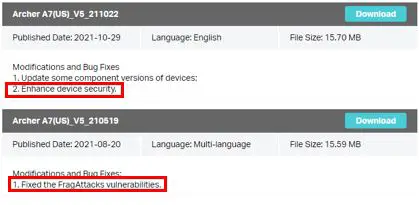
    Move Wifi Router title page

    Moving can be an overwhelming experience.

    If you’re moving, the last thing you’re thinking about is if your WiFi router will work in your new house or apartment. Chances are, this won’t cross your mind until you’re setting up your internet in the new location.

    So the question remains: can a WiFi router be moved to another house?

    As a general rule, a WiFi router can be moved to any house with a working modem and active internet connection. As long as the modem that will be connected to the router is functioning properly, the router will work regardless of its location.

    I know this may sound confusing, but I will untangle this mess for you in this post.

    I can speak from experience because I recently moved to a new house and I’m using the same modem and router that I had in my old apartment.

    Hopefully my experience will help you get your internet humming along after you move.

    My Experience Moving My WiFi Router

    When I was getting ready to move, I had the same question that you did.

    I wasn’t sure if I’d have to buy a new router for my home, or if I could use the one I already had (which was working perfectly).

    I decided to find out for myself.

    Hopefully in hearing my story you’ll understand what you might have to do with your router when you move.

    Getting a New Internet Service

    Before I go into the details of my experience, there’s important background you should know first.

    When I was moving, I didn’t transfer my existing internet plan.

    I needed to start a new internet plan, because my roommate was in charge of our internet account at my previous apartment. Both my previous internet plan and new internet plan were for cable internet.

    On top of that, I rented a modem and router combination device from my ISP for a few months before setting up my own modem and router.

    Why is this important?

    As you’ll see later, this caused me to register my modem with the ISP to get my internet working.

    Now that the necessary background information is out of the way, let’s get into the experiment.

    Setting Up My Own WiFi Router

    Let me set the scene.

    At this point I had a working internet connection at my new home. I was using my the modem and router combination device that I was renting from my ISP.

    This is what my internet setup looked like:

    modem router combo device

    I was all packed up and ready to move from my apartment. At this point I wanted to set up my own modem and router in the new place.

    I unplugged the modem and router at my apartment and moved them to my new home.

    To make the setup easier, I put my rented modem and router combo device next to my own modem and router. That way, I’d be able to easily unplug the rented device and connect my own devices.

    At this point, here’s what it looked like.

    Rented modem router combo with owned modem and router

    It was time to connect my own modem and router to my internet connection.

    First, I made sure the rented modem and router combo device was powered off. Then I removed the internet cable from the back of the device.

    Rented modem router combo internet cable

    I attached the internet cable to the internet port of the modem that I own.

    Back of modem with internet cable plugged in

    Next, I connected my modem and router together with an ethernet cable.

    Lastly, I plugged both the power cords of my modem and router into outlets and crossed my fingers. Both of my devices powered on.

    At this point, I was expecting my internet connection to start up and work like it did in my old apartment.

    Unfortunately that’s not what happened.

    Further Modem and Router Configuration

    Much to my surprise, a few of the lights on my modem and router lit up orange instead of green.

    Here’s what my modem looked like:

    Modem with no internet

    My router looked like this:

    Router with no internet

    The bad news was that my internet wasn’t working and there seemed to be a problem with my modem and router.

    The good news?

    I knew what my modem lights and router lights were telling me. Something was wrong with my internet connection to my ISP.

    To confirm this, I tried logging into my router’s settings. Here’s the notification I got.

    Router internet connection error notification

    Thankfully, the fix was an easy one.

    All I had to do was register the MAC address of my modem with my ISP. Once I did this (through my phone using the ISP’s setup app), the lights on both my modem and router turned green.

    Here’s my modem after I registered its MAC address with the ISP:

    Modem working internet

    And here’s what my router looked like.

    Router with internet connection

    No further configuration was needed for my router. Once the modem was registered with the ISP, it was able to get a good internet connection from my modem.

    As you can guess, I was able to get an internet connection once the lights on my modem and router were all green on both devices.

    I was relieved to be able to move my WiFi router to a different location without having to buy a new one. I was equally as happy that I could do the same with my modem.

    The experiment was a success. I was able to put all my internet worries behind me and focus on the task at hand: moving the rest of my stuff to my new home.

    Things to Think About When Moving a Router to a New Location

    There are a few things I learned from my experiment with moving my WiFi router that are important to consider if you’re looking to do the same thing.

    Considerations when moving your router to a new location

    Your Router Is Compatible With All ISPs

    When you’re moving your WiFi router, you don’t have to worry about the ISP you’re using. Routers work regardless of the ISP you have an internet plan with.

    This is a bigger issue with modems. You need to make sure your modem is compatible with your ISP, or else it won’t work. If your modem won’t work, you won’t have internet access.

    Your Router Will Work With Most Modems

    Let’s say you’re moving and you’ll have a different ISP for your new home. As a result, you need to get a new modem that’s compatible with your new internet provider.

    If this applies to you, you shouldn’t have to worry about your router. Routers that are used in home networks are compatible with the vast majority of modems. As long as they both have an RJ45 ethernet port (which almost all of them do), you should be in good shape.

    What to Do if You Are Transferring Your Internet Plan

    If you’re moving to an area where you can keep the same internet service provider, you should be able to transfer your internet service to the new location. This makes things easier on you because you won’t have to cancel your existing plan and go through the hassle of starting a new one.

    When it comes to your router, you won’t have to worry about anything in this situation. So long as your modem is compatible with the ISP, it will work.

    The only thing you may have to do is re-register your modem with your ISP at the new location. From there your router will be up and running.

    What to Do if You Are Getting a New Internet Plan

    Things aren’t much different if you sign up for a new internet plan. If this is the case, you won’t have to worry about your router as long as your modem works with the ISP.

    The only consideration is if you sign up for a new internet plan with faster speeds. Depending upon the type of router your have, you may need to upgrade it so it can keep up with your internet plan.

    If your router isn’t built to handle your internet plan, it can slow down your home internet.

    Will My Wireless Networks Change if I Move My Router to A Different Location?

    This is a big question that gets asked frequently.

    If you move your router to a new location (and potentially get a new internet plan), will you have to set up your wireless networks again? Or will they stay the same?

    When I moved my WiFi router to my new home, my wireless network names and passwords stayed the same. It was like I never left my previous apartment.

    The reason for this is that your router has memory in it. When you change your router’s settings they get saved in your router’s memory. A perfect example of this is your wireless network names. Even when your device is turned off, it keeps that information in its memory for the next time it powers up.

    This was a huge benefit for me.

    All of my wireless devices automatically connected to my WiFi because they remembered the names of my wireless networks. This saved me from having to connect all my wireless devices to the internet again.

    It was as if I never left my old apartment.

    Will My Router’s IP Address Change if I Move to Another House?
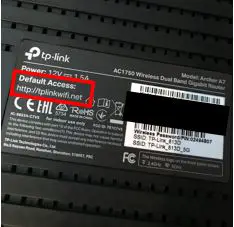
    Before I answer this question, it’s important to note that routers have two IP addresses. One IP address is used for your internal home network and is usually 192.168.0.1 or a similar address. The other IP address is externally facing. This IP address is used to allow devices on the internet to find the devices on your home network and vice versa.

    Unless you’re moving to a location very close to where you were before, the external IP address of your router will most likely change. The internal IP address of your router will not change (unless you manually change it).

    IP addresses are tied to geographic areas. If you move your WiFi router to a new house the geographic location of your device will also change.

    This is not something you need to worry about.

    Your external IP address change will happen automatically, as your modem will be assigned an IP address from you ISP. No action is required on your part.

    In fact, you won’t even notice this has happened unless you have devices in your home network that can be accessed over the internet. If this sounds like your situation, you will need to reconfigure those devices for the new IP address.

    Wrap Up

    Hopefully your anxiety about moving your WiFi router to a new home or location has been relieved. You shouldn’t have much trouble moving it to your new home and keeping the same wireless networks that you had before.

    If you have any questions or you would like to share your experiences about moving your router, please drop a comment below.

    If you found this article interesting, you might be interested in these related topics as well:

    What Do My Router Lights Mean?

    What Do the Lights on My Modem Mean?

    Does a Router Affect Your WiFi Speed?

    Different Types of Internet Connections

    What is a Modem Router Combo?

  • What is a Modem Router Combo?

    What is a Modem Router Combo?

    Modem router combo title page

    Buying a modem and router for your home internet can be a daunting task. There are many different modems and routers to choose from and it can be overwhelming. On top of that, if you don’t buy the right devices your internet speed can be greatly reduced.

    Thankfully, there’s an easy way to solve this problem.

    The solution is a modem router combo device.

    A modem router combo is a home networking device that combines the functionality of a modem and router into one device. It functions the same way as a separate modem and router does, in that it establishes an internet connection to an internet service provider (ISP) and broadcasts a wireless network.

    In this post we’ll take an in-depth look at modem router combinations so you can determine if it’s the right device for your home network.

    What Does a Modem Router Combo Do?

    Let’s start with the basics here.

    A modem and router combination device provides you with all you need to access the internet from your home. This includes connecting your home to your ISP, as well as providing a wireless network for your devices.

    It’s basically a one-stop shop for your home internet.

    What Is the Difference Between a Standalone Router and a Modem Router Combo?

    You’re probably wondering what the difference is between a regular router and a modem and router combination device.

    The biggest difference is that a router on its own doesn’t provide you with all you need to access the internet.

    A router allows your devices to interact with the internet once an internet connection is already in place. It’s also used to take the already-established internet connection and create a wireless network in your home for your wireless devices to access the internet.

    The key here is that on its own, your router can’t provide your devices with access to the internet.

    That’s where the modem comes in.

    A modem provides the internet connection that the router uses to make a wireless network. You need both a modem and router to create a working home internet network.

    Using a router on its own to access the internet would be like trying to drive a train without train tracks. It simply won’t work.

    That’s why a modem and router combination device can be so useful. As long as you have an internet plan, you can be confident that your home network will work well.

    What Does a Router and Modem Combination Device Look Like?

    Now that we know what a modem router combo does, let’s dive into what they look like.

    The biggest difference you’ll notice is that modem and router combination devices are much simpler than standalone modems and routers.

    In a combination device the modem and router are already connected within the piece of equipment. In other words, you don’t have to do anything to make sure they’re working properly with each other.

    When the modem and router are separate, they need to be manually connected. On top of that, each standalone device needs its own connection to a power source, so each one will have its own power cord. Combination devices only need one power cord because it’s only one device.

    Here’s what the front of a modem router combination device looks like:

    modem router combo front

    See? It looks pretty clean and simple.
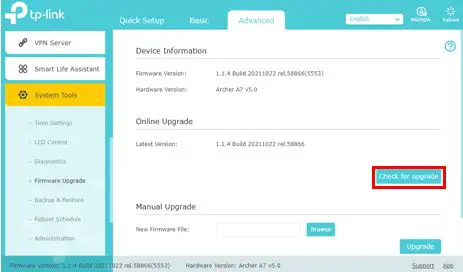
    Now, let’s take a look at the front of a modem and router that are standalone devices.

    Front of standalone modem
    The front of a standalone modem
    Front of standalone router
    The front of a standalone router

    Not too overwhelming at this point right?

    You might think differently after comparing the back of a modem router combination device and a standalone modem and router.

    Here’s what the back of a modem router combination device looks like:

    back of modem router combo

    Just like the front, the back of the modem router combo is very simple as well.

    How about the modem and router standalone devices? How do they look?

    Here’s what the back of a standalone modem looks like:

    Back of standalone modem

    Seems simple enough. In fact, it doesn’t look too different from the modem router combination device.

    What if we throw a router into the mix? What does the back of a standalone router look like?
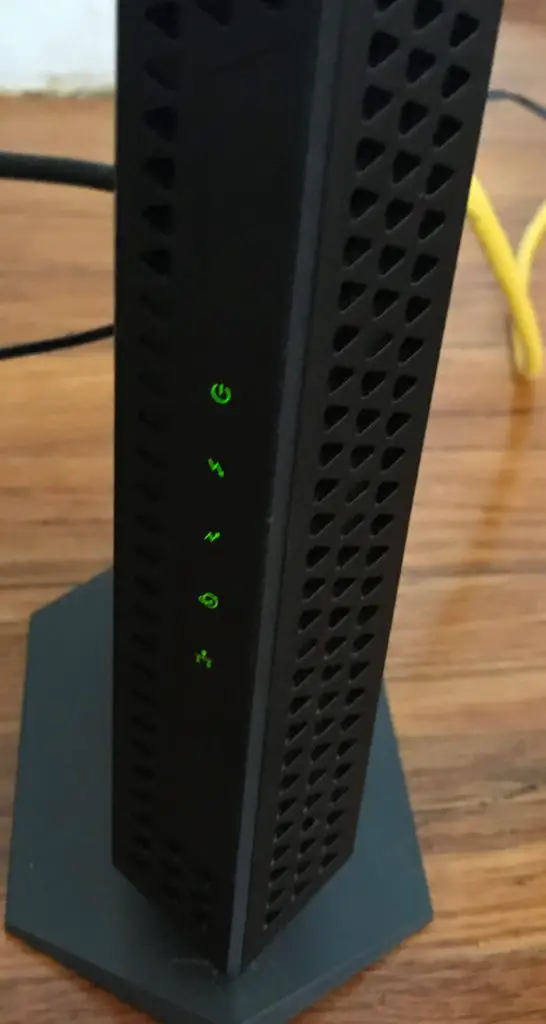
    Back of standalone router

    As you can see, the back of a standalone router is much more complex than the back of a modem router combination or a standalone modem.

    This level of complexity is what can make a non-technical person feel uneasy. Especially considering the fact that you need to make sure both the modem and router are connected correctly when you buy them as separate devices.

    Reasons to Buy a Modem Router Combination Device

    A modem and router combo can be very useful depending upon your personal situation. Before running out and buying one, it’s important to understand the benefits of these devices.

    Let’s take a look at the situations where a modem router combo provides the most value.

    Reasons to buy a modem router combination device

    When You Want an Easy Solution That Works Well With Your Internet Plan

    I’ll just come out and say it.

    Finding a modem and router that maximizes the speed of your internet plan can be a challenging task.

    If you buy a standalone modem or router that doesn’t meet the needs of your internet plan, it can greatly reduce your internet speed. The last thing you want to do is pay a lot of money for a high speed internet plan and not get the most out of it.

    I know, this is an intimidating concept.

    In buying a modem router combo, you can save yourself hours of researching which individual modems and routers would optimize your internet speed. On top of that, you can rest easy knowing your modem and router will work well together.

    A modem router combination removes several of the variables that go into your home internet speed. The less factors you have to worry about when setting up your home internet, the easier it is to get the performance you want out of your internet plan.

    If You Want a Simple and Easy Way to Set Up Your Home Internet

    I hinted at this earlier when detailing what a modem router combination looks like, but it’s important to hammer this point home.

    If you don’t consider yourself a technical person and you get overwhelmed by the gadgets in your home, a modem router combo may be a great option for you. They’re much easier to configure and manage than individual modems and routers.

    Sure, modem and router combos may not be as customizable as standalone devices, but if you’re not a very technical person you probably wouldn’t be utilizing those capabilities anyway.

    With a modem router combo you’re choosing simplicity and functionality over high customizability. In other words, you’re ensuring your modem and router work well together at the expense of some advanced technical features.

    If you just want a solution that will give you good internet performance and you’re not worried about squeezing every last drop of horsepower out of your internet devices, a modem router combination may be a good choice.

    If You Want Your Internet Devices to Take Up as Little Space as Possible

    This should be fairly obvious at this point.

    When you have a separate modem and router, you’re dealing with two devices. That means you need to have the physical space for both of them in your home.

    This doesn’t mean you can stack them on top of each other either.

    Modems and routers need to be in open spaces that get good air flow. If you don’t give these devices enough space, you run the risk of your modem or router overheating.

    Nobody wants that, especially the internet users in your home.

    The other consideration is that each device has its own power cord. Thankfully, it’s good practice to plug these devices into a surge protector.

    If you already have a surge protector and it’s running short on available outlets, it’s much more convenient to only need one for your home internet setup. This is a minor consideration because surge protectors are cheap, but it’s still a consideration nonetheless.

    The bottom line is, if you’re going for a minimalist look with as few devices and tumbleweeds of cables as possible, a modem router combination device is worth considering.

    If You Want to Save Money on Your Home Internet Setup

    Another consideration to think about is your budget.

    In general, modem router combinations are cheaper than buying a modem and router separately.

    If you’re on a tight budget, you can probably save a few bucks by buying the combo device.

    One thing I will add is that you should keep your future plans in mind here. If you plan on upgrading your internet devices in the future, with a separate modem and router you can upgrade each one individually.

    Separate devices can save you money in the long run, because if you want to upgrade a modem router combo you have to buy a whole new one each time you want to upgrade.

    In addition, router technology has been advancing much faster than modem technology. As a result, you can probably get away with upgrading your router a few times before you have to upgrade your modem. In this scenario it’s cheaper in the long run to have a separate modem and router.

    With that said, if you don’t see your internet needs changing and don’t plan on upgrading your devices anytime soon, you’ll probably save some money by buying a modem router combo.

    Should I Buy a Modem Router Combo?
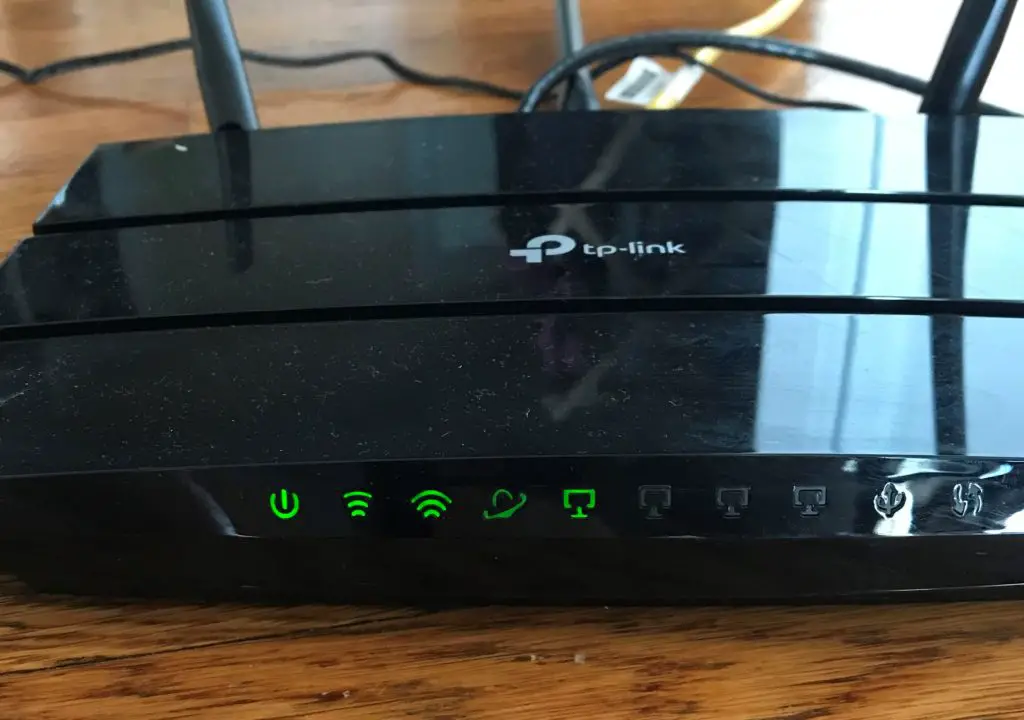
    If you like what you’ve read so far about modem router combinations, I have some advice before you run out and buy one.

    Test drive one first.

    In many cases if you rent a router from your ISP, they’ll provide you with a modem router combination device.

    I’d suggest keeping what you have now and renting a modem router combination device from your ISP for a few months. They’re usually pretty cheap to rent (around $10 per month), so it’s worth trying one out. Worst case scenario is if you don’t like it, you can go back to what you were using before.

    Keep in mind that the devices provided by your ISP are pretty general in nature and usually aren’t designed for your particular internet plan.

    What does this mean?

    It means you can probably get slightly better performance out of a modem router combo that you buy for your specific internet plan. In other words, if you like the performance you get out of the device you get from your ISP, you’ll probably be able to get even better performance if you buy your own.

    You’ll ensure you’re happy with your decision if you try before you buy. Even if you’re curious about how modem router combinations work, it’s worth the short money to find out for yourself.

    What Modem Router Combo Should I Buy?

    If you’re convinced that a modem router combo is the best fit for your home, there are a few I can recommend.

    The Budget Friendly Option

    If you just want a modem router combination that works and you have basic internet needs, you can get really good bang for your buck with the Netgear C6220.

    This modem router combo supports internet speeds up to 200 Mbps. This means it’ll work well for you if your internet plan is for speeds up to 200 Mbps. If your internet plan provides more than 200 Mbps, you’ll want to go in a different direction.

    Most small families should get good performance out of their internet with 200 Mbps. If this is your situation, give this device a shot.

    For More Demanding Internet Needs

    If you need more than 200 Mbps to satisfy your internet needs, you can take a step up with the Arris Surfboard SBG7600AC2.

    The Surfboard can support internet speeds up to 800 Mbps, so it’s a step up from the Netgear C6220. This’ll be a better fit for larger families where there are multiple people on the internet at all times.

    If you have multiple people streaming and gaming at the same time, you won’t have any problems with this modem and router device (as long as your internet plan can support it).

    This router is more expensive than the Netgear C6220, but it serves as a good middle ground if you want a good option that isn’t super expensive.

    If you’re looking for off-the-charts performance at a higher price point, check out the next modem router combination device on the list.

    Top of the Line

    If you want to swing for the fences and budget isn’t a concern for you, you might want to try the Netgear Nighthawk AX6000.

    This modem router combination is one of the best in the business. It will undoubtedly meet any of your home internet needs.

    If you want to online game? Check.

    If you have a large family that always has multiple devices streaming? Check.

    If you have a blazing fast internet plan? This device has you covered.

    In addition to the fact that it can support gigabit internet speeds, it also has WiFi 6 capability. This is the latest and greatest WiFi technology that allows for faster internet speeds. WiFi 6 can also support more devices at the same time when compared to the previous WiFi technology.

    If you decide to buy this device you’ll future-proof your home internet and you won’t have to buy a new modem router device for a long time.

    Wrap Up

    I hope you now have a good understanding of what modem router combination devices are, and why you might want to consider buying one.

    If you have any questions or want to share your experiences with these devices, please feel free to drop a comment in the section below.

    If you found this reading interesting, check out some previous posts on similar topics:

    Can a Modem Overheat? What to Look For

    Can a Router Overheat? A Detailed Analysis

    Does a Router Affect Your WiFi Speed?

    Does Your Modem Affect Your Internet Speed?

    Can an Ethernet Cable Slow Your Internet Speed?

  • How to Factory Reset Your Router

    How to Factory Reset Your Router

    Factory Reset Router title page

    Your router is a very important piece of your home internet connection. It’s a complex device that offers a great deal of configuration options.

    Sometimes, making changes to your router can have negative affects on your home internet’s performance. Other times, you forget your router’s username and password and can’t even log in to change its settings.

    The good news is there’s a safe way to restore your router to good health.

    I’m taking about the factory reset option.

    But how exactly is this accomplished?

    A factory reset is performed on a router by manually pressing the reset button on the device. This can also be accomplished by accessing the router’s settings page with a device like a laptop or mobile phone and navigating to the advanced settings page.

    In this post I’ll provide a detailed approach to performing a factory reset on your router, including when you should do it and the steps you should take immediately after a reset.

    When Should I Factory Reset My Router?

    There are several cases where a factory reset makes sense. Let’s take a look at each situation.

    When You Can’t Log in to Your Router

    Have you ever created a password for an account, only to forget it at a later date?

    I’m sure we’ve all been there before.

    This is probably the most common reason for performing a factory reboot on your router. If you can’t get into your router to change any of its settings, you’re only option is to restore it to its default settings.

    By performing a factory reset on your router, your username and password will become the default values that they were when you first got the router. Unfortunately this also makes your router much less secure, but we’ll get into that later on.

    As a note, before you factory reset your router, you should first try to log in to it with the router’s default username and password. Your default username and password can be found on a sticker on the device or in the router’s user manual. Most of the time, people never change their router’s password in the first place.

    If the default username and password don’t work and you want to access your router, you should give it a factory reset.

    When Your Router Is Performing Poorly

    If your home internet starts acting funky, it may have something to do with your router.

    Your router is an important piece of your home internet. If your internet connections slow to a crawl or you have trouble connecting to the internet on a regular basis, there may be a configuration setting holding it back.

    In this case, there are a few things you can try before restoring your router to its default settings. The first step is to perform a reboot of your router (you can even set it to automatically reboot on a schedule if you have consistent issues). If that doesn’t solve your issues you may want to try rebooting your modem as well.

    If both of those options don’t solve your problems, a factory reset might be the next thing to try. Its possible that starting over with your router might clear up whatever was slowing it down.

    Keep in mind that there may be times when even a factory reset won’t help your situation. For example, if you have an old router its performance will slowly degrade over time and you will eventually have to replace it.

    When You’re Not Sure What Setting Is Causing Poor Router Performance

    As I previously mentioned, your router is highly customizable.

    You can configure it as much or as little as you like. The problem with this is, if you make too many changes to your settings, it’s hard to keep track of them all.

    If making changes to your router causes poor internet performance, how do you know what setting is causing it?

    Unless you’re a highly technical person, it can be very hard to tell.

    Sometimes it’s just easier to start with a clean slate.

    A factory reset allows you to do just that.

    To avoid making too many changes at once that may slow your internet performance, I recommend making a few settings changes to your router at a time. After making a few changes to your settings, test your internet’s performance. If it’s working properly, move on and make additional changes.

    If you want to play it safe, you can even save your settings after you’ve confirmed that your internet is performing well with them. This will allow you to return your router to a working configuration at a later time if you’re experiencing problems.

    What Happens if I Factory Reset My Router?

    Before we dive into how to perform a factory reset on your router, let’s talk about what a factory reset does first.

    A factory reset will cause drastic changes to your home network. It’s important to understand what these changes are so you’re not surprised when you perform a reset.

    A Factory Reset Changes the Router Login Information

    When you restore your router to its factory settings, your router’s login password will be restored to its default value. This is the password that’s used to access and change the routers settings.

    As you’ll see later, you may have the option to reset your router’s settings while keeping the password you set for it, but depending upon your router you may not have this option.

    A Factory Reset Changes WiFi Network Names and Passwords

    Do you remember the first time you set up your router?

    If you do, you probably remember how your WiFi network names were very generic. On top of that, the passwords for these networks were random and hard to remember.

    After resetting your router to its factory settings, your wireless network names and passwords will revert back to what they were when you first set up your router.

    Many people don’t think of this when they factory reset their router.

    When you think about how many devices you have connected to your wireless network, you realize how much work you’ll have to do after a factory reset.

    You’ll have to reconnect all your devices to your WiFi, unless you rename your wireless networks to exactly what they were before. You’ll also have to change the passwords for these networks to the same as they were before if you want your devices to automatically reconnect.

    This is not an argument against performing a factory reset on your router. I just want you to be aware of the actions you’ll need to take after you perform the factory reset.

    A Factory Reset Changes All Your Security and Configuration Settings to Their Default Values

    This is what most people think of when they perform a factory reset.

    All of your router’s settings will revert back to their original state, which is their default values.

    There are tons of different settings changes you can make on your router, but some of the settings that will be reset include:

    • Security settings such as the type of encryption used
    • Any automatic reboot schedule that’s in place
    • The wireless channels the router uses, if you set it to use specific channels
    • Access restrictions or parental controls on the router
    • The DNS the router uses

    The list goes on and on. It’s important to take a minute and think about all the customization you’ve made on your router before you reset it. Make a list of the settings changes you’ll have to go in and change again after the factory reset is completed.

    The more prepared you are for the factory reset, the easier it’ll be to get your internet up and running as you want it.

    How to Reset Your Router to Factory Settings

    There are two ways to reset your router to its factory settings. You can either manually perform a factory reset by pressing a button on your router, or you can reset your router through its settings console.

    Performing a Factory Reset by Pressing the Factory Reset Button on the Device

    Using the reset button on your router to perform a factory reset it is a fairly simple process.

    You’ll first need to get an object with a point like a push pin or a paper clip that has been straightened out.

    Paperclip to reset router

    Next, you’ll want to locate the reset button on your router. It should be clearly labeled and located somewhere on the back of the router.

    For example, here’s the back of my TP-Link Archer A7 router:

    Reset button on back of router

    As you can see, the reset button is located in a little hole. This is to prevent the button from accidentally being pressed.

    To factory reset your router, press and hold the reset button for 7 seconds, or until the power LED light on the front of the router blinks.

    Router factory reset button

    Once the router powers back on and connects to the internet, it will have its default settings in place.

    Performing a Factory Reset by Accessing Your Router’s Settings Console

    You can also reset your modem to its factory settings with your computer.

    To do this, you’ll need to log in to your router to access its settings.

    The first step is to enter your router’s IP address or default access location into your browser. If you’re unsure of your router’s IP address, look for a sticker on the device.

    On my TP-Link Archer A7 router, the sticker is on the bottom of the router.

    Archer A7 Default Access Location

    I also know that my router’s IP address is 192.168.0.1 (which is the case for a lot of routers), so I can just type that into my browser.

    Router IP Address In Browser

    This will bring you to the login page of your router. Enter your username and password to gain access to your router’s settings.

    Router login page

    If you don’t remember your router’s username and password, you’ll have to factory reset your router with the manual method above.

    Once you’re logged in to your router, you’ll need to access the advanced settings page. This is where you’ll most likely find the factory reset option.

    Router Advanced Settings Page

    The advanced settings page will provide you with tons of options for customizing your router. As is the case with my router, the advanced settings are broken into categories.

    For my router, I need to access the System Tools category to get to the factory reset option.

    Router System Tools Category

    After clicking the System Tools category, a list of subcategories is displayed. From this list I can select Backup and Restore, which brings me to the settings page I want.

    Router Backup And Restore Subcategory

    On the Backup and Restore subcategory page, I can access the option to perform a factory reset of my router.

    Router Factory Default Reset Options

    As you can see, there are multiple options for resetting your router to its default settings.

    Resetting Your Router’s Settings to Their Default Values and Keeping Your Login Information

    Since you know the username and password of your router (you need this information to log in to your router’s settings in the first place), you may just want to return all your router’s settings to their default values and keep your login and cloud information.

    Keeping your login information will be useful for you if you made a settings change that is causing poor internet performance, but you’re not sure what setting is causing it.

    With this option you’ll get back up and running faster. You won’t have to create a new cloud account or change your router’s password away from the default value.

    This will probably be the best choice for most people who want to perform a factory reset on their router.

    Resetting All Configuration Settings to Default Values

    Resetting all of your router’s settings to their default values will return your router to a completely new condition.

    In other words, every setting on the router will be returned to what it was when you first got it.

    This is a good option if you want to start over with a clean slate and create new login information for your router.

    It’s also a smart choice if you want to sell your router or return it to the store. You’ll want to wipe it clean before you hand it over to someone else.

    Next Steps After Performing a Factory Reset on Your Router

    If you perform a factory reset where all your configuration settings are reset to their default values, there are a few next steps you should take.

    Log in to Your Router

    The first step is to log in to your router’s settings console. You’ll need to do this with your router’s default username and password. You can follow the steps detailed above to log in to your router.

    Change Your Router’s Default Password

    Once you’ve logged in, you should first change your password away from the default value.

    Keeping your routers default password is a huge security risk.

    The default password of your router isn’t a secret. Chances are, there are many websites that list your router’s exact default username and password.

    Check out this site for example.

    See? Your router’s login information is more available than you might think.

    What does this mean?

    It means if a hacker was to get access to your home network, he or she would be able to log in to your router and make any changes to it that they want.

    Yikes. That’s scary.

    The good news is, changing your router’s password to something you know will go a long way toward making it more secure.

    Change Your Wireless Network Names and Passwords

    While you’re changing your other settings, you should change the names of your wireless networks as well.

    If you don’t, every time you want to connect a new device to your home internet, you’ll have to look up what the names of your networks are.

    It’s much easier to just change your networks to names that you’ll easily remember.

    Along these same lines, you should change the passwords to these newly named networks as well.

    Trust me. You’ll thank me later when your friends and family come over and want to use your WiFi.

    Make Any Desired Security Settings Changes

    The last (and definitely not the least) important changes you should make to your router after a factory reset are to make sure your security settings are in good shape.

    Two of the most important are to disable WPS on your router, and to make sure you’re using the best encryption for your wireless connections (AES with WPA2).

    These changes, along with changing the default password for your router, will zip up your router and home internet pretty tightly.

    Of course, there are additional security measures you can take, but these are the heavy hitters that you can take care of easily while setting up your router after a factory reset.

    Wrap Up

    There you have it folks. That’s the most important information you should consider when you’re thinking about performing a factory reset on your router.

    Make sure you understand exactly how a factory reset will impact your home network so you’re ready to get back up and running after your router turns back on.

    As always, if you have any questions or want to share your experiences, please feel free to drop a comment below.

    If you found this post interesting, here are some related posts I’ve written for your viewing pleasure:

    How to Automatically Reboot Your Router for Better Internet Connections

    Does a Router Affect Your WiFi Speed?

    What Do My Router Lights Mean?

    Can a Router Overheat? A Detailed Analysis

    Why Do Routers Have Multiple Antennas?