Category: Routers

This category pertains to content related to routers

  • Can a Router Affect My Upload Speed? What to Look At Instead

    Can a Router Affect My Upload Speed? What to Look At Instead

    Can a Router Affect My Upload Speed Title Picture

    In recent years, upload speed has become a more important part of internet plans.

    More than ever before, people are connecting to the internet to:

    • Participate in video conferences
    • Upload documents to a shared location when working from home
    • Upload videos to YouTube
    • Stream live gaming sessions

    The common requirement of all of these activities is the need for upload speed. An increased frequency of these activities has led to more analysis of a network’s upload speed than ever before.

    When poor upload performance is experienced, the first device people blame is their router.

    So the question is, does your router affect the upload speed of your home network?

    In most cases, a router will have no impact on the upload speed of an internet plan. Most routers can support internet speeds much faster than the maximum upload speed provided by an internet plan. As a result, the router is almost never the reason for poor upload performance.

    In this post, I’ll discuss why your router shouldn’t impact the upload speed of your internet plan. I’ll also talk about the main factor that determines the upload speed of your network.

    Will Your Router Impact the Upload Speed of Your Network?

    To put it simply, you shouldn’t be looking at your router as the reason why you have a low upload speed.

    The reason you have low upload speed in your home network is because of your internet plan. Your internet provider likely provides a low upload speed when compared to the download speed it supports as part of your internet plan. This is by design due to the nature of how people use the internet in their homes.

    Why Your Router Does Not Affect Your Upload Speed

    Routers are designed to support the heavy download requirements of a given home network. This is why you’ll see routers that can support internet speeds of 600 megabits per second (Mbps) or faster.

    As an aside, if you’re curious about finding out the speed your router can support, check out the article I wrote that details what you need to do to find out.

    So let’s say you have an internet plan that provides up to 600 Mbps of download speed. An internet plan with that kind of download speed probably supports a maximum upload speed of about 10 Mbps.

    For an example of the major difference between upload and download speeds provided by an internet plan, look no further than my internet.

    I ran a speed test on my home network and these are the results I got:
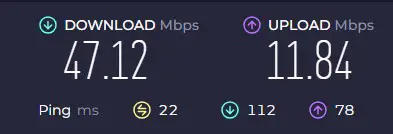
    Upload and download speed test results
    The download speed of my network is more than four times faster than the upload speed

    As you can see, the download speed of my home network is much faster than the upload speed of my network.

    Keep this difference in mind when thinking about what your router is designed to do. Your router is designed to support the fastest speed of data through your network, regardless of the direction the data is going in (to or from the internet provider).

    If a router can’t support the maximum speed of a given internet plan, it’ll serve as a bottleneck and slow down the entire network.

    So if a router can support the maximum download speed of an internet plan, it won’t have any problem supporting the upload speed of the plan. This is why routers are designed to support the maximum download speed of an internet plan.

    This is also why your router won’t have any impact on the upload speed of your network.

    In my case, my router would have to support a maximum internet speed of less than 10 Mbps in order for it to affect my upload speed.

    They don’t even make routers that supports speeds that slow anymore. Not to mention, I wouldn’t be able to do much on the internet if my router supported download speeds of less than 10 Mbps.

    So if your router won’t affect the upload speed of your network, what will?

    What Impacts the Upload Speed of a Network?

    When it comes to your network’s upload speed, there’s really only one variable that matters.

    I’m talking about your internet plan.

    As I previously mentioned, you don’t have to worry about your router’s limitations reducing your upload speed. This means that your router will support just about any upload speed that your internet provider can handle.

    All the other variables that may impact the download speed of your internet plan won’t come into play with your upload speed because of how slow upload speeds are in comparison.

    Namely, I’m referring to your modem and ethernet cables here. It’s possible that these things can limit your download speed if they aren’t sized properly. The fact of the matter is, even the slowest modem and ethernet cable can support upload speeds of 10 Mbps. You’re much more likely to see your modem or ethernet cables limit the download speed of your internet plan than your upload speed.

    So if you’re looking to increase the upload speed of your network, you need to look at your internet plan.

    How Do I Improve the Upload Speed of My Network?

    If you’re currently unsatisfied with the upload speed of your network, your only choice is to look at upgrading your internet plan.

    Unfortunately, your options might be limited here.

    You may have to pay significantly more for a marginal increase in upload speed (10-20 Mbps). Simply put, internet providers don’t support fast upload speeds as part of their traditional internet plans. You will likely find this to be the case with the most common types of internet plans like cable and DSL internet plans.

    With that said, if you have a need for blazing upload speeds, you might have another option.

    You might be able to upgrade to a fiber internet plan.

    Fiber internet plans are different from cable and DSL internet plans because they support upload speeds that are equal to the download speeds of the plan.

    In other words, if your fiber internet plan supports 1 gigabit per second (1,000 Mbps) of download speed, it’ll support 1 gigabit per second of upload speed. This is due to how fiber optic internet cables transfer data when compared to DSL and cable internet plans.

    That’s a topic for another day.

    Before you get too excited, you should know that fiber internet plans aren’t available to everyone. Although the availability of fiber internet plans is improving, the Fiber Broadband Association (FBA) indicated that 43% of the United States has access to fiber internet in 2022.

    Even if fiber is available in your area, in many cases it doesn’t come cheaply. Chances are, you’ll have to pay more than your current DSL or cable internet plan if you want to upgrade to fiber.

    With limited other choices for improving the upload speed of your network, you might find it worth the price.

    Wrap Up

    You don’t have to worry about your router limiting the upload speed of your network.

    If you’d like to improve your network’s upload speed, the only variable you need to look at is your internet plan. You’ll need to increase the maximum upload speed of your internet plan if you want better upload performance.

    If you have any questions about the information I presented in this post, please leave a comment below.

    If you’re interested in learning more about similar topics, check out these other articles I’ve previously written:

    What Speed Can My Router Handle? What You Need to Look At

    Do Cable Modems Work With Fiber? The Device You Really Need

    Will a New Router Increase Internet Speed? An Explanation
    Does a Router Affect Your WiFi Speed?

    Can I Move My WiFi Router to Another House?

  • Does a Router Encrypt Data? What Settings You Should Look at

    Does a Router Encrypt Data? What Settings You Should Look at

    Does a Router Encrypt Data Title Picture

    In this day and age, just about everyone uses wireless devices to send sensitive and personal information over WiFi.

    The risk that comes with this activity is that it provides hackers with the opportunity to steal this information as it’s sent through the air between devices.

    Thankfully, there are devices in your home network that can help protect you when you’re sending data wirelessly.

    Your router is a perfect example of this.

    So how does your router protect your personal information that’s sent over WiFi? Does a router encrypt your data, or is there a different way that it protects your communications?

    In general, all modern routers encrypt communications with devices connected to their wireless networks. Encrypting communications between devices on the network ensures that data sent over WiFi cannot be read by nearby devices that are not intended to receive it.

    In this post, I’ll break down how routers protect their communications using encryption. I’ll also talk about how you can verify that your router’s encryption settings are configured correctly.

    How Do I Know if My Router Is Encrypted?

    When it comes to router encryption, I have some good news and bad news.

    I’ll start with the good news first.

    The good news is that your router most likely has encryption enabled by default. In other words, your router will automatically encrypt communications between it and your devices.

    And the bad news?

    The bad news is, even if your router has encryption enabled, your data might not be totally safe.

    The reason for this is because the safety of your devices’ communications depends upon the type of encryption that your router is using.

    Unfortunately, not all encryption is created equal.

    The fact is, some encryption methods don’t do a great job of protecting your data because they can be cracked by hackers.

    For example, if a given encryption key isn’t strong enough, hackers can actually reverse engineer the encryption key that’s being used. Once they’ve figured out the encryption key used in a message transmission, they can read the messages between your device and your router.

    It doesn’t matter that the communication was encrypted.

    So even if your router has encryption enabled, you need to verify that the right encryption settings are in place.

    If any of this information is confusing to you, don’t be overwhelmed. The next sections will hopefully clear up any confusion you have.

    How Does Router Encryption Work?

    When it comes to protecting your data, your router has quite a bit of functionality.

    Of utmost importance is it’s ability to protect the data that’s sent between it and your devices.

    This is where encryption comes in.

    So how exactly does a router encrypt your data?

    Router encryption starts with the identification of the devices it trusts. Although this might sound complicated, it’s really not.

    Your router trusts the devices that’re able to connect to it by providing the correct password for its wireless networks. After all, the only devices that’re connected to a router in the first place should be the ones that have been trusted with the password for the network.

    This highlights the need for unique passwords for your router’s wireless networks, but that’s a topic for a another time.

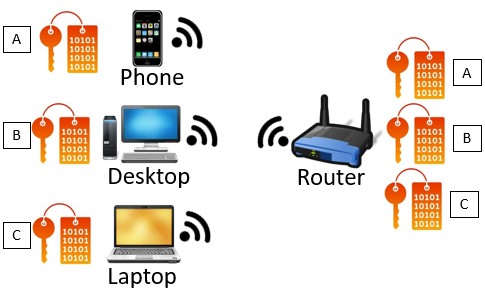
    When a device joins a router’s wireless network, an encryption key is established between the device and the router. This encryption key is used to scramble the data that the two devices send to each other.

    Shared encryption key between router and device
    When a device joins a router’s network, an encryption key is shared between the devices

    Think of the encryption key like a decoder ring.

    When data is sent from a device to the router, the decoder ring is used to scramble the message. When the router receives the message, it uses the same decoder ring to translate the message so that it’s readable.

    This is what prevents a hacker or malicious user from listening in on your device’s conversation with your router. They’re welcome to listen in on the conversation between your device and your router, but the messages won’t be useful.

    In other words, the hacker doesn’t have access to the decoder ring that your device and router used to scramble the message.

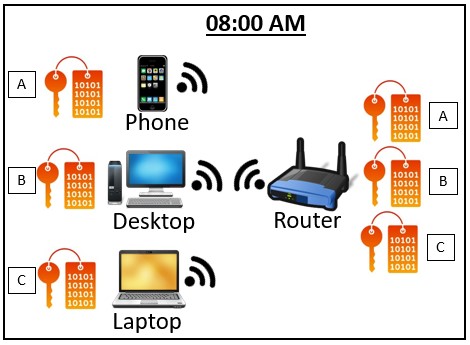
    To make things more secure, each device that connects to the router will have a different encryption key (or decoder ring) to scramble the data between the two devices.

    Router encryption keys used are different for each connected device
    A router uses different encryption keys for each device connected to it

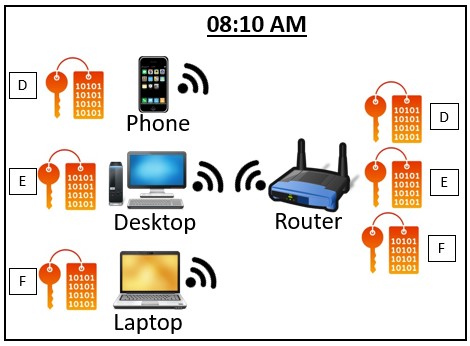
    On top of that, depending upon the type of encryption that’s used, the router and device connected to it will periodically change the decoder ring they’re using.

    Talk about a headache for anyone that’s trying to listen in on the conversation.

    That’s exactly the point.

    What Does Router Encryption Protect?

    There’s an important distinction that needs to be made when it comes to your router’s ability to encrypt communications with your devices.

    You need to understand that router encryption will only protect communications on your local network. To put this another way, your router’s encryption will not protect your devices’ communication on the open internet.

    Let me break this down.

    As I previously mentioned, when a device joins a router’s network, the device and router share an encryption key.

    The key here (pun intended) is that this encryption key only protects WiFi communication between that device and the router.

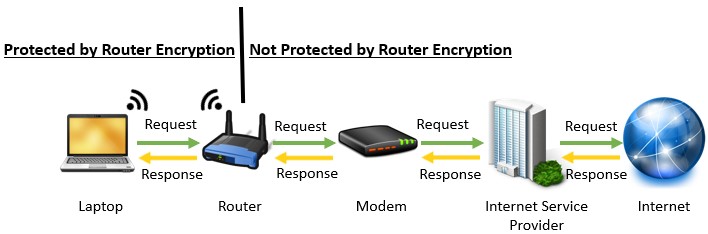
    Any communication that happens beyond the device and router communicating directly with each other isn’t protected by the router’s encryption.

    For example, when a router sends an internet request to a router, the router only encrypts the request coming to the router. Once that request is passed to the public internet, the request is no longer protected by the router’s encryption. That’s because this communication isn’t happening over WiFi. It’s happening over the internet’s backbone of wired connections.

    Router encryption protection diagram
    Router encryption only protects WiFi communications between the router and the device

    To put this another way, if your device is accessing a website on the internet, this traffic could still potentially be stolen by hackers on the open internet.

    There’s a totally separate encryption method for communication between devices and web pages, which is called Transport Layer Security (TLS).

    If TLS is in place on a website, the communication between your device and the website will be protected as well.

    TLS is a topic for another post, but the bottom line here is that you should recognize that a router using encryption doesn’t mean all your traffic is protected.

    It just means that the local communication over WiFi between the router and device will be protected.

    How to Check Your Router’s Encryption Settings

    If you’re not sure what your router’s encryption settings are, you should verify that it has the proper encryption configuration is in place.

    There’s too much at stake with your personal data to risk not encrypting your data with the strongest encryption keys.

    To do this, you first need to access your router’s settings.

    If you’re not sure how to log in to your router’s settings, fear not. I have included the necessary steps for logging in to your router in a previous post I’ve written about updating your router. Check out this post for guidance on how to log in to your router’s settings.

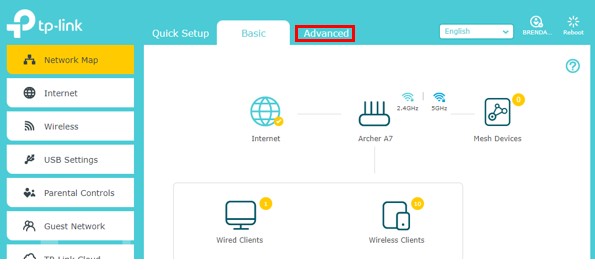
    Once you’ve logged in to your router’s settings, you need to go to the Advanced Settings tab.

    Router advanced settings tab

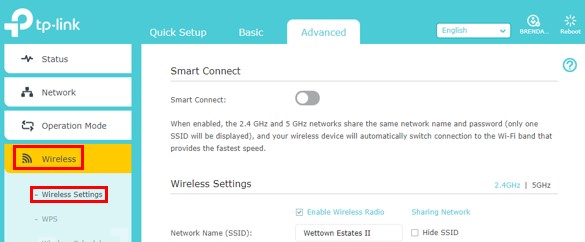
    In the Advanced settings tab, I had to go under the “Wireless” header and select “Wireless settings”. This brought me to my router’s encryption settings.

    Router advanced wireless settings tab

    Accessing your router’s encryption settings might be slightly different for you depending upon the make and model of your router. With that said, it’s a safe bet that the encryption settings will be in the Advanced settings section.

    Now that you’ve accessed your router’s encryption settings, we need to make sure they’re set correctly.

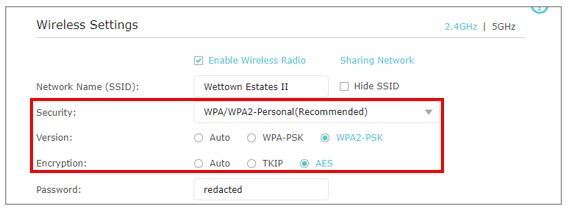
    Router encryption settings
    The router encryption settings you should be concerned about are the security setting, the version of encryption, and the encryption algorithm

    The settings you should have in place on your router are as follows:

    • WPA/WPA2-Personal for the security setting. If the router you’re configuring is for your home network, you’ll want to select “Personal” here. The “Enterprise” security version is for routers that are used in businesses and offices.
    • WPA2-PSK (WiFi Protected Access 2 Pre-Shared Key) for the encryption version. WPA2 was developed more recently than WPA-PSK and it provides security advancements to better protect your communications.
    • AES (Advanced Encryption Standard) for the encryption algorithm. This is the strongest available encryption algorithm available.

    As a side note, you don’t want to select “Auto” for any of these options.

    When Auto is selected, it lets the device determine the encryption method and algorithm that’s used.

    You want to ensure that the strongest encryption standards are always used for communication between your devices and your router. That’s why you should explicitly select the settings above. This puts your router in control of the encryption methods used to protect your data.

    Wrap Up

    At this point, you should be able to access your router’s settings and ensure that the strongest encryption settings are in place.

    If you have any questions about the information presented in this post, please drop a comment below.

    For more fascinating information on similar topics, check out these other posts I’ve written:

    Will a New Router Increase Internet Speed? An Explanation
    What Speed Can My Router Handle? What You Need to Look At

    Do You Need an Internet Connection if You Have WiFi?

    Router Ethernet Ports: Everything You Need to Know

    How Does a Router Connect to the Internet? The Basics

  • Do I Have to Rent My Router? What You Can Do Instead

    Do I Have to Rent My Router? What You Can Do Instead

    Do I Have to Rent My Router title picture

    When a contract for an internet plan is established with an internet service provider (ISP), the ISP usually provides you with a router as part of the service.

    After a contract is signed, the internet provider sends a technician to your house to activate your internet plan and set up the router for you.

    Chances are, you won’t think twice about this interaction.

    What you might not realize is that you’re renting (and paying for) the router that the technician set up for you in your home.

    The question is, does it have to be this way? Do you have to rent your router from your ISP, or are there other options?

    The router in a home network does not have to be rented from an internet service provider. As an alternative, a router can be purchased and used in a home network instead of renting a router from the ISP.

    In this post, I’ll detail all your options when it comes to the router in your home network. I’ll also talk about why there might be better options instead of renting your router from your ISP.

    Can You Buy a Router Instead of Renting?

    When it comes to setting up your home network, you have more options than you think.

    For many people, it’s convenient to have a technician from their ISP come to their home and set up a router for them.

    That way, they have a working internet connection when the technician leaves. They don’t have to worry about configuring anything.

    In these scenarios, the routers that’re set up by the technician are owned and managed by the ISP. For the convenience of not having to set up or manage the device, an additional monthly fee is added to the internet plan for the rental of the router

    Although this may be the most convenient option for establishing a home network, it’s not the only option.

    Rather than renting a router from your ISP, you can provide your own.

    In other words, you have the option of buying the home networking equipment that will give you a connection to the internet.

    You’ll still have to purchase a monthly internet plan from your ISP, but you’ll be in control of everything else in your home network.

    What Is the Point of Buying Your Own Router?

    So why would you buy your own router instead of renting one in the first place? Are there any benefits to buying your own router instead of renting one from your ISP?

    The answer here is yes.

    There can most certainly be benefits to using your own router in your home network. It all depends upon what you’re looking for out of your internet experience.

    As you’ll see, there are tradeoffs that you need to consider when making this decision.

    Let’s take a closer look at a few different aspects you should think about.

    You Can Save Money in the Long Run by Buying Your Own Router

    The most obvious factor when buying your own router is the financial impact of the decision.

    As I mentioned previously, if you rent a router from your ISP, you’ll have to pay a monthly fee.

    Depending upon your internet provider, this can add up in the long run.

    For example, some internet providers charge $10 a month (or more) for renting a router from them.

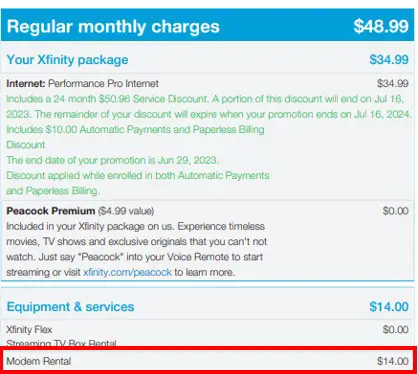
    For example, when I was renting my home network devices from my ISP they were charging me $14 per month:

    ISP Modem Rental Fee from internet bill
    My internet service provider charged me $14 per month to rent home networking equipment from them

    Think about what that means over the course of a year.

    That means every year, I was paying $168 just to use my internet provider’s equipment.

    After a few years, I’m sure you can see how these fees add up.

    This is where there’s tremendous value in purchasing your own router.

    As a side note, the equipment that you rent from an ISP is actually a modem router combination device. A modem and router combination device is essentially a device that functions as both the modem and router in your home network.

    modem router combo example
    An example of a modem router combination device rented from an ISP

    If you’re not familiar with what modem router combo devices are and you’d like to get a better understanding of them, check out the previous article I’ve written that breaks down these devices.

    You may be wondering why I’m mentioning this, but the context is actually important when considering the finances of buying your own equipment.

    Rather than renting a modem and router combination device from your ISP, you could buy your own modem and router combo and use that in your home network.

    Approximately how much would that cost?

    As an example, a top-of-the-line modem and router combination device is the Netgear Nighthawk CAX30S. This modem is one of the highest performing modem router combination devices you can buy, and at the time of this writing it costs about $350.

    Even if you bought a standalone modem and router (which you’ll find out more about in the next section), you’d be able to find a high performing pair for less than $350.

    This means that if you rented your modem and router from your ISP for more than two years, you’d be spending more than if you bought a Netgear Nighthawk CAX30S.

    Adding insult to injury, you can definitely find a high-performing modem and router combo that fits your internet needs for much less.

    Most people plan on using the internet for the foreseeable future, and buying your own home networking equipment instead of renting from you ISP will save you money in the long run.

    Buying a Router Is More Customizable Than Renting From an ISP

    Another aspect to consider when deciding if you want to buy your own equipment is how much you want to customize your home network.

    When you rent from an ISP, your ISP still owns the equipment.

    This means they’re responsible for the configuration and updating of the device.

    In other words, your ability to make changes to the device and customize your internet experience is limited.

    For some people, that’s more than ok. They aren’t technical people and they just want the internet to work in their home.

    If this sounds like your mentality, you might consider renting from your ISP instead of buying your own equipment.

    On the other hand, modem and router combination devices are very easy devices to set up and configure, so you could save money and have a more customizable internet experience by buying your own device.

    For those that want to get the most out of their internet plan, you have the option of buying a standalone modem and router for your network.

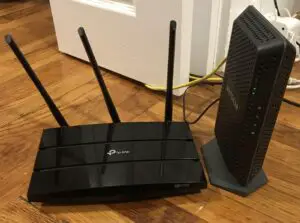
    Standalone modem and router
    An example of a modem (right) and router (left) as standalone devices

    When you buy a modem and router that’re separate devices, you have the unrestricted ability to customize your home network. You’re responsible for setting up, configuring, and making sure the devices get updated.

    With the ability to customize your network, you’ll be able to tailor it to the unique needs of the internet users in your home. This usually results in better internet performance compared to what you get when you rent equipment from your ISP.

    Which leads me to my next point…

    Buying Your Own Internet Equipment Can Result in a Better Internet Experience

    The last major thing to think about when deciding if you want to rent or buy your home networking equipment is what kind of internet experience you want.

    If you rent your equipment from an ISP, you’ll have a working internet connection that’ll hopefully meet your needs.

    If you buy your own equipment, you can maximize your internet plan and ensure you’re getting the performance you want.

    This has to do with the equipment you’re using in your home network.

    When you rent a modem and router combination device from your ISP, it’s not usually top-of-the-line equipment.

    Think of it like a rental car.

    Rental cars usually aren’t brand new cars when you rent them. On top of that, they might not always be in the best shape.

    It’ll get the job done, but it probably won’t be exactly what you want.

    The same goes for a rented modem and router combination device.

    When you rent equipment from your ISP, you don’t have any choices. They assign you a device to be installed in your home.

    They’re usually older devices, and they’re certainly not tailored to your individual internet plan and needs.

    As a result, you’ll be able to access the internet, but you probably won’t be maximizing your internet speed.

    When you buy your own equipment, however, it’s a different story.

    You can buy a modem and router that’re designed for your internet plan. On top of that, your purchased equipment will offer more features and be much more customizable than a rented device.

    With purchased home network equipment, you know you’re getting the most out of your internet plan. With rented equipment, you’re just hoping it doesn’t cause you any problems.

    Although it takes a little bit more effort to set up purchased equipment, the improved internet experience is well worth it (in my opinion).

    Wrap Up

    When it comes to your home networking equipment, you have the freedom of choice.

    Rather than paying monthly to rent your internet equipment, you have the ability to save money and improve your internet performance by buying your own.

    If you have any questions about this information, or you’d like to share your experience with making the decision between renting and buying a modem and router, please leave a comment below.

    For more information about similar topics, check out these other posts I’ve previously written:

    What is a Modem Router Combo?

    Do Routers Need to Be Updated? What You Should Be Aware Of

    What Does a Router Look Like? How to Identify Your Device

    How Does a Router Connect to the Internet? The Basics

    What Speed Can My Router Handle? What You Need to Look At

  • Do Routers Need to Be Updated? What You Should Be Aware Of

    Do Routers Need to Be Updated? What You Should Be Aware Of

    Do Routers Need to Be Updated title picture

    In this day and age, it’s common to have to update our home network devices when new software is developed for them.

    To name a few, the devices that require updates include your:

    • Computer
    • Smart phone
    • Gaming system
    • Smart TV

    All of these devices are similar in that they’re run by software located on the device.

    In this sense, your router is not unlike all of these devices in your home network. Routers also have software that tell them how to operate, just like the other smart devices in your home.

    With that said, does your router need to be updated like the rest of the devices in your home network? Or can you forget about your router once it’s set up?

    Routers need to be updated on a periodic basis. When security vulnerabilities or operating efficiencies are identified by a router manufacturer, firmware updates are developed and issued. These firmware updates must be installed on the router in order to provide benefit to the device.

    In this post, I’ll talk about what’s involved when it comes to updating your router. I’ll also talk about who is responsible for updating your router.

    Let’s get started.

    Routers Need to Be Updated

    Yes, it’s true.

    Your router needs to be updated.

    You shouldn’t be too upset about this, however. Updating your router actually protects you (and the device) in the long run.

    Before we get too far into that, let’s talk about why routers need updates in the first place.

    This all has to do with how routers operate.

    Routers are run by software. This software is embedded on computer chips that are located inside the device. Another term for this software is “firmware”.

    When a router is purchased, it comes loaded with the original firmware that the router manufacturer created when the device was released to the public for purchase.

    After a new router is released for purchase, customers expect the router to last for years.

    Think about it.

    When you bought your router, were you expecting to buy another one any time soon?

    I didn’t think so.

    During these years that a given router is in operation, quite a bit can change in the environment around it.

    There are two main areas we should look at here.

    Routers Need to Be Updated to Provide Security Enhancements

    Security is the most important reason for router updates.

    In today’s day and age, cybersecurity threats are ever-evolving. According to Packetlabs, there were an estimated 2,200 cybersecurity attacks every day in 2022.

    What does this statistic tell you?

    First and foremost, it tells you that cybersecurity threats are evolving every day. The cybersecurity threats we were faced with two years ago aren’t the same ones we face today.

    This is relevant to routers because router software is created to address the cybersecurity threats that were common at the time the router was first developed. Not the cybersecurity threats the router will face a few years down the road.

    In short, routers are faced with new cybersecurity threats each year, and they need to be updated to address the new threats that arise while they’re in operation.

    As a result, router manufacturers need to update the software for their routers to address the latest and greatest cyber attacks.

    When it’s identified that a router has a potentially vulnerability to a new cyber attack, the router manufacturer updates the router’s code. These software updates protect the router (and your network) from these vulnerabilities.

    Routers Need Updates to Improve Their Functionality

    The other main reason routers need updates is to ensure they continue to operate smoothly once a customer buys the device.

    Similar to the cybersecurity threats I detailed in the section above, advancements in technology are happening just as quickly.

    Once a router is released for sale to the public, a lot can change in the years that follow.

    For example, software bugs could be found in the router firmware after the router is already on the shelves.

    What’s the best way to fix the bugs?

    Issue a software update.

    Also, the router manufacturer could develop new features for the router that improve its performance.

    What’s the best way to get those feature enhancements into their products?

    By issuing a software update.

    As you hopefully have noticed by now, firmware updates are the way that router manufacturers can ensure their products run smoothly after they’re released to the public.

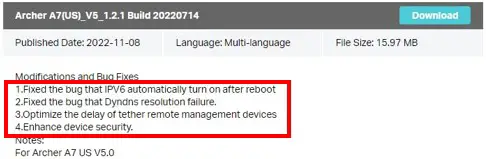
    As I detailed above, most of these firmware upgrades are for functionality improvements and security reasons. For evidence of this, look no further than the notes about the latest firmware update for my router:

    TP-Link Archer A7 Firmware Update Modifications
    The latest firmware update for my router included bug fixes and security enhancements

    As you can see, the latest firmware update for my router was issued for exactly these reasons.

    Who Is Responsible for Updating My Router?

    Ok, so we’ve established your router needs to be updated.

    The next question is, who’s responsible for updating your router?

    That all depends upon your situation.

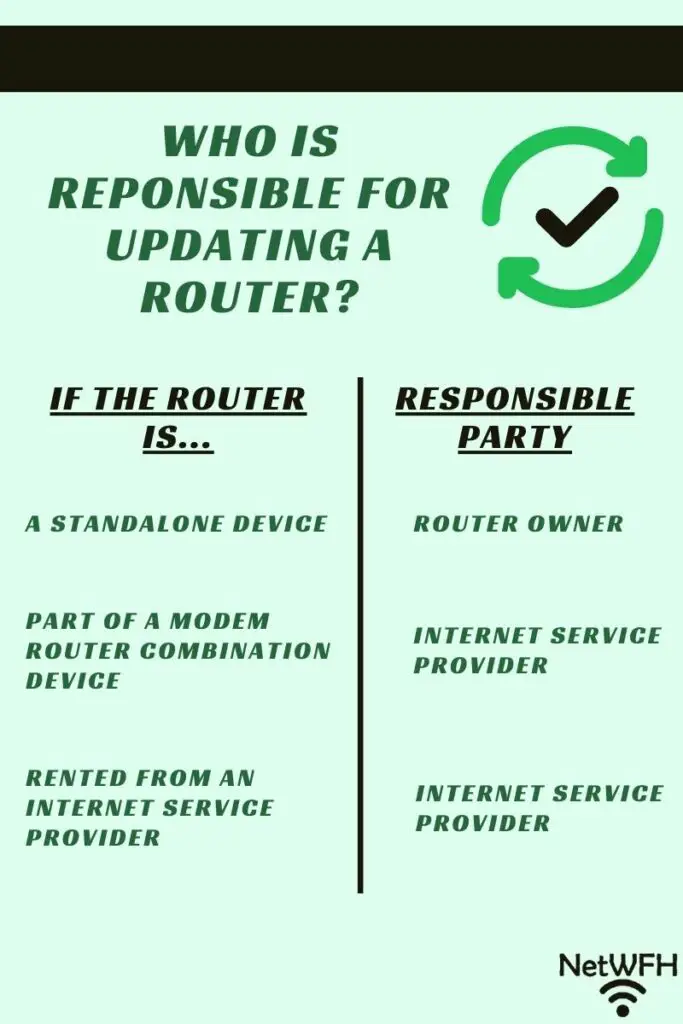
    Who is Responsible for Router Updates

    Who Is Responsible for Updating a User Owned Standalone Router?

    For example, if you own your own standalone router, you’re responsible for updating the device.

    To be clear, I’m talking about routers that are separate devices from the modem in a home network.

    Before you get overwhelmed by this responsibility, I should say that updating your router is extremely easy.

    For a breakdown of how to update your router’s firmware, I’ve detailed these steps in an article I’ve previously written that you might want to check out.

    Ok, so if you own your own standalone router you’re responsible for updating it.

    Are there any other scenarios you need to consider when it comes to router updates?

    You bet there are.

    Who Is Responsible for Updating a Rented Router?

    If you rent your router from your internet service provider (ISP), you’ll be off the hook for updating it. Most ISPs will automatically push software updates to the devices that you rent from them.

    After all, when you rent a router from an ISP, your ISP doesn’t allow you to make changes to the router’s settings. As a result, they have to update the device simply because you aren’t able to.

    Who Is Responsible for Updating a Modem Router Combination Device?

    This same principle applies if you bought a modem and router combination device.

    If you’re not familiar with modem and router combo devices, hold up a second. I’ve written another post that covers modem and router combination devices that’ll help you understand what I’m referencing here.

    Ok, back to the topic at hand.

    If you have a modem and router combination device, your ISP will automatically provide firmware updates to your device.

    These updates happen without you having to do anything. When your router’s manufacturer publishes a new version of firmware, your ISP will send it to your device over the internet to update it.

    Although this might sound nice at first, I’ve seen reviews for modem and router combo devices that have had bad experiences with their ISP updating their device. On occasion, your ISP might push a bad update to your device, or the update might fail during installation.

    This is just something to keep in mind if you’re in the market for a new router. Sometimes it’s nice to be in control of your own updates.

    How Do I Know if My Router Needs to Be Updated?

    If you own your own router and you’re responsible for updating it, it can be difficult to tell when there’s an update is available for it.

    On occasion, you may be able to tell based upon your router’s performance.

    If you notice your internet performance starting to drag, your router might need an update. This might also be the case if your internet connection starts to become inconsistent and you haven’t updated your router in a while.

    These situations might give you an idea of when your router needs a performance update.

    The troubling thing is, if your router has a security update available, you won’t know it based upon how the router is functioning. That’s because a lot of security updates have little effect on how the router operates on a daily basis.

    With this in mind, it’s best practice to periodically check to see if your router has any updates available for it.

    Every four months or so, log in to your router’s settings and see if there’s an update available for it.

    It only takes a minute to do this, and your certainly won’t regret it.

    After all, router updates can only make your device work better and operate more safely.

    Wrap Up

    At this point, it should be crystal clear that your router has to be updated. You should also have a good understanding of who is responsible for updating your router.

    If you have any questions about the above information, please leave a comment below.

    If you found this information useful, here are some other posts I’ve written on similar topics that might interest you:

    How to Update Your Router: The Ultimate Guide

    What is a Modem Router Combo?

    What Does a Router Look Like? How to Identify Your Device

    How Does a Router Connect to the Internet? The Basics

    Are All Routers Compatible With All Modems?

  • What Does a Router Look Like? How to Identify Your Device

    What Does a Router Look Like? How to Identify Your Device

    What Does a Router Look Like title picture

    There are a lot of different settings on your router that you can change to enhance your internet experience.

    But before you go about customizing your router, you need to be able to find it in your home network.

    So how do you know which device is your router? What does your router look like?

    Most routers are black in color and usually about 10 inches wide, 6 inches long, and 2 inches tall. In addition, they usually have multiple antennas extending from the device that are between 6 and 9 inches in length. Most routers will also have multiple status lights on the front of the device.

    In this post, I’ll break down all the different ways you can identify the router in your home network. I’ll also talk about how you can tell the difference between your router and modem.

    How to Identify Your Router in Your Home Network

    So you want to figure out which device in your home network is your router?

    You’re in luck.

    There are multiple things you can look at that’ll help you identify your router.

    For example, you can look at:

    • The informational sticker on the device
    • The size and shape of the device
    • How many ethernet ports the device has
    • What the lights on the device look like

    Any of the above choices is a viable option for identifying your router.

    With that said, you should start with the easiest option first.

    Identifying Your Router by Looking at Its Informational Sticker

    The shortcut for identifying the router in your home network starts with looking at the physical device itself.

    If you think you know which device is your router, go pick it up.

    Next, look for a sticker on the device that provides information about it.

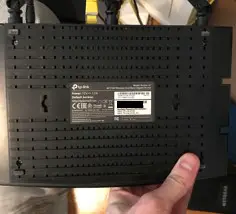
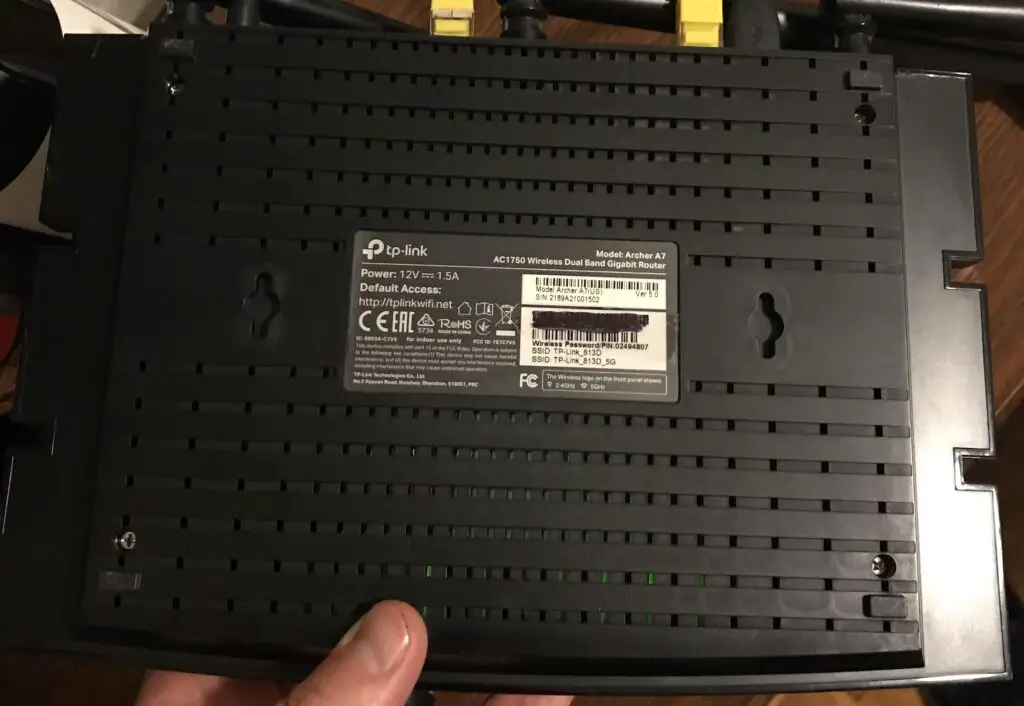
    You can usually find this sticker on the bottom of the router. Here’s an example of what the sticker on the bottom of my router looks like:

    Sticker on bottom of router
    The informational sticker on the bottom of my router

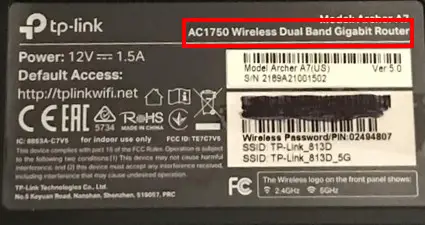
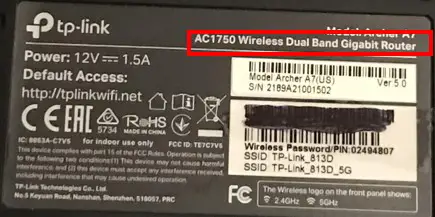
    If the device you’re looking at has a sticker on it, take a closer look. If the device is a router, it’ll more than likely say that on the sticker.

    Identification sticker on router

    As you can see, the sticker on my router clearly identifies what type of device it is.

    It’s really that easy.

    Even if you’re not sure if a device in your home network is your router, it’s worth inspecting it. If it has a sticker on it, chances are the sticker will tell you what type of device it is.

    In the case where the devices in your home network don’t have stickers, or you still can’t tell which device is your router, there’s no reason to worry.

    There are plenty of other ways to identify your router.

    Let’s take a look at some of these options.

    Identifying Your Router by Its Size and Shape

    Let’s start at a high level here.

    Hopefully, you’ll have a good idea of which device is your router just by looking at it.

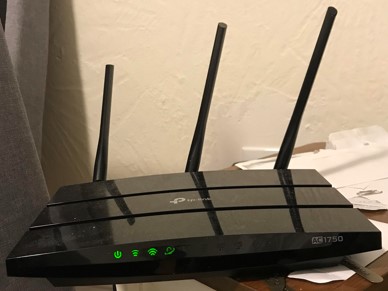
    Most routers are black rectangular boxes that have multiple external antennas on them.

    Here’s an example of what my router looks like.

    Router on a table

    The dead giveaway here should be the antennas on the device. Most other devices in your home network won’t have antennas like a router does.

    As you can see from the picture above, my router has three adjustable antennas.

    While we’re on the topic, you may be wondering why a router needs multiple antennas in the first place. If you’d like to learn more about your routers antennas, you should check out the post I’ve written on this topic.

    In addition to a router having antennas, its good to have an idea of the approximate size of your router.

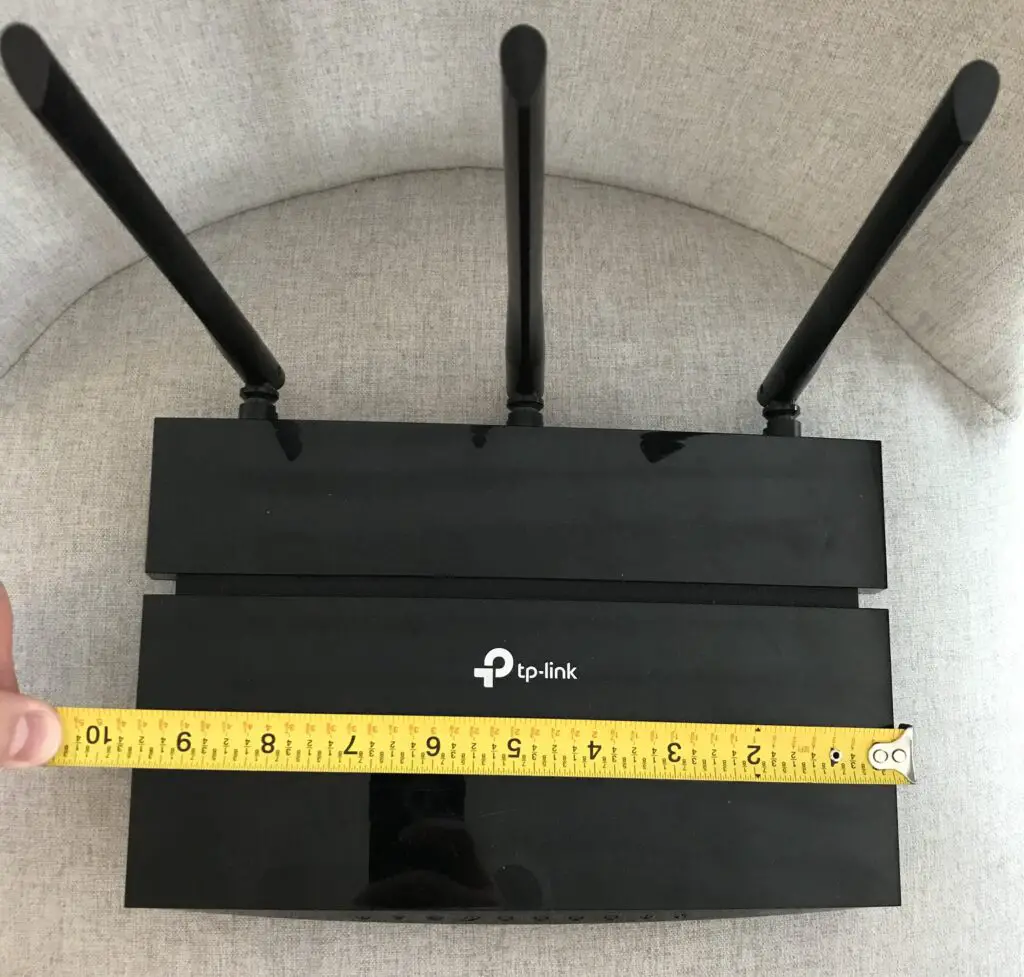
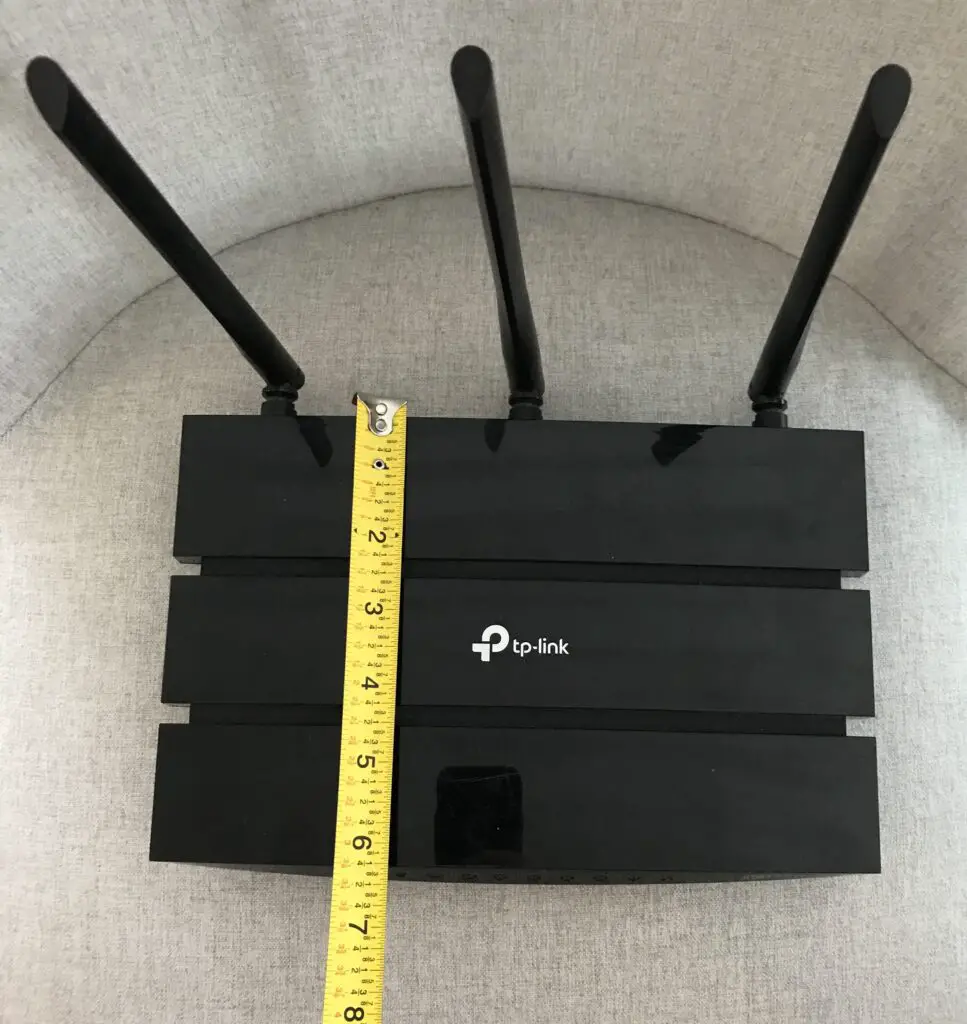
    In most cases, your router will be about ten inches wide, by six inches deep:

    When it comes to the height of the device, they usually aren’t very thick. For example, my router is less than two inches thick.

    Router device height

    When it comes to your router’s antennas, you can expect them to be about ten inches tall or less.

    Router antenna height

    Now that you have an idea of the approximate size of your router, let’s take a closer look at the device itself.

    Identifying a Router by the Number of Ethernet Ports It Has

    Another easy way to identify your router is to look at the number of ethernet ports on the device.

    For those of you that need a quick refresher, an ethernet port allows an ethernet cable to be connected to your device. This allows devices to communicate with each other directly over the ethernet cable (as opposed to wirelessly).

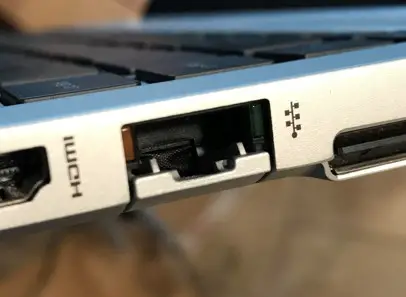
    Chances are, your computer has an ethernet port that can be used for reference.

    Laptop ethernet port
    The ethernet port on my laptop

    Ok, back to the task at hand.

    The dead giveaway for a router is that it’ll have multiple ethernet ports on it. These ethernet ports are usually on the back of the device.

    To be more specific, routers usually have five ethernet ports on them.

    Ethernet ports on a router

    If the device you’re looking at has multiple ethernet ports on it and meets the description of the previous section, chances are it’s your router.

    Are you curious about what these ethernet ports are for?

    If so, check out the previous post I’ve written that details what the ethernet ports on a router are used for.

    Identifying a Router by the Lights on the Device

    Another way to identify your router is to look at the lights on the device.

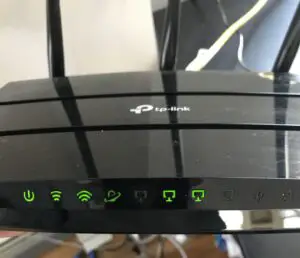
    Your router will most likely have status lights on the front of the device.

    Router lights
    The status lights on a router

    When it comes to the lights on your router, you just need to be careful here.

    The challenge is that your router probably won’t be the only device with lights on the front of it. You’ll see what I mean in the next section.

    As a result, you need to make sure that you take a close look at what each of the lights indicate.

    For example, your router will most likely have the following lights on it:

    • A power status light
    • WiFi network status lights (e.g. 2.4 GHz and 5 GHz)
    • An internet connection status light
    • Ethernet port connection status lights
    • A USB port connection status light
    • A WiFi Protected Setup (WPS) status light

    If the device you’re looking at has all (or most) of the lights above, it’ll be a router.

    By the way, if you’re not sure what all the lights on your router are for, I’ve written a post on that topic as well that you might want to check out.

    How to Tell the Difference Between a Router and Modem

    Modems and routers often get confused with one another in a home network. This makes a lot of sense, as these two devices are needed to provide your home with an internet connection.

    Now that you know what a router looks like, it shouldn’t be too difficult to tell the two devices apart.

    It’s especially easy when you consider the major differences between the two devices.

    For a complete breakdown of what a modem looks like, you can check out the post I wrote for more information.

    So what are the main differences between a modem and router, exactly?

    You Can Tell the Difference Between a Modem and Router by Their Informational Stickers

    For one, if there’s any confusion about what device you’re looking at, you should first go to the informational sticker on the device.

    As I previously mentioned, the sticker on your router will identify which device is your router.

    Your modem is no different.

    Your modem should also have an informational sticker on it that details what type of device it is.

    This is the easiest way to tell the difference between your modem and router.

    Identifying a Modem and Router by Their Antennas

    Another easy way to tell the difference between a modem and router is to look at their antennas.

    A router will have external antennas that are impossible to miss.

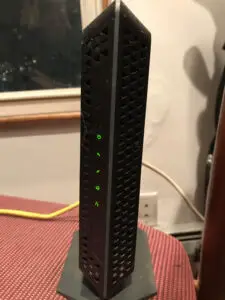
    A modem, on the other hand, won’t have any antennas at all. This is because they aren’t able to communicate wirelessly with other devices. As a result, there’s no need for a modem to have antennas.

    This results in modems have a much more streamlined shape when compared to a router.

    Netgear Modem Front Image
    A modem will not have antennas like a router

    Identifying a Modem and Router by the Number of Ethernet Ports They Have

    The next major difference between a modem and router is the number of ethernet ports they have.

    While a router will usually have at least five ethernet ports, a modem won’t have that many.

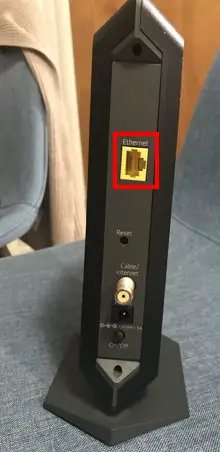
    In fact, a modem will only have one ethernet port.

    Modem ethernet port
    The ethernet port on a modem

    So if you look at the back of a device and it has multiple ethernet ports, you know the device is a router.

    Identifying a Modem and Router by the Lights on the Devices

    The last way to tell the difference between a modem and router is to look at the lights on the devices.

    As I mentioned earlier, this is where you need to be careful. Both a modem and router will have lights on the front of the device.

    The difference is in the number and types of lights they have.

    Modems usually have less status lights on them than routers. On top of that, modem lights are meant to provide different statuses than router lights.

    For example, a modem won’t have lights on it for the WiFi networks it’s broadcasting like a router will. That’s because modems don’t broadcast WiFi networks.

    If you’d like a reference of the lights on a modem, you’re in luck. I’ve written an article that details all the lights you can expect to find on a modem.

    The bottom line is if you have an idea of the lights you’ll find on a modem and router, you should be able to tell the devices apart pretty easily.

    Wrap Up

    At this point, you should have problem identifying the router in your home network. You should especially have no problem telling the difference between your modem and router.

    If you have any questions, or are running into trouble identifying your router, please leave a comment below.

    If you found this information interesting, you might also like some of these other posts I’ve written:

    Why Do Routers Have Multiple Antennas?

    Router Ethernet Ports: Everything You Need to Know

    What Do My Router Lights Mean?

    What Does a Modem Look Like? What You Should Look For

    What Do the Lights on My Modem Mean?

  • How Does a Router Connect to the Internet? The Basics

    How Does a Router Connect to the Internet? The Basics

    How does a router connect to the internet title picture

    Routers allow devices on a home network to share an internet connection.

    To put it another way, routers are the reason why all the devices in your home network can connect to the internet at the same time.

    In order to provide your devices with an internet connection, however, your router must also have a connection to the internet.

    So how exactly does this happen?

    A router connects to the internet through a connection with a modem. The modem establishes an internet connection with an internet service provider (ISP) and passes the internet connection to the router. In most cases, a modem and router are connected with an ethernet cable.

    In this post, I’ll break down everything you need to know about how your router connects to the internet.

    Let’s get started.

    Does a Router Connect Directly to the Internet?

    Let me start by saying that your router is very dependent when it comes to connecting to the internet. In other words, it can’t establish an internet connection on its own.

    To keep it at a high level, routers don’t have the components necessary to directly connect to the internet. As a result, routers rely on another device (spoiler: a modem) to establish an internet connection for them. They then use that internet connection provided by the other device to access the internet.

    Let’s dive a bit more into this.

    In order to understand how a router connects to the internet, it’s important to know the roles that your devices play in your network.

    The two devices I’m referring to here are your modem and router.

    Your modem and router play very specific, but separate roles in your home network.

    For example, a modem’s responsibility is to establish an internet connection with an internet service provider.

    Modems have the ability to translate data signals that are sent to your home from the internet. This is what allows modems to communicate with the internet and establish an internet connection.

    Routers don’t have the ability to translate data signals from the internet. This is why they can’t directly connect to the internet.

    Once a modem establishes an internet connection with an ISP, its job is to maintain that active connection.

    This active connection is then used by other devices on the network to pass data to and from the internet.

    On the other hand, a router’s responsibility is to use the internet connection established by a modem and make it available to all the devices in a network. This is a responsibility a modem can’t have, because it doesn’t have the ability to communicate wirelessly with other devices.

    In this sense, modems and routers perform actions that the other device can’t.

    Due to the specific roles that each of these devices play in an internet connection, both are needed to provide an internet connection to the network.

    So how exactly does this work?

    How a Router Connects to the Internet

    As I mentioned above, a router can’t connect to the internet on its own.

    In order to get a connection to the internet, a router must leverage the internet connection established by the modem in the network.

    This is the first requirement for a router’s connection to the internet. The modem in the home network must have an established internet connection.

    If you’d like to learn how a modem establishes a connection to the internet, check out the post that I’ve previously written about this. It’ll help you better understand the role of a modem in your network.

    In short, for a modem to have an internet connection, it must:

    • Be powered on and connected with a cable to an ISP
    • Have an active internet plan in place with an ISP
    • Be registered with an ISP to activate the internet plan

    Once the modem has met the above criteria, it’ll have an active internet connection in place.

    Now this internet connection just needs to be shared with the devices on the network.

    This brings us to our second requirement for a router’s connection to the internet. The router must be connected to the modem with an ethernet cable.

    Connecting the modem and router allows for communication between the two devices in both directions.

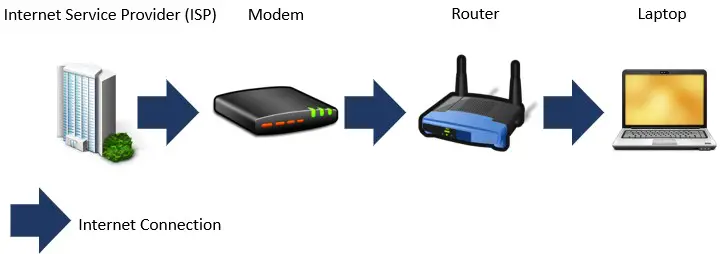
    For example, the connection allows the modem to pass its internet connection to the router. This internet connection is then passed further down the line to the devices on the network:

    Internet connection diagram

    For communication in the other direction, the router passes internet requests from the devices on the network to the modem. The modem then forwards these requests to the internet:

    Internet requests diagram

    If the modem and router weren’t connected with an ethernet cable, none of this communication would happen.

    If you want to find out exactly how a modem and router are connected with an ethernet cable, I’ve written a post on this topic to help you out.

    When it comes to connecting a router to the internet, the only other thing that’s required is the router’s power cable needs to be connected to an electrical outlet.

    To summarize, a router will have an internet connection if:

    • The modem in the network has an active internet connection
    • The modem and router are connected with an ethernet cable
    • The router is powered on and connected to an electrical outlet

    Once the router has access to the internet, devices on the network will be able to connect to it to access the internet.

    How Does a Modem Router Combo Connect to the Internet?

    For those of you that don’t have a standalone modem and router, I want to make sure you’re not left out.

    What I’m talking about here is if you have a modem router combination device.

    If you’re not familiar with modem and router combination devices, you should check out the article I’ve written that explains what they are. It might give you useful context for the rest of this section.

    With a modem and router combination device, you won’t have to worry about connecting your modem and router with an ethernet cable. They’ll already be integrated into one device.

    In fact, things will be really easy for you because your modem and router combination device will have the capabilities of both a modem and router. It’ll be able to not only establish an internet connection, but it’ll be able to share it with the devices on the network as well.

    Connecting a modem router combination device to the internet is very similar to connecting a modem to the internet (see the link above for more information). You don’t have to worry about the extra steps needed to connect a standalone router to the internet.

    You just need to ensure the modem router combination device:

    • Is powered on and connected with a cable to an ISP
    • Has an active internet plan in place with an ISP
    • Is registered with an ISP to activate the internet plan

    With these things in place, your modem and router combination device will have access to the internet. It’ll also be able to share that connection with your devices on the network.

    Wrap Up

    That just about covers everything you need to know about connecting your router to the internet.

    If you have any questions about the information I’ve shared, please leave a comment below.

    If you’re looking for more information about similar topics, here are some additional posts that might interest you:

    How Does a Modem Connect to the Internet? A Breakdown

    Does a Modem Matter for Gaming? What to Watch Out For

    Does a Modem Provide WiFi? The Facts You Should Know

    Does a Modem Need to Be Connected to a Router? What to Know

    How Many Ethernet Ports Are on a Modem? A Complete Analysis

  • Will a New Router Increase Internet Speed? An Explanation
    Will a New Router Increase Internet Speed title picture

    Nobody likes a slow internet connection.

    The difficult thing about a slow internet connection is the fact that there are many different factors that can cause the slow connection.

    As a result, there are many possible solutions for increasing the speed of an internet connection.

    One of these potential solutions is replacing the router used in the home network.

    With that said, can a new router increase the internet speed of a network, or would this have no affect on network speed?

    It is possible for a new router to increase the speed of a network, but this is not always the case. In a case where a router is restricting the speed of a network, replacing it with a new router can increase the internet speed of the network.

    In this post, I’ll detail when a new router can increase the internet speed of a network. I’ll also discuss how you can determine if a new router will improve your network speed.

    Can a New Router Increase the Internet Speed of a Network?

    There are many variables that affect the internet speed of a network.

    Some of these factors include the:

    • Speed provided by the internet plan
    • Internet speed the modem can support
    • Internet speed the router can support
    • Number of internet users on the network at a given time

    In talking about your router specifically, there are a few principles to discuss upfront.

    The first is that your router has no affect on the internet speed provided by your internet plan.

    A Router Cannot Increase the Speed of Your Internet Plan

    When it comes to your internet connection, it all starts with your internet plan.

    Your internet plan will determine the maximum achievable speed of your home network.

    What I mean by this is that none of the devices on your home network can increase the maximum speed of your internet plan. This includes your router.

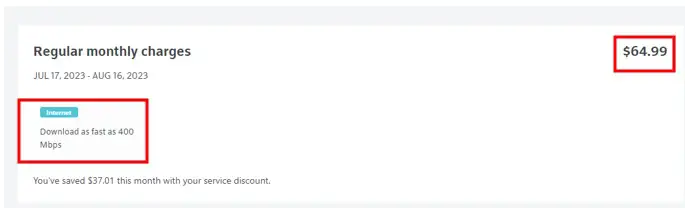
    For example, in my home network my internet plan provides a speed of up to 400 megabits per second (Mbps).

    Xfinity internet plan example

    This means that regardless of the devices I have in my network, I’ll never be able to get an internet speed faster than 400 Mbps. The only way I’ll be able to achieve this would be to upgrade my internet plan.

    This is an important concept to understand when it comes to your router.

    The best-case scenario for your router is that it allows you to maximize the speed of your internet plan. In my case, that would mean my router allows me to utilize the 400 Mbps provided by my internet plan.

    A Router Can Restrict the Speed of a Network if the Wrong Router Is Used

    Ok, so we’ve established that the best-case scenario for a router is that it’ll allow you to utilize the maximum speed provided by your internet plan.

    Now let’s talk about the worst-case scenario.

    If the wrong router is used in a home network, it can have quite the opposite effect. If the wrong router is chosen for a network, it’ll restrict the speed of the network so it can’t achieve the maximum speed provided by the internet plan.

    This can slow down all the devices on the network.

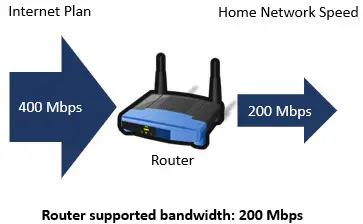
    Using my network as an example again, let’s say my router can only support 200 Mbps.

    If my internet plan provides 400 Mbps, what would this mean for my network?

    Example of router restricting network speed

    This would mean that my network would only be utilizing about 50% of my internet plan. Although I am paying for 400 Mbps, the maximum speed of my network would be 200 Mbps because of my router (assuming all the other devices on my home network could support 400 Mbps).

    So the question is, is there anything I can do about this?

    That’s where a new router comes in.

    A New Router Can Increase the Speed of a Network if It Replaces a Router That Is Restricting the Network

    If a router that can’t support the speed provided by an internet plan is replaced with a new router that’s able to support the speed of the plan, it’ll effectively increase the speed of the network.

    In other words, a new router may enable you to utilize the full speed provided by an internet plan.

    Let’s build on the example from the previous section.

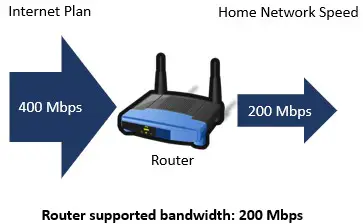
    In this example, my internet plan provides 400 Mbps, but my router can only support 200 Mbps. In this case, my router is limiting the internet speed of my network to 200 Mbps.

    Example of router restricting network speed

    What if I wanted to do something about this? What could I do?

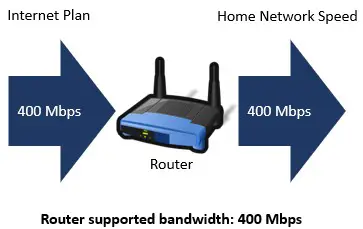
    I could replace my existing router with a new router that supports at least 400 Mbps.

    This new router would allow my network to run at 400 Mbps, or the maximum speed provided by my internet plan.

    Example of router supporting speed of internet plan

    Making this change would increase the speed of my home network by 200 Mbps.

    In this scenario, buying a new router would increase the speed of my network, even though the maximum speed provided by my internet plan wouldn’t change.

    These are the situations where a new router can increase the speed of a network: when the current router is restricting the network, a new router can essentially remove this restriction.

    Removing the existing internet speed restriction increases the speed of the network.

    How to Find Out if a New Router Will Increase the Internet Speed of Your Network

    If a new router will only increase the speed of a network in certain situations, how do you know if a new router will improve the speed of your network?

    There are a few different steps to follow to achieve this.

    The first is to identify the speed provided by your current internet plan.

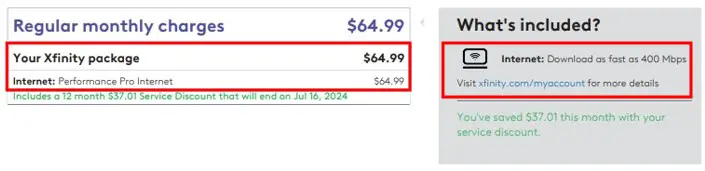
    You can do this by looking at your monthly bill from your internet service provider (ISP). Your monthly bill should identify your current internet plan, as well as the price of that plan.

    Internet plan details

    You can also log in to your account with your ISP an access your plan information online. As you can see, it has the same information as the monthly bill I receive:

    ISP website internet plan details

    As a last resort, you can always call your ISP and ask them what the maximum speed of your internet plan is.

    Once you have the speed of your internet plan, you just need to determine the speed supported by your router.

    If you’re not sure how to determine what speed your router supports, you’re in luck. I previously wrote an article on this topic that provides the step-by-step procedure on how to do this. Make sure to check it out before moving forward with your analysis.

    I’d be remiss if I failed to mention that your modem must support the speed provided by your internet plan as well. Thankfully, I’ve written an article on determining the maximum speed your modem supports as well.

    Now that you know the speed of your internet plan and the speed your current router (and modem) supports, you can determine if a new router will increase your network’s internet speed or not.

    If the speed your router can support is equal to or greater than the speed provided by your internet plan, you’re in good shape.

    Just remember, if this is the case for you, buying a new router won’t increase the speed of your network. You’re already maximizing your internet plan. If you remember from earlier, a new router can’t make your network faster than the speed provided by your internet plan.

    If the speed your router can support is less than the speed provided by your internet plan, you have the opportunity to increase the speed of your network. If you get a new router that can support speeds at least as fast as your internet plan, it’ll increase your network speed.

    How fast will your new network speed be, exactly?

    If you get a new router that maximizes your network speed, your new network speed will be the speed provided by your internet plan.

    Wrap Up

    With the information in this post, you should be able to determine if a new router will increase your network speed.

    If you have any questions about the information above, or you have questions about your specific network, please leave a comment below.

    If this information has helped you get the most out of your internet plan, here are some other articles I’ve written that you might be interested in:

    What Speed Can My Router Handle? What You Need to Look At

    Modem Speed Limits: What You Might Be Missing

    Can a Router Connect to a Modem Wirelessly? An Analysis

    Does a Modem Need to Be Connected to a Router? What to Know

    Does a Router Affect Your WiFi Speed?

  • Can You Use More Than One Router at Once? What to Consider

    Can You Use More Than One Router at Once? What to Consider

    Can You Use More Than One Router At Once Title Picture

    It’s well known that routers are vital components of a functioning home network with an internet connection.

    What’s more uncertain is how many of these devices can be used in a given network.

    With that said, is it possible to have more than one router in a home network at a given time?

    It is possible to use more than one router in a home network. In most cases where multiple routers are used in a network, both do not perform the normal functions of a router. One router will function as the primary router for the network, while the others will function as a wireless access points.

    In this post, I’ll go into detail about how multiple routers can be used in a network. I’ll also talk about how multiple routers can be configured in a home network.

    Can Multiple Routers Be Used in a Network?

    Let me start by saying that it’s possible to have multiple routers functioning in a given network.

    Unfortunately, our answer doesn’t end there. Using two routers in a network isn’t as straightforward as you might think.

    So, what’s the catch here?

    When multiple routers are used in a network, the vast majority of the time they both aren’t performing the normal functions of a router.

    In other words, it’s very rare to have multiple routers in a network all doing the following:

    • Broadcasting wireless networks
    • Assigning IP addresses to devices
    • Communicating directly with the modem
    • Coordinating communication between devices and the internet

    In order for the above scenario to be possible, there would need to be multiple separate internet connections coming to the home. This would mean there would be multiple separate internet plans to pay for. Each of these connections would need to be connected to a different modem as well.

    On top of that, each router would be functioning totally independently of the others. This would create multiple different WiFi networks, and devices would have different IP addresses based upon the network they’re connected to.

    Although this is all possible, it’s not very common (or realistic) in most situations.

    As I mentioned above, it’s much more common to have multiple routers on the same network with one connection to the internet. In these cases, however, the routers aren’t performing the same functions.

    So if multiple routers used in a network aren’t performing the normal functions of a router, how do they work?

    Let’s take a closer look.

    How Are Multiple Routers Used on a Network?

    If multiple routers are used in one network with one internet connection, it’d cause problems if they were performing the same functions.

    You’d have problems with IP address assignment, multiple different wireless network names, etc.

    Thankfully, routers have the ability to work around this issue.

    With multiple routers on the same network, one router can perform the standard functions of a router, while the others can be used to extend the coverage of the WiFi network that the first router is broadcasting.

    To put it differently, any router that’s added to the network in addition to the one performing the normal functions of the router can serve as a wireless access point.

    These routers serving as access points allow you to provide WiFi coverage to areas that get a weak wireless signal from your primary router.

    The best part is that your secondary routers will broadcast the same WiFi network as your main router. This simplifies things because you won’t have to worry about which WiFi network you’re connected to.

    You’ll basically just have one really large wireless network.

    Another benefit of using multiple routers in your network is that you’ll have the ability to provide more devices with wired internet connections.

    Routers usually have multiple ethernet ports that can be used to provide wired connections to your network. In having multiple routers on your network, you’ll have more ethernet ports available that your devices can connect to.

    This can be advantageous because wired internet connections are more reliable and experience less delay than WiFi connections.

    Between the extended WiFi coverage and the option for providing additional wired connections, utilizing multiple routers in a network can be quite useful. It all depends upon the needs of your network.

    How Are Multiple Routers Set Up on the Same Network?

    Now that we’ve talked about how multiple routers can be used in a network, let’s discuss how this configuration is accomplished in the first place.

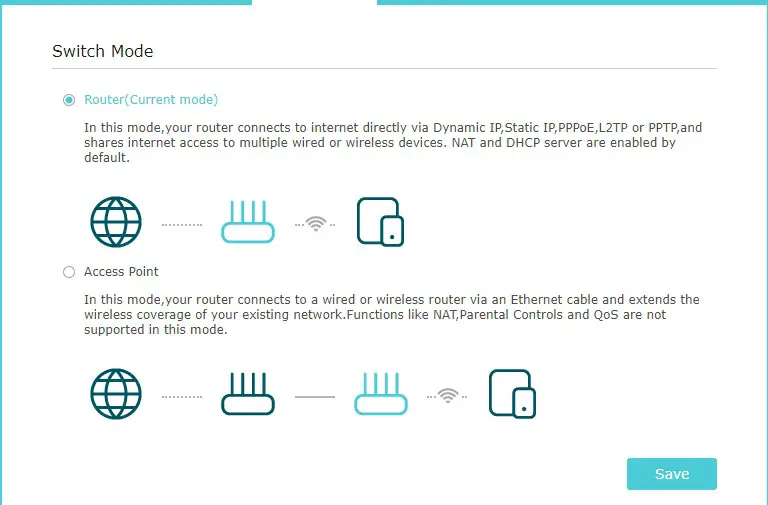
    This is all made possible by a router’s operating modes.

    Most routers will have the ability to operate in two modes: the standard router mode and access point mode.

    Router access modes
    A router’s different modes of operation

    As you may have guessed, the main router in the network will be in standard router mode, and all the other routers will be in access point mode.

    By setting the secondary routers to access point mode, it’ll disable all the other functions of the secondary router that would conflict with the primary router’s functions.

    A router will be in router mode by default, so any additional routers that are added to the network must be manually configured to be in access point mode.

    Changing the mode of a router can be done by accessing the router’s settings.

    Once a secondary router is in access point mode, both routers need to be connected with an ethernet cable.

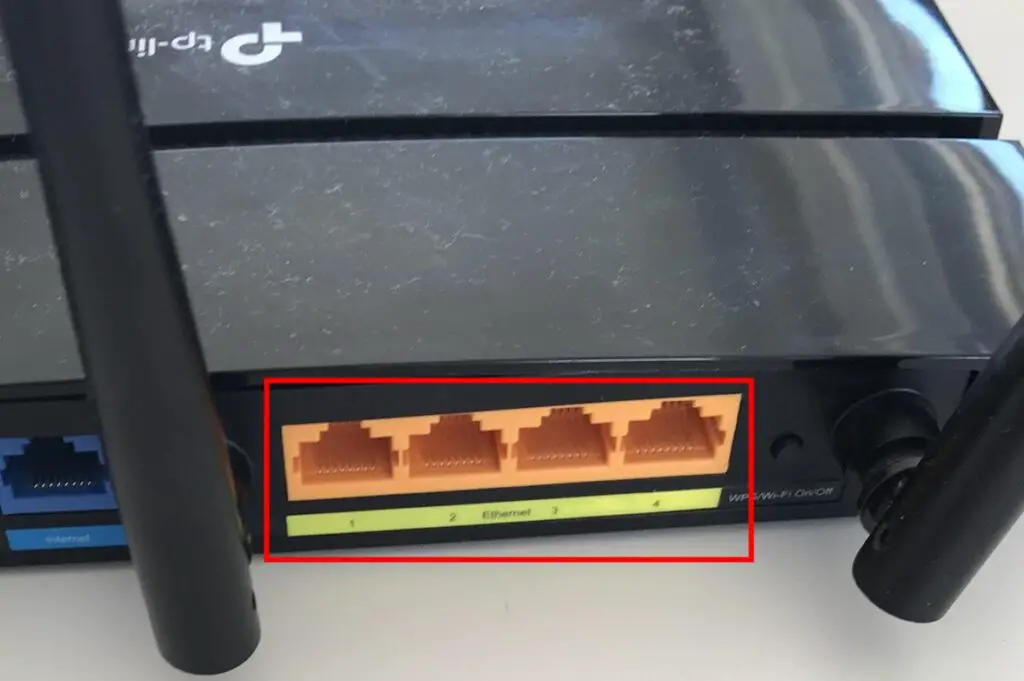
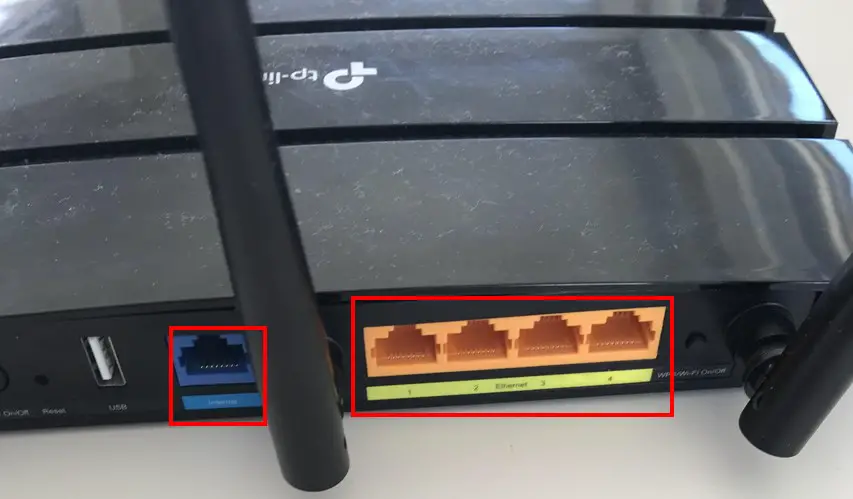
    The ethernet cable needs to be attached to one of the local area network (LAN) ethernet ports on each router in order for it to function properly. For reference, here are the four LAN ethernet ports on my router:

    Ethernet ports on a router
    The LAN ethernet ports on a router

    Connecting the primary and secondary router with an ethernet connection will allow the secondary router to duplicate the WiFi signal that the primary router is broadcasting.

    Keep in mind here that it might benefit you to connect the primary and secondary router with a long ethernet cable. The farther away the secondary router is from the primary router, the more flexibility you’ll have in terms of expanding your WiFi network coverage.

    As long as the ethernet cable connecting the routers is less than 328 feet (100 meters) long, you won’t experience any performance issues in terms of the connection between the routers.

    As an aside, if you’d like to learn more about why an ethernet cable can be 328 feet long without affecting the performance of a connection, you should check out the article I’ve previously written explaining why this is.

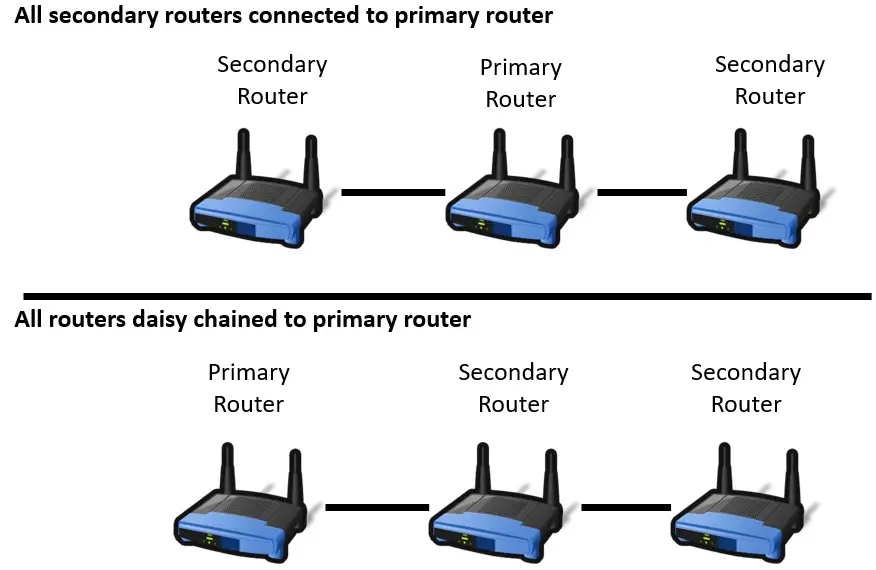
    Another important point here is if you have more than two routers in the network, there are multiple ways to connect them to the primary router. Each secondary router can either be connected directly to the primary router, or they can be daisy chained together.

    Different router connection configurations

    In other words, you have the ability to choose which configuration maximizes the WiFi signal in your home.

    Most networks will usually only have one or two secondary routers, but you have the ability to choose what configuration is best for the performance of your network.

    Wrap Up

    Now you should have a clear idea of how multiple routers can be used in the same network, and the potential benefits of doing so.

    If you have any questions about the above information, or you’d like to share how your home network is configured with multiple routers, please drop a comment below.

    If this information was helpful for you, here are some other posts I’ve written on similar topics that might be helpful as well.

    Can a Router Connect to a Modem Wirelessly? An Analysis

    What Speed Can My Router Handle? What You Need to Look At

    Are All Routers Compatible With All Modems?

    Router Ethernet Ports: Everything You Need to Know

    What Router Do I Have? How to Find Out

  • Can a Router Connect to a Modem Wirelessly? An Analysis

    Can a Router Connect to a Modem Wirelessly? An Analysis

    Can a router connect to modem wirelessly title page

    If you have an internet connection in your home, chances are it means you have a modem and router.

    In many cases, your modem and router are standalone devices that need to be connected in order to establish an internet connection.

    When it comes to connecting the two devices, what are your options? Can you connect your modem and router wirelessly, or do you have to connect them with an ethernet cable?

    In a network with a standalone modem and router, the modem and router cannot be connected wirelessly. Modems are not equipped with the necessary wireless networking components to connect to a router wirelessly. As a result, standalone modems and routers need to be connected with an ethernet cable.

    In this post, I’ll detail if it’s possible to connect a modem and router wirelessly. I’ll also discuss a few options for you if you need to access the internet far away from your modem in your home.

    Your Modem and Router Need to Be Connected to Each Other

    It goes without saying: if the modem and router in your home network are separate devices, they need to be connected to each other.

    If you’d like an explanation as to why your modem and router need to be connected, check out a previous post I’ve written detailing this subject.
    When it comes to connecting any two devices in a home network, the only possibilities for connecting them are through a wired connection, or wirelessly (over WiFi).

    So let’s break down both of these options.

    A common question that arises is if it’s possible to connect a modem and router wirelessly, so we’ll dive into that one first.

    Can a Modem and Router Be Connected Wirelessly?

    Unfortunately, there’s not a lot to discuss on this topic.

    A modem and router can’t be connected to each other wirelessly.

    The reason this isn’t possible is because of the roles of these devices in a home network.

    The purpose of a modem in a home network is to establish a connection with the internet service provider (ISP) that you have an active internet plan with.

    In the vast majority of cases, the connection between a modem and ISP is a wired connection.

    The internet connection from the ISP is transferred through wires to your home, where your modem connects to it with a phone, coaxial, or fiber cable, depending upon the type of internet plan it is.

    Once this connection is established, the modem simply maintains the active internet connection. It essentially serves as a bridge that your devices can use to send and receive data from the internet.

    This is the extent of the modem’s role in a home network.

    As you can tell, your modem is a simple device that can only make wired connections. As a result, your modem doesn’t have any hardware that allows it to wirelessly connect to other devices.

    Front of modem
    Modems don’t have antennas or any other hardware that provides wireless capabilities

    Wireless connections are more complex than wired connections (and require different hardware), which is why this heavy lifting is left to your router in your home network.

    Your router is responsible for taking the internet connection established by your modem and making it available to the devices in your home network in a wired and wireless capacity.

    So if we’re assigning blame here, it’s your modem’s fault that you can’t connect your modem and router wirelessly.

    If your modem had wireless capabilities, there’d be no need for a router in your home network.

    Interestingly enough, there are devices that combine the functionality of a modem and router into one device. These devices are called modem and router combination devices.
    If you’d like to learn more about modem router combos, check out the article I wrote detailing these devices.

    The takeaway here is that your modem and router can’t be connected wirelessly because standalone modems aren’t made for wireless connections.

    How Do a Modem and Router Need to Be Connected?

    If modems and routers can’t be connected wirelessly, this leaves us with only one option.

    That’s right, they need to be connected with a wired connection.

    Specifically, standalone modems and routers need to be connected with an ethernet cable.

    As I mentioned above, this is the only possible option due to the connection limitations of modems. These simple devices are only designed for wired connections due to their simplicity.

    If you’d like to learn the specifics of how a modem and router are connected with an ethernet cable, I’ve detailed that in a previous post I’ve written as well.

    It’s a pretty straightforward process, but you need to know how to do it correctly if you want your internet connection to work properly.

    What if You Need to Access the Internet in a Location Far Away From Your Modem?
    When people ask if a modem and router can be connected wirelessly, it’s usually because they want to access the internet in a location that’s far away from their modem.
    To put this another way, they want to place their router far away from their modem.

    If this is the case for you, there’s no reason to panic. Although your modem and router can’t be connected wirelessly, you have a few alternatives.

    Your Modem and Router Can Be Connected With an Ethernet Cable and Still Be Far Apart

    The first thing you need to be aware of is that your modem and router can be connected with an ethernet cable and still be far apart from each other. To be exact, as long as your modem and router aren’t more than 328 feet (100 meters) apart, you can connect them with an ethernet cable and not experience any performance issues.

    If you’re interested in learning more about why your modem and router don’t need to be close together, here’s an article I’ve written on this topic that you should check out.

    With 328 feet of ethernet cable to work with, that’s plenty of length to work with in many houses. It may even be worth looking into putting the ethernet cable through the walls of your home and adding an ethernet jack to the room where you want your router.

    This’ll be a feasible solution in some circumstances, but it might not make sense in all situations.
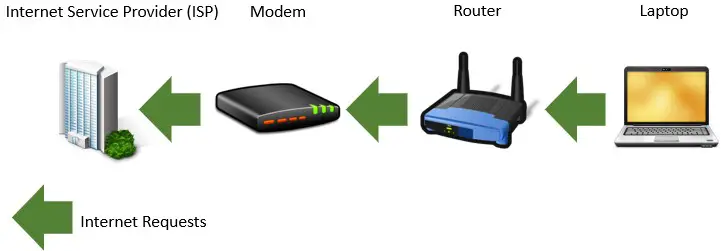
    One thing’s for sure: you definitely don’t want a long ethernet cable like this on the floor of your home snaking through the halls.
    Long ethernet cable

    If this solution doesn’t make sense for you, your best bet may be to try to expand the range of your router’s WiFi signal .
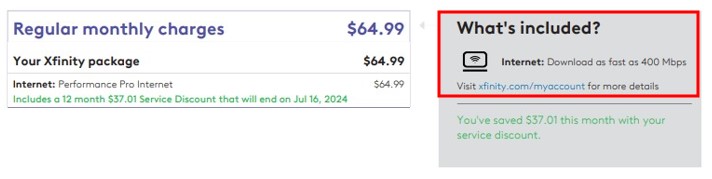
    You Can Use a WiFi Repeater to Increase the Wireless Range of Your Router

    If using a long ethernet cable to connect your modem and router doesn’t make sense for you, you can turn to a WiFi repeater instead.

    In this scenario, you’d connect your modem and router to each other wherever the modem is located. You could then use a WiFi repeater to enhance the wireless network range of your router.

    Wireless repeaters are placed in areas that receive adequate WiFi signal from your router. They detect and rebroadcast the wireless network coming from your router to increase the range of the network.

    Wireless repeaters can be used to reach areas of your home that are either far from your router, or don’t receive a strong wireless network signal.

    The best part about WiFi repeaters is that they don’t need to connect to your router with an ethernet cable. They can wirelessly detect the WiFi network in your home. All they need is a connection to a power outlet.

    There are plenty of options to choose from, but something like this Netgear WiFi repeater and booster would do the trick in most situations.

    This is definitely something to consider if you frequently access the internet in locations that are far away from where your modem and router are located. You can keep your modem and router close to each other, and use the repeater to provide WiFi coverage to the areas that you want.

    Wrap Up

    Unfortunately, I couldn’t deliver good news to you and say that modems and routers can be connected wirelessly.

    With that said, there are a few different options for you that should negate any disappointment you may have. You can be far away from your modem and router and still get good internet performance.

    If you have any questions about this information (or my recommendations), please leave a comment below.

    Also, check out the following posts I’ve written on similar topics if you’d like to learn more:

    Does a Modem Need to Be Connected to a Router? What to Know

    What is a Modem Router Combo?

    Should Your Router and Modem Be Close Together?

    Is My Router Dual Band? How to Know for Sure

    What Speed Can My Router Handle? What You Need to Look At

  • Is My Router Dual Band? How to Know for Sure

    Is My Router Dual Band? How to Know for Sure

    Is my router dual band title page

    It’s important to know how many wireless networks your router is broadcasting.

    If your router is dual band, it’ll broadcast two wireless networks: a 2.4 Gigahertz (GHz) network and 5 Gigahertz network. If it’s a single band router, it’ll only broadcast a 2.4 GHz network.

    This is important to know because some of the connected devices in your home network might require a connection to a specific wireless band in order for it to work.

    With that said, how do you determine if your router is dual band or not?

    The best way to determine if a router is dual band is to verify the number of wireless networks it is broadcasting. This can be achieved by looking at the informational sticker on the router itself, or by using a phone, tablet, or computer to view the router’s wireless networks.

    In this post, I’ll break down how you can determine if your router is dual band or not. I’ll also talk about what configuration you can expect from most routers today.

    How to Determine if a Router Is Dual Band

    When talking about routers, don’t let the term “dual band” fool you.

    All this means is that the router is emitting multiple wireless networks at the same time.

    The reason this is called dual band is because both of these networks being broadcast from your router will be at a different frequency. In other words, each network will be broadcast at a different frequency band.

    Is this starting to make sense now?

    The two different frequency bands emitted from dual band routers are 2.4 GHz and 5 GHz. What this means to you is that you’ll have a 2.4 GHz wireless network and a 5 GHz wireless network that you can connect to with your devices.

    So the question is, how can you tell if a router is dual band or not?

    There are two easy ways to tell if your router is dual band or not. You can either look at the router’s informational sticker, or you can use a connected device to look at the available wireless networks coming from the router.

    Let’s take a closer look at both of these options so you can choose the method that’s easiest for you.

    How to Tell if Your Router Is Dual Band by Looking at Its Informational Sticker

    One way you can tell if your router is dual band or not is by looking at its informational sticker.

    Every router should have a sticker on it that details some of its basic information.

    In many cases, this sticker is on the back or bottom of the device.

    For example, here’s what the sticker looks like on my TP-Link Archer A7 router:

    Sticker on bottom of router

    In many cases, this informational sticker will give you some hints as to whether it’s dual band or not.

    One area on the sticker where you might get some useful information is where it details the make and model of your router.

    As you can see, the model of my router is listed as “AC1750 Wireless Dual Band Gigabit Router” in the corner:

    Router sticker model information
    The model information on my router’s sticker identifies that it’s a dual band router

    This is a dead giveaway.

    In the case that the model information doesn’t detail if your router is dual band or not, there’s another place we can look.

    I’m referring to the default wireless network information here.

    Your router’s sticker will most likely detail what the default names of the router’s wireless networks are. These are the names of the wireless networks that your devices can connect to when you first set up the router.

    What we’re looking for here is how many default wireless network names are provided.

    If two default wireless network names are provided, we know that the router is dual band. If only one default wireless network is listed, it’s a single band router.

    Looking again at the sticker on my router, we get some useful information:

    Router sticker default wireless networks
    My router lists two default wireless networks on its sticker

    As you can see, there are two default wireless networks listed on my router’s sticker. On top of that, one of them is listed with a “5G” identifier at the end.

    In general, this is how 5 GHz wireless networks are labeled so it’s easy to tell which network is the 2.4 GHz network and which is the 5 GHz network.

    If that’s not convincing enough, there’s yet another way to use the sticker on your router to tell if the device is dual band or not.

    The sticker also provides clarifying information about the lights on my router.

    If we look at the corner of my router’s sticker, we can see that there’s information explaining what the wireless network lights on the front of my router mean.

    Router sticker wireless network logo information

    This is yet another clear example that my router broadcasts two different wireless networks.

    When looking at your router’s sticker, one thing to keep in mind is that every router is different. The informational sticker on a router will provide different information for different routers and manufacturers.

    With that said, there’s a great chance at least one of these three ways to identify your router as dual band will be available on your router’s sticker as well.

    How to Tell if Your Router Is Dual Band by Looking at Available Wireless Networks in the Area

    If for some reason you can’t tell if your router is single band or dual band by looking at its sticker, there’s another option available to you. This is also a great option if you can’t find the sticker on your router or it doesn’t have one.

    This method requires a little experimentation.

    To perform this test, you need a device that can connect to WiFi. You also need your router to be powered on and broadcasting a wireless network.

    All you need to do is use your device to search for available wireless networks in the area. I recommend you stand close to your router when doing this.

    Depending upon the type of connected device you’re using, you can usually get to the list of available WiFi networks by selecting the WiFi icon on the device.

    On my computer, the WiFi icon is in the lower right corner of the toolbar. This’ll allow you to further expand the wireless network options:

    Computer wireless network options

    When looking at the available WiFi networks in the area, you should be able to tell how many networks your router is broadcasting.

    Available WiFi networks
    The available WiFi networks near my router

    As we discussed earlier, if your router is dual band, it’ll broadcast two different wireless networks.

    The key here is that both wireless networks should have the same name, with the exception of “5G” being added to the 5 GHz network.

    So if you see two networks being broadcast from your router, and one of the networks has a “5G” identifier, you know your router is dual band.

    As you can see in the picture above, this is the case with my router.

    If you’re not sure what the names of the wireless networks being broadcast from your router are, it shouldn’t matter very much.

    If you’re standing near your router when performing this test, the WiFi networks that your router is broadcasting should have the strongest signals.

    Not sure how to tell which WiFi signals are the strongest?

    You can tell which WiFi signals are the strongest by the number of bars next to the network name when you’re looking at the list of available wireless networks.

    WiFi network signal strength

    As you can see, the strongest signals are usually at the top of the available networks list.

    So if you see two networks at the top of the WiFi signal list, and one of them has “5G” at the end, your router is dual band.

    Keep in mind that if you’ve customized your network names, this could look different for you. With that said, most people keep the names of their 2.4 GHz and 5 GHz networks the same.

    Are Most Routers Dual Band?

    Hopefully with the different options detailed above you can tell if your router is dual band or not.

    If it eases your mind at all, it’s safe to say that there’s a good chance that your router is dual band. This is especially the case if you bought your router in the last 10 years or so.

    To put it simply, any modern day router will support two wireless networks.

    With the increased number of connected devices in home networks today, the different networks provided by dual band routers are extremely useful.

    The faster, but shorter range 5 GHz network provided by your dual band router can be used for the devices that require a lot of bandwidth. On the other hand, the long range 2.4 GHz network can be used for devices that’re farther away (or don’t require much bandwidth).

    I only expect more connected devices to be incorporated into homes moving forward, and dual band routers are equipped to handle the requirements of these devices.

    In other words, I don’t expect them to go away anytime soon.

    In fact, I expect it would be hard to find any single band routers that are still in use.

    If you happen to come across a single band router (outside of a museum), I’d love to hear about it in the comments section.

    Wrap Up

    Now you should have no problems identifying if your router is dual band or not.

    If you have any questions about this information, please leave a comment below explaining where you need help.

    If this information was helpful for you, you might want to check out some of these other articles I’ve written on similar topics:

    What Speed Can My Router Handle? What You Need to Look At

    Router Ethernet Ports: Everything You Need to Know

    Does a Router Have to Be Connected to a Computer to Work?

    What Router Do I Have? How to Find Out

    What Can You Use an Internet Router For? 7 Common Uses