Author: Ross Ricky

  • The Difference Between Cat5e and Cat6 Cables

    The Difference Between Cat5e and Cat6 Cables

    Difference between cat5e and cat6 cables title page

    The two most commonly used ethernet cables are cat5e and cat6 cables.

    I’ll just about guarantee you’re currently using one of these cables in your home (if not both). I’d even wager that you don’t know which type of cable you’re using.

    The key question to ask here is: is this a problem?

    To be honest, I’d say probably not (at least in the short term). Most people don’t know what ethernet cables they’re using in their home, yet they still have high speed internet connections that are working just fine.

    That doesn’t mean you shouldn’t know the difference between cat5e and cat6 cables. Understanding the different capabilities of these cables will help you set up your network for success in the long run.

    So what are the differences between cat5e and cat6 cables? What do I need to know to make the right decisions when buying ethernet cables?

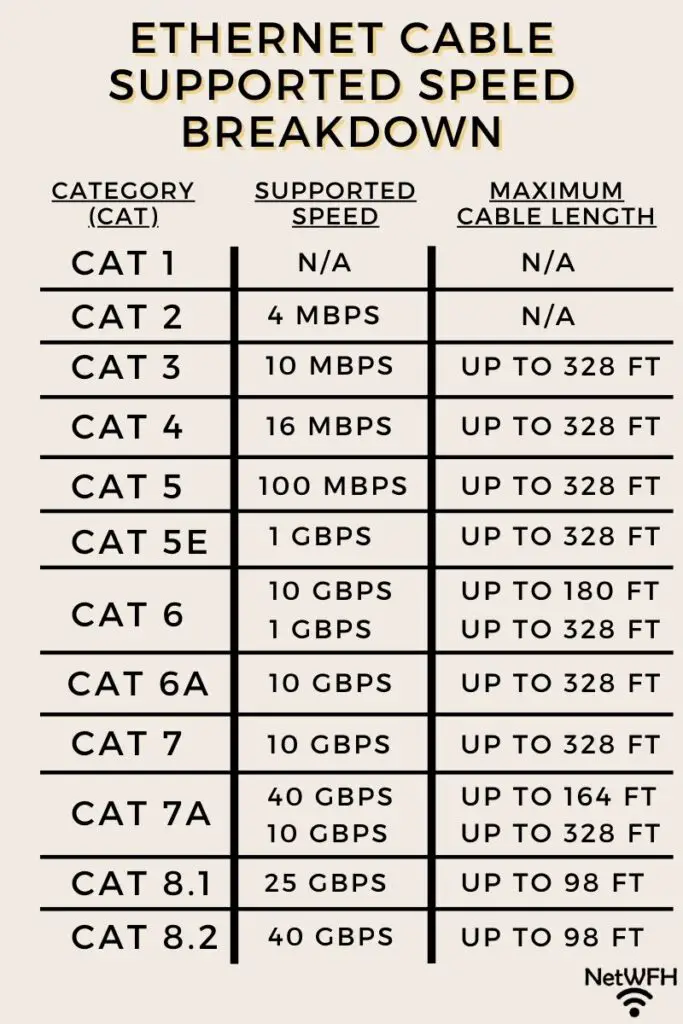
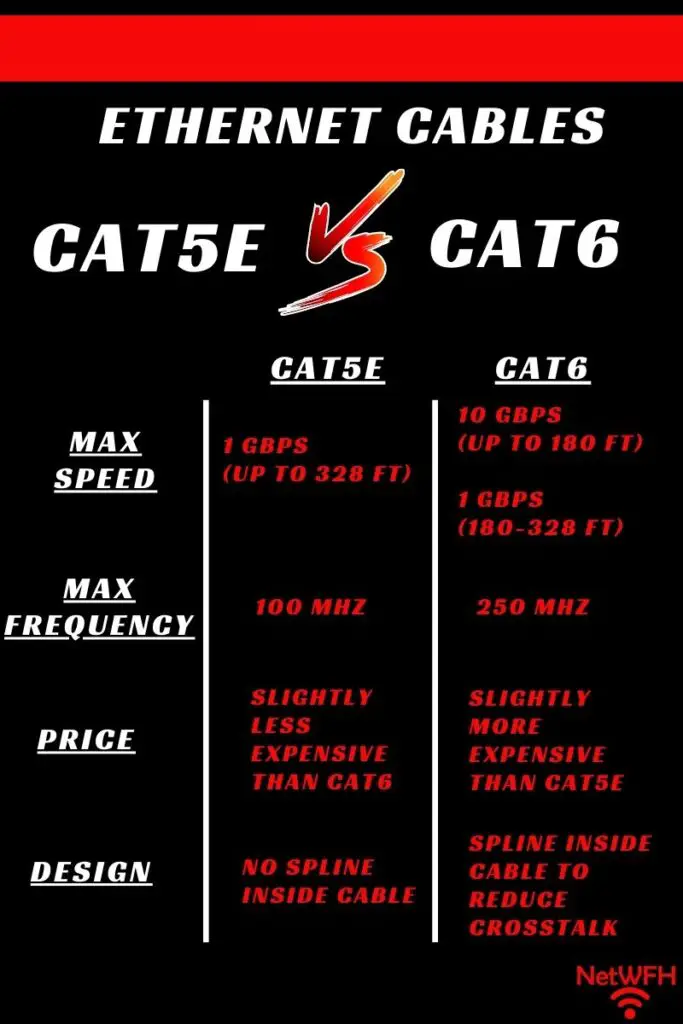
    The main difference between cat5e and cat6 cables is the speeds they support. Cat5e cables support speeds up to 1 gigabit per second (Gbps), while cat6 cables can support a maximum speed of 10 Gbps (depending upon the length of cable).

    Other differences between cat5e and cat6 cables include:

    • The different frequencies they support
    • How much they cost
    • The way they’re designed

    In this post, I’ll detail all the ways that cat5e and cat6 cables are different. I’ll also provide a recommendation about which cable you should be using in your home.

    What does cat5e and cat6 mean?

    We’ll start at a high level here to make sure we’re on the same page.

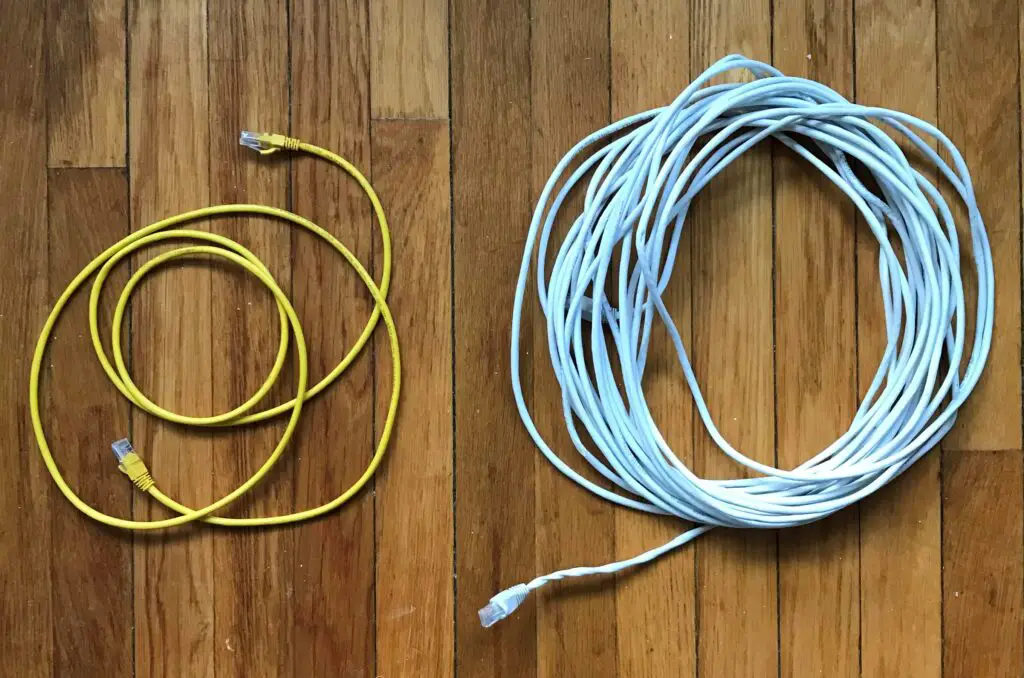
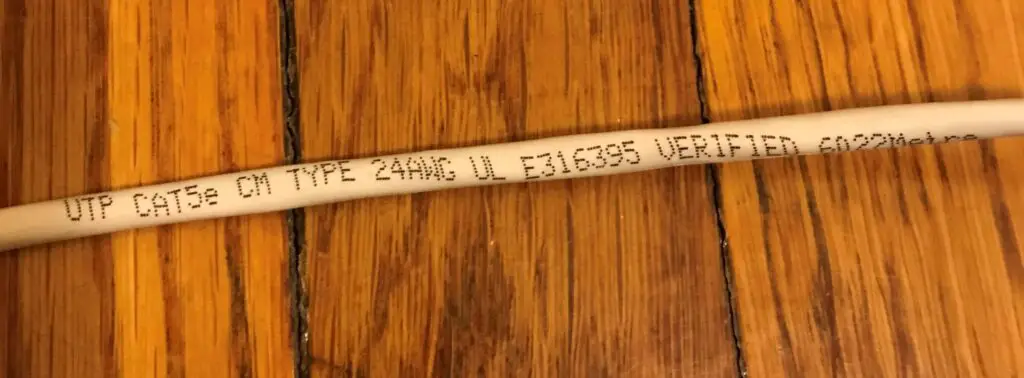
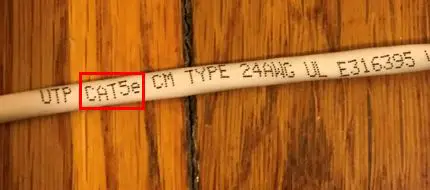
    Cat5e and cat6 cables are just different types of everyday ethernet cables you use in your home network. For reference, here’s a cat5e and cat6 ethernet cable next to each other.
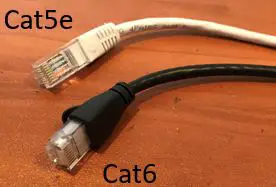
    Cat5e and Cat6 ethernet cables

    Pretty obvious to tell which one is which, isn’t it?

    Not exactly.

    When it comes to different types of ethernet cables, they’ll all pretty much look the same. That’s because all ethernet cables are designed to do the same thing. They’re used to allow two devices to communicate with each other.

    So if all ethernet cables do the same thing, why do they have different categories of cables?

    Why are there categories of cables?

    A big reason for the different categories of ethernet cables is due to advancements in technology.

    Over time, the speed of computers (and the internet) has grown exponentially. On top of that, more and more devices are getting connected to the internet in this digital age. Everything from heavy machinery in manufacturing plants to refrigerators in our homes are now digitized and connected to the internet.

    To support the advancement of computers, as well as the different environments they’re used in, ethernet cables required further development as well. They needed to support faster speeds, and they needed to work in different operating environments.

    This led to the development of new categories of ethernet cables.

    These ethernet cable categories standardized how ethernet cables were manufactured. As the performance requirements for ethernet cables increased, so did the standards to which they were made. As you’ll find out in the next section, ethernet cables that are made to different standards will meet different specifications.

    What’s important for you take away from this is that there are other categories of ethernet cables other than cat5e and cat6 cables. At this day and age, however, cat5e and cat6 cables are used in the vast majority of applications.

    You also need to know that you can’t use any category of cable in any situation. If you use the wrong ethernet cable, it can greatly reduce the speed of your network.

    What are the differences between cat5e and cat6 cables?

    Ok, so cat5e and cat6 cables are made to different specifications. What are the differences between these two specifications?

    Let’s take a close look at each of these differences.
    Cat5e vs Cat6 Cables

    Supported speed

    We’ll start with the factor that everyone cares about the most.

    Cat5e and cat6 cables support different data transmission speeds.

    Cat5e ethernet cables support data transfer speeds up to 1 Gbps. On the other hand, Cat6 cables support speeds up to 10 Gbps.

    The catch here is that cat6 cables support speeds up to 10 Gbps if the ethernet cable is less than 180 feet (55 meters) long. If the cable is longer than 180 feet, it’ll support the same speeds as a cat5e cable (1 Gbps).

    With that said, most people don’t need cables longer than 180 feet. If you’re using a cat6 cable, it’s probably supporting speeds up to 10 Gbps.

    It’s also important to note that for both cat5e and cat6 categories, the cable will stop working properly if it’s more than 328 feet long. If for some reason you need ethernet cables longer than 328 feet, there are a few things you can do to extend the length of your ethernet cables.

    Maximum frequency

    Another major difference between cat5e and cat6 cables is the maximum frequencies they can support.

    This goes hand-in-hand with the different maximum data transmission speeds of the cables.

    Cat5e ethernet cables can support a maximum frequency of 100 megahertz (MHz), while cat6 cables can support a frequency of up to 250 MHz.

    Ok, a cat6 cable can support a higher frequency than a cat5e cable. What exactly does this mean in terms of cable performance?

    When it comes to ethernet cables, frequency is used to measure how quickly a cable can process data.

    In simpler terms, it’s just a measure of how fast a cable can send and receive data.

    The more data that can be processed in a given period of time, the faster you can move data between the two systems connected to the ethernet cable.

    So if a cat6 cable can send and receive data more than twice as fast as a cat5e cable, it’d make sense that it can support faster data transmission speeds as a result.

    Frequency is the underlying specification that allows cat6 cables to support faster data transmission speeds than cat5e cables.

    Most people are just concerned with the speed the cable can support, but now you know why different cables can support different speeds.

    Price

    This next difference between cat5e and cat6 cables is more general.

    I’m talking about how much these two types of cables cost.

    This won’t come as any surprise to you, but cat5e and cat6 cables don’t cost the same amount. Although you should be able to buy both types of cables for under $10, cat6 cables are generally more expensive than cat5e cables.

    This makes sense, because cat6 cables are made to higher specifications than cat5e cables are (resulting in the higher supporting frequency and transmission speed).

    It should be known that I’m not talking about a big price difference here. If you compare the prices of cat5e and cat6 cables from the same manufacturer, cat6 cables probably won’t cost more than a few dollars more.

    Design

    The last major difference between cat5e and cat6 cables is in their construction.

    Although they look the same on the outside, there’s a big difference inside the cable. Both types of cables have 8 copper wires inside them that are twisted in pairs.

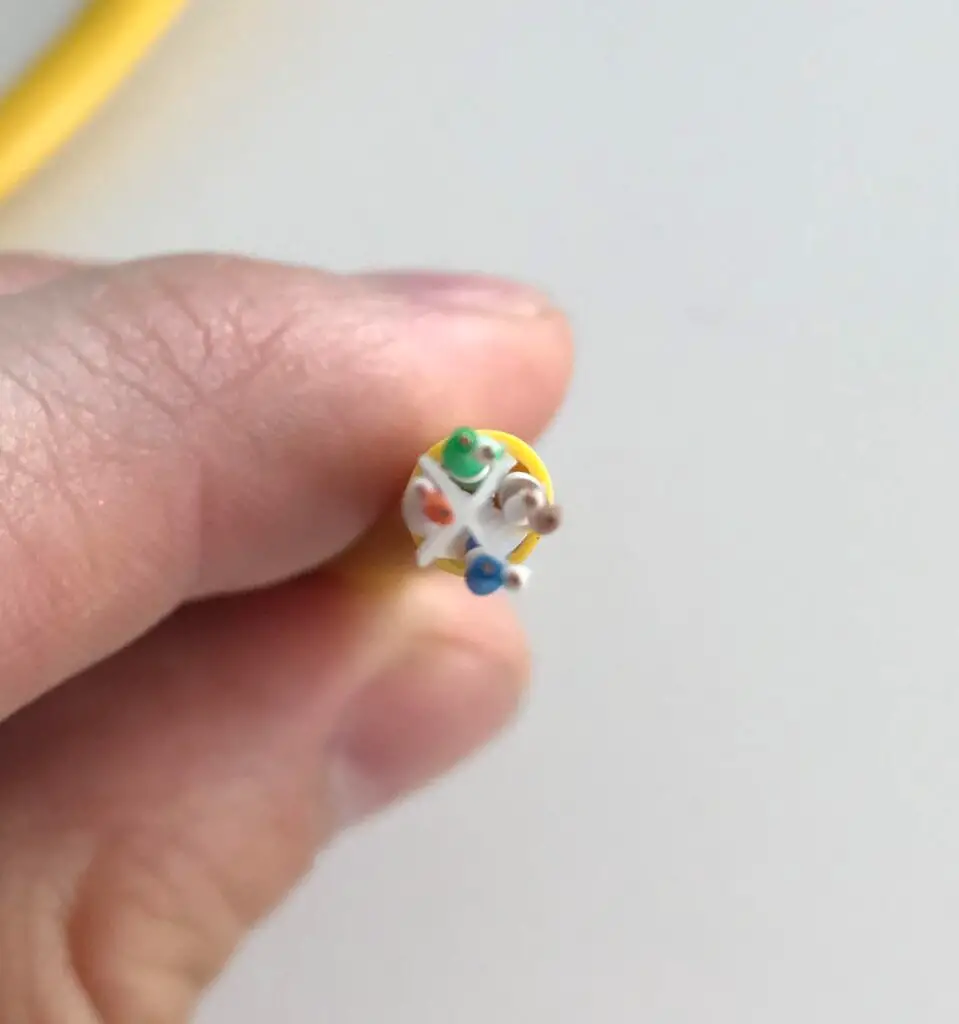
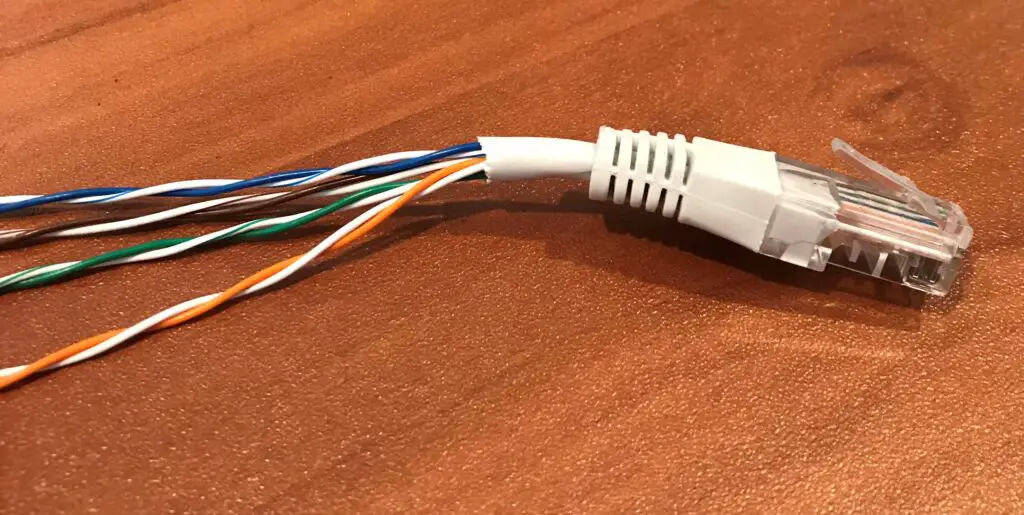
    This means that both cables have 4 pairs of twisted wires inside them. For your reference, here’s what the inside of a cat5e cable looks like:
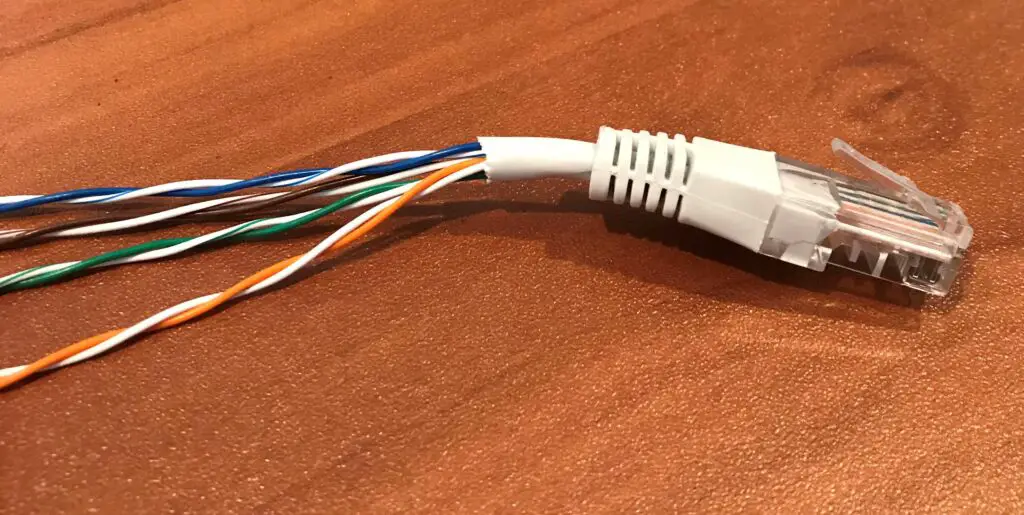
    Twisted pairs of wires inside an ethernet cable

    Ok, so how are cat5e and cat6 cables different?

    Cat6 cables are different because they have splines in them.

    Wait. What exactly is a spline and what’re they used for?

    Here’s what a spline looks like inside a cat6 cable:
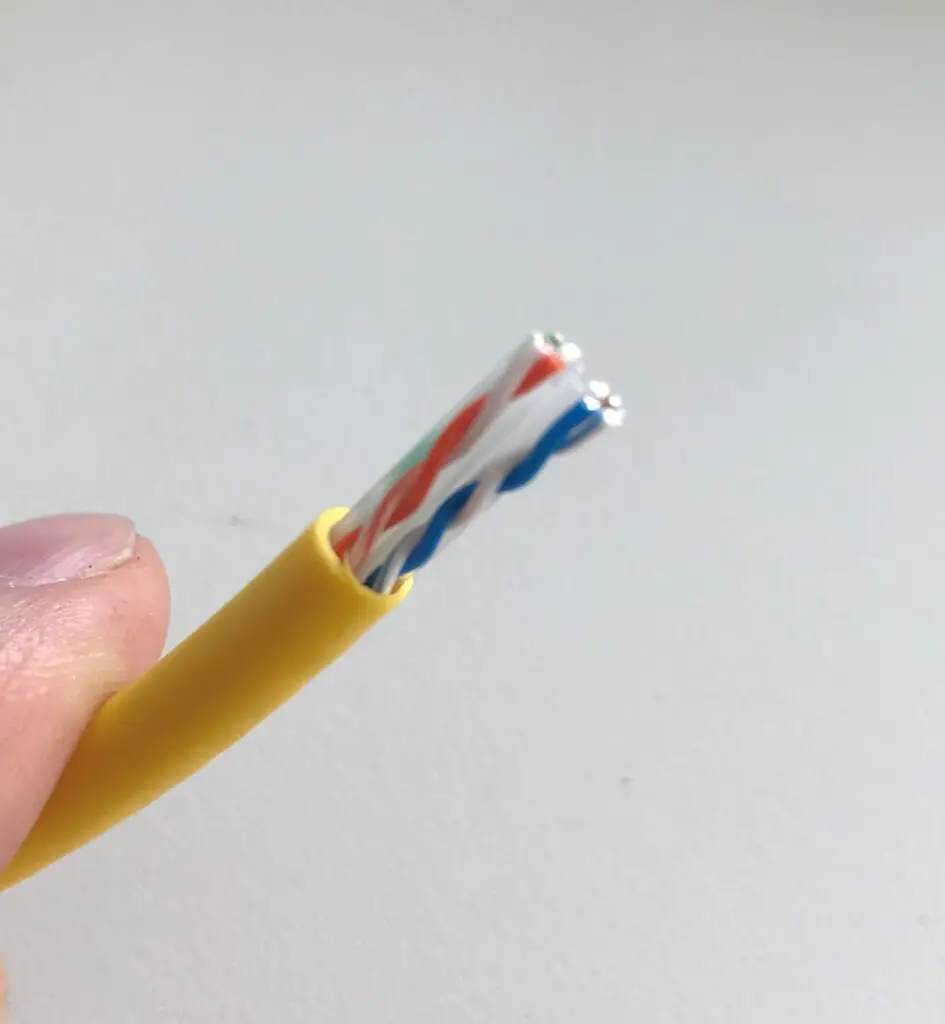
    If it’s not obvious, the spline is the plastic piece in the middle of the cable.

    Here’s what the spline looks like when it’s removed from the cable:
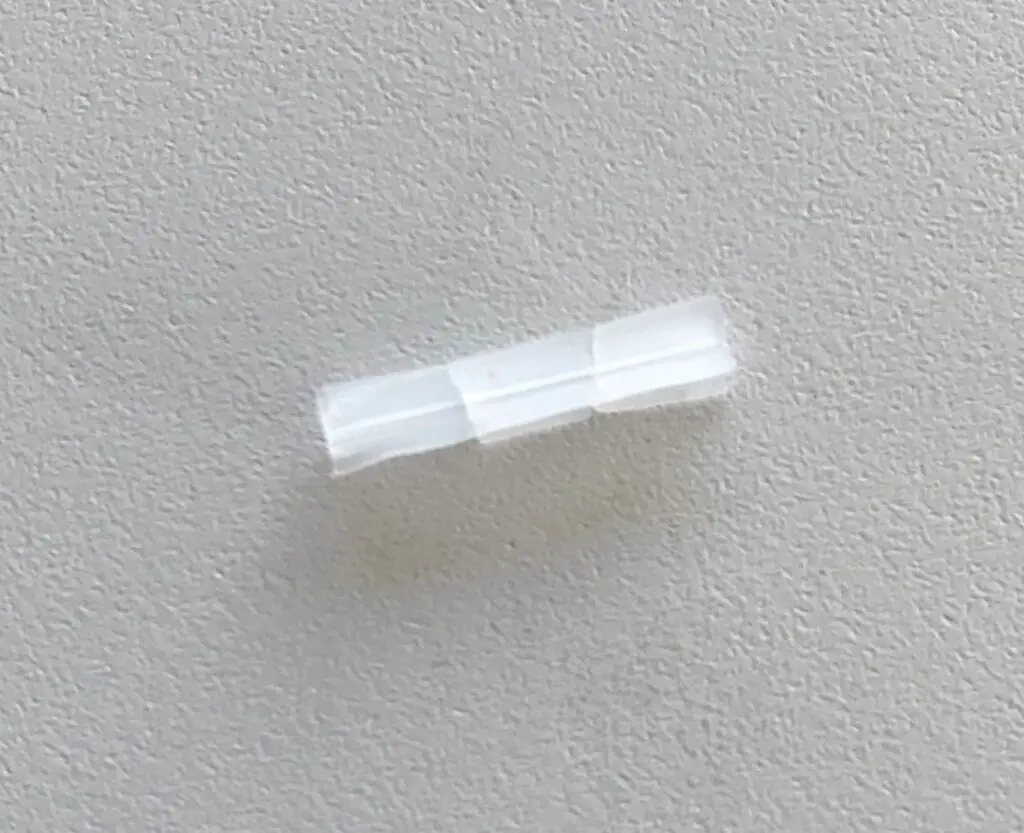
    The plastic spline in the cable separates the cable into 4 sections. Each pair of twisted wires inside the cable fits into each section that the spline creates.

    The reason cat6 cables are designed this way is because the spline helps eliminate crosstalk.

    Splines help eliminate crosstalk

    If wires are too close to each other, the signals from one wire can affect the signals in the wires that are close to it. This results in improper transmission of data and a weakened connection between the devices connected to the cable. This is what’s happening when you have crosstalk in an ethernet cable.

    In other words, crosstalk is electromagnetic interference (EMI) between wires in an ethernet cable.

    The spline is useful here because it provides a barrier against crosstalk. It makes it harder for the electric signals traveling through one pair of wires to affect the other wires near it.

    This ensures a strong connection between the devices connected to your cat6 cable.

    That’s not the only benefit that a spline provides, however.

    Other spline benefits

    Not only do splines prevent crosstalk, but they also help by reinforcing your cables.

    The piece of plastic inside the cable helps keep its shape, and it also prevents it from stretching out. A more rigid cable will be more resistant to some of the things that can cause a cable to fail.

    The one potential downside of having a spline inside the cable is that the spline will make it slightly less flexible than a cat5e cable. This isn’t a minor concern, because cat6 cables are still pretty flexible.
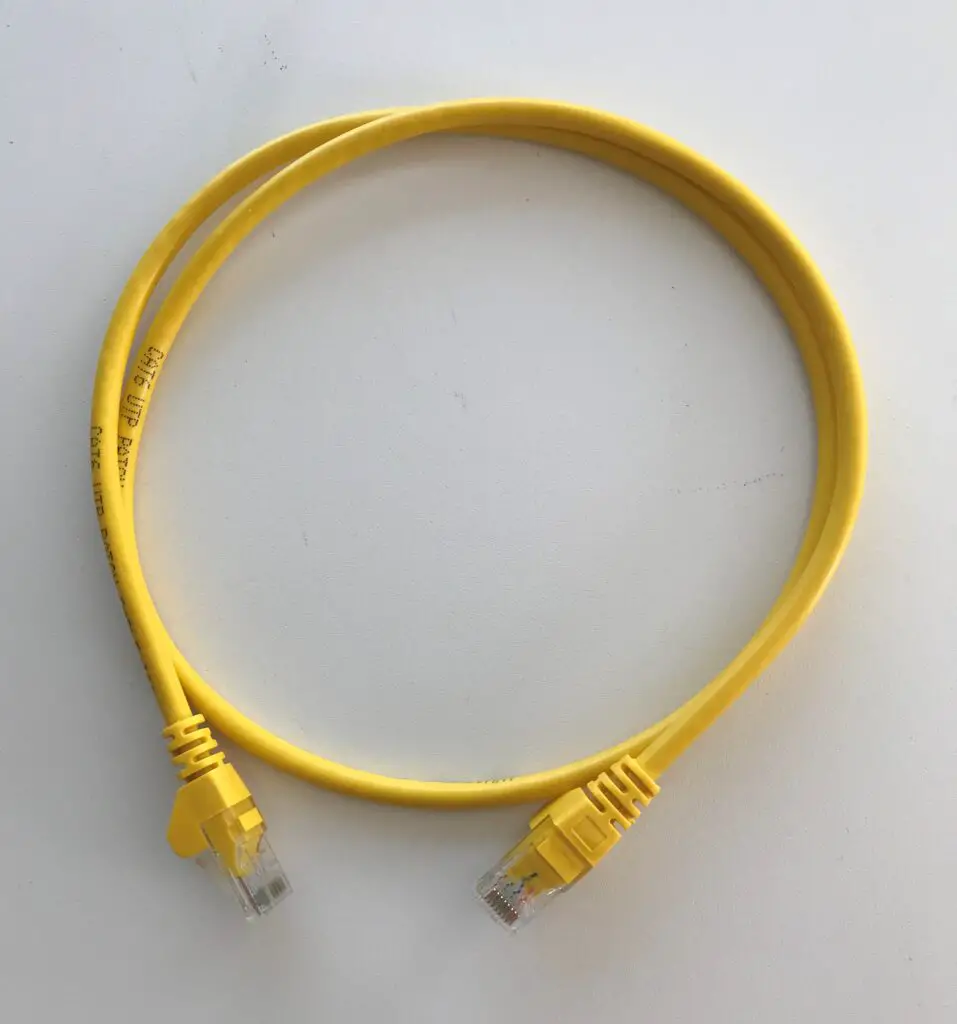
    Cat6 ethernet cable

    See? It looks pretty flexible to me.

    A spline in the cable is well worth the added protection and insurance of better data transfer if you ask me.

    Which type of ethernet cable should you buy?

    I’ll just come out and say it.

    If you’re in the market for some ethernet cables, I suggest you buy cat6 cables instead of cat5e.

    There are a few reasons for this.

    Cat6 cables can help future-proof your network

    At this point, it’s no secret that cat6 (10 Gbps) cables support faster data transmission speeds than cat5e cables (1 Gbps).

    With that said, a cat5e cable will most certainly meet the current needs of your network.

    I know what you’re thinking. If a cat5e cable will fit the needs of my network, why should I buy a cat6 cable?

    The answer is simple. We don’t want an ethernet cable that’ll support our needs today. We want an ethernet cable that’ll support our needs both now and into the future.

    This concept is called future-proofing.

    I mentioned earlier that internet and data speeds continue to get faster as technology advances. You should expect this trend to continue moving forward.

    With data moving faster both to and from your devices, you’ll need to make sure the cables they’re connected with can support it.

    By buying cat6 cables, you’re ensuring that you won’t “outgrow” your cables as your devices and internet get faster in the future.

    Plus, cat6 cables are only a little more expensive than cat5e cables.

    Speaking of cost…

    Cat6 don’t cost much more than than cat5 cables

    Yes, cat6 cables are generally more expensive than cat5e cables.

    The good news is, they don’t cost that much more.

    It’s well worth it to spend a little extra money to future-proof your network. After all, it’s better to spend a few extra dollars now and get cat6 cables instead of having to buy all new cables when your cat5e cables need to be replaced.

    You may even be able to find cat6 cables that are less expensive than cat5e. One word of caution here is that you’ll want to make sure you get your cables from a manufacturer that has a good reputation.

    Especially if you’re buying your cables online.

    There are a lot of knockoff cables online that aren’t the best quality. Once again, I’ll stress that spending a little extra for a cable from a well-known manufacturer can go a long way.

    Cat6 cables are more durable than cat5e cables

    The spline inside cat6 cables has side benefits that can’t be ignored.

    Are cat5e cables light and flexible?

    Yes they are. They’re also less resistant to abuse.

    Cat6 cables, on the other hand, are much more robust.

    The spline inside cat6 cables makes them more resistant to failure. This is a nice benefit because I’ve seen how cables can be treated.

    To say that ethernet cables aren’t always handled with care is an understatement. The truth is, most people have tripped over an ethernet cable before (or at least their pets have). You want to make sure your cable won’t stop working if this happens.

    I know this may sound like a minor detail, but for some people it’s more important than you think. I won’t name any names here.

    If spending a few extra bucks gets you a cable that’s better suited to withstand the abuse of your household, it sounds like a good deal to me.

    Wrap up

    Hopefully by now you’re sold on cat6 cables (pun intended). If you have any questions about cat6 (or cat5e) cables, or you’d like to share how many times you’ve tripped over the ethernet cables in your home, drop a comment below.

    For more groundbreaking content, check out these other posts I’ve written on similar topics:

    How to Extend an Ethernet Cable

    Shielded vs Unshielded Cables: A Full Comparison
    Can Ethernet Cables Go Bad?

    Does Ethernet Cable Length Affect Network Speed?

    How to Tell What Type of Ethernet Cable You Have

  • When to Use a Straight Through Cable

    When to Use a Straight Through Cable

    Straight Through Cable title page

    You’d think using ethernet cables would be easy.

    All you have to do is grab any cable you can find and plug it into the two devices you want to connect, right?

    Unfortunately it’s not that simple.

    I know what you’re thinking.

    How can it be more complicated than that? All ethernet cables look exactly the same.

    When it comes to ethernet cables, there’s a lot more to them than you’d think.

    There are two major types of ethernet cables, and each cable type has multiple categories. The two main types of ethernet cables are straight through and crossover cables.

    Of these two main types of cable, straight through cables are the ones you’re probably more familiar with.

    Don’t be confused by their name. Straight through cables are just the regular ethernet cables you’re used to.

    So the question is, if there’s more than one type of ethernet cable to choose from, when should you be using straight through cables?

    The good news is, you can use straight through cables to connect any of your devices. Due to advancements in technology, you no longer need to use crossover cables in your network.

    There are additional advantages to using straight through cables instead of crossover cables. Straight through cables are much easier to get than crossover cables, and they generally cost less as well.

    In this post, I’ll provide all you need to know about using straight through cables. I’ll also break down the benefits of using them instead of crossover cables.

    What is a straight through ethernet cable?

    Straight through ethernet cables are the regular, everyday cables you’re probably using in your home network now. The truth is, when you think of ethernet cables, these are the ones you think about.

    In other words, they’re the most “basic” type of ethernet cable. Especially when they’re compared with their crossover cable counterparts (which we’ll talk more about later).

    Straight through cables were originally designed to connect two different types of devices together. This means they were designed to connect a:

    On the other hand, they weren’t designed to connect two of the same type of device. This means they weren’t meant to connect a(n):

    • Computer to a computer
    • Ethernet switch to an ethernet switch
    • Router to a router

    In the situations above, crossover cables were used.

    When it comes to which type of ethernet cable was used more often, it’s straight through cables without a doubt.

    In home networks, most people needed ethernet cables to connect two different types of devices together. It’s not very common that people needed to connect two of the same type of device. Historically, that was more often the case in advanced home networks and datacenters.

    As you’ll find out later, things have changed when it comes to connecting these devices with ethernet cables, but this is still useful background information.

    How do straight through cables work?

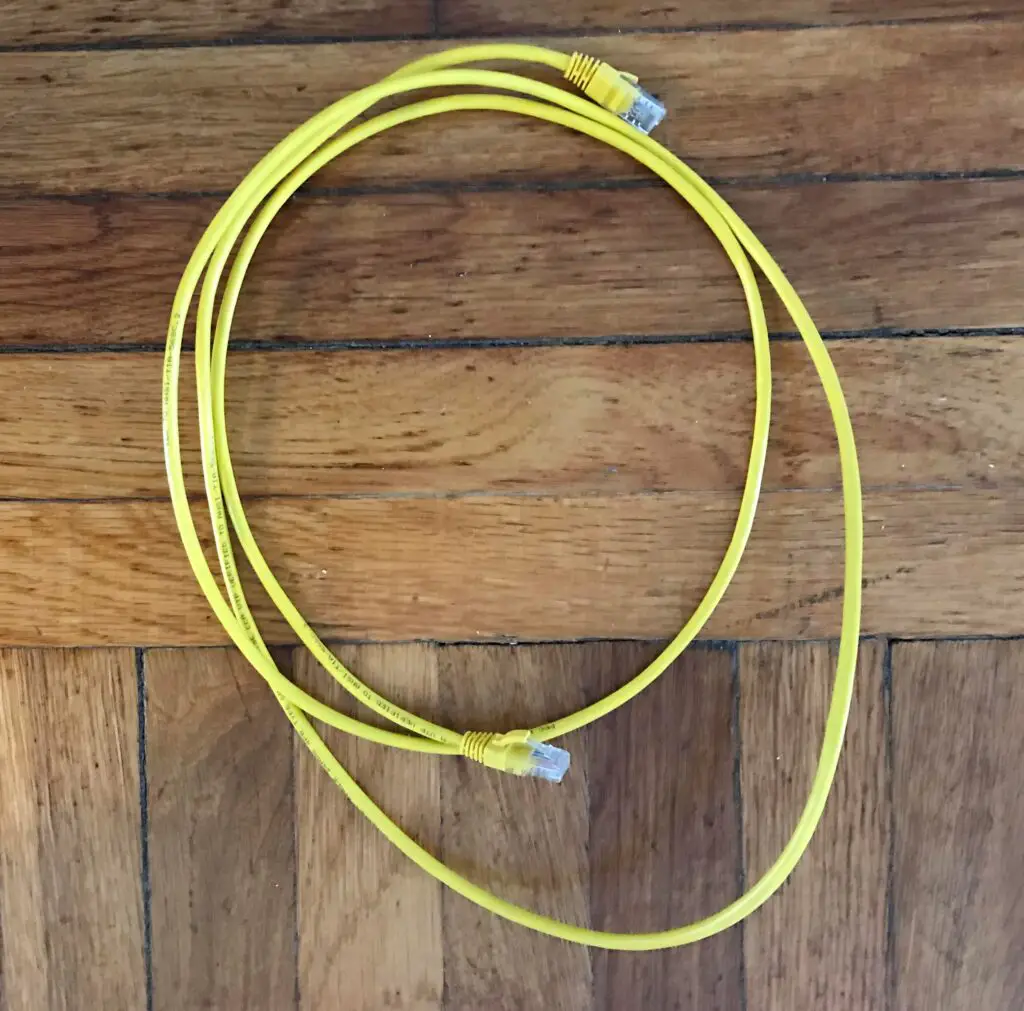
    By the looks of them, straight through ethernet cables are very simple devices:

    Coiled Ethernet cable
    A straight through ethernet cable

    See, nothing to exciting to look at.

    Surprisingly, there’s a little more going on inside them than you’d think.

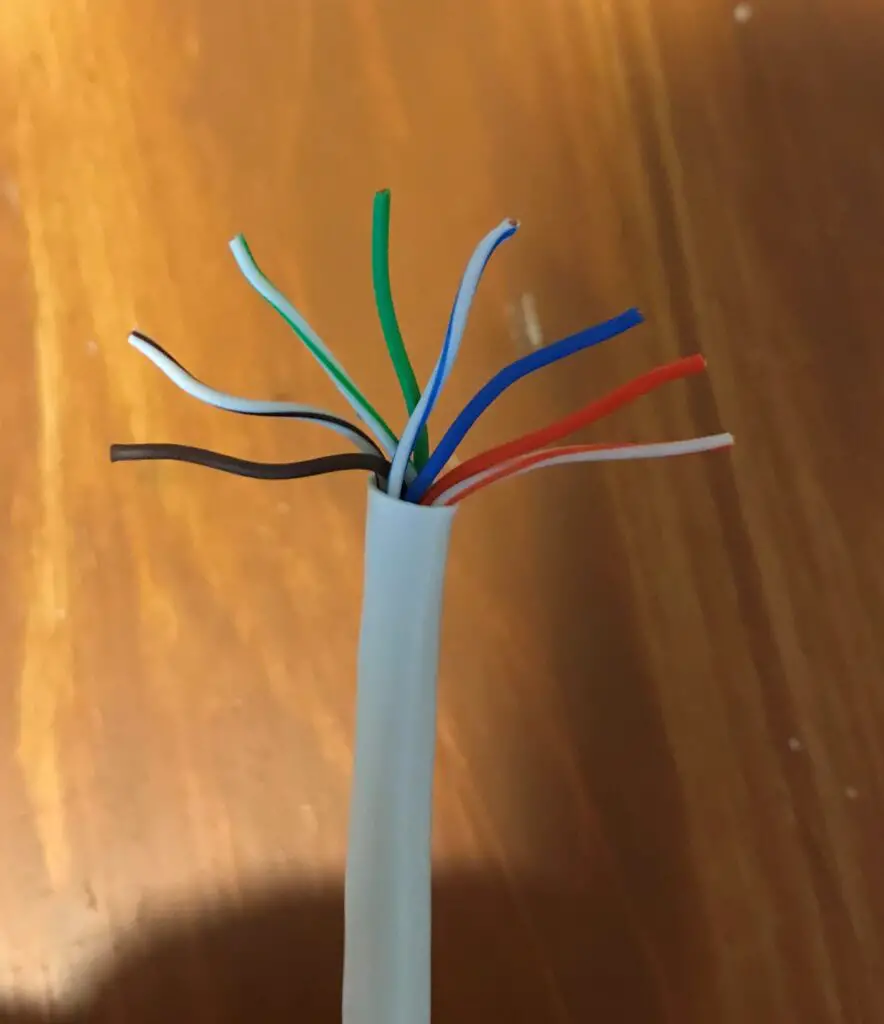
    Inside an ethernet cable there are actually 4 pairs of copper wires that are twisted together.

    Let’s get a closer look:

    Ethernet cable copper wires
    Inside an ethernet cable there are 4 pairs of copper wires twisted together

    In the picture above, I’ve untwisted the 4 pairs of wires so you can see them better. Inside the cable itself, the two black wires are twisted together, as well as the two green, blue, and orange wires.

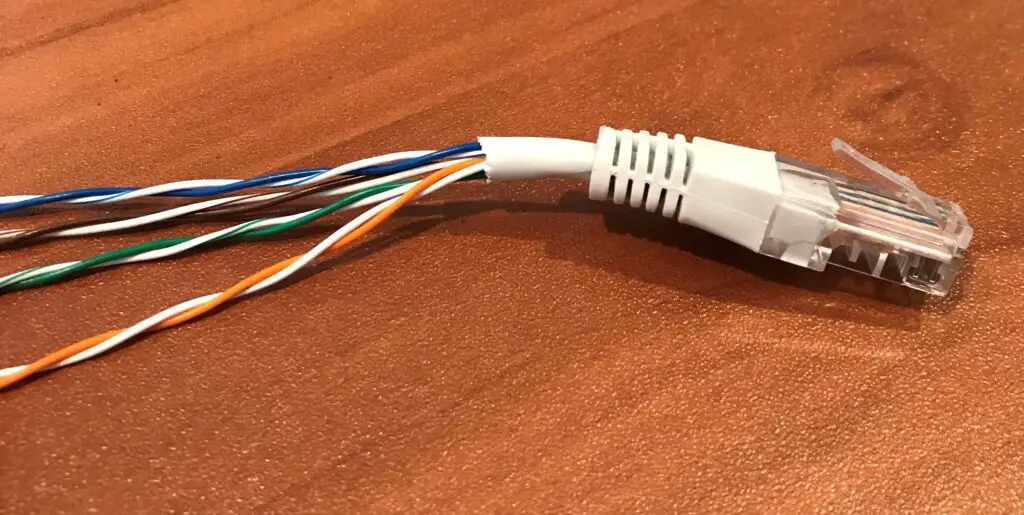
    Here’s a visual of the wires when they’re twisted together.

    Twisted wires inside ethernet cable
    The 4 twisted pairs of wires inside an ethernet cable

    When an ethernet cable is used to connect two devices together, the devices use the 8 copper wires inside the cable to send data to each other.

    This data comes in the form of electrical pulses. Electrical pulses transmit the data from one system to the next. When the electric pulse arrives at the receiving system, the device translates the data into a message that the system can read.

    Make sense so far?

    That’s straight through cables 101. In fact, crossover cables work the same way.

    As you’ll see in the next section, this is where their similarities end.

    What does the wiring of a straight through cable look like?

    Let’s take a second and think about what’s happening inside an ethernet cable.

    We’ve already established that there are 8 copper wires inside any given ethernet cable (regardless of what type of cable it is). This basically means that there are 8 different paths that data can take as it’s transmitted through the cable.

    Think of each wire like a lane on a highway.

    A car can take any of the 8 lanes to get to their destination. With that said, if there are cars coming in the other direction in the same lane, that would lead to some serious problems.

    Ethernet cables are no different. When two devices communicate with each other, data is traveling back and forth between the two.

    If both devices send data to each other using the same wire inside the ethernet cable, it would lead to a lot of confusion.

    To allow for seamless communication between the connected devices, each device has specific wires for transmitting data, as well as specific wires for receiving data.

    Going back to our highway analogy, this is the same concept that you see when you’re driving. Some lanes are designated for traffic in one direction, while other lanes are designated for traffic in the other.

    These rules of the road for ethernet cables are determined by wire pinout standards.

    Ethernet cable pinout standards

    In order to determine which wires are used for sending data and which are used for receiving data, ethernet cable pinout standards were developed. The goal of these standards was to make sure all manufacturers were wiring their ethernet cables the same way for a given type of cable.

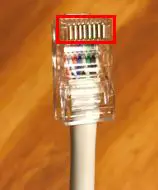
    A pinout basically refers to how the wires are laid out at each end of the cable. For example, let’s look at the end of an ethernet cable.

    Can you see the colored wires all lined up inside the connector at the end of the cable?

    Ethernet cable wire locations

    The position of each wire in the ethernet cable connector will determine if it’s a sending or receiving wire. For example, the first two wires in the connector might be sending wires, while the next two might be receiving, and so on.

    As you’ll see, this will also depend upon the pinout standard that the cable was manufactured to.

    Ok, back to the pinout standards.

    The two pinout standards for ethernet cables are T568A and T568B.

    This is where straight through cables and crossover cables differ. Straight through cables will have the same pinout at both ends, while crossover ethernet cables will have one of each pinout configuration at each end.

    Let’s take a closer look at what the T568A and T568B standards mean for straight through cables.

    Straight through cable pinout standards

    Ok, so we’ve established that straight through cables will have the same pinout standard at both ends.

    This’ll make a lot more sense once you see the actual pinout for the cable. As the name suggests, wires in a straight through cable are laid out straight through the cable.

    What does this mean, exactly?

    It means that although pairs of copper wires are twisted together inside the cable, these pairs of wires don’t cross each other at the end of the cable. To simplify things, it means that the position of a certain wire at one end of the ethernet cable will be in the same position at the other end of the cable.

    Let’s look at a few visuals for straight through cables.

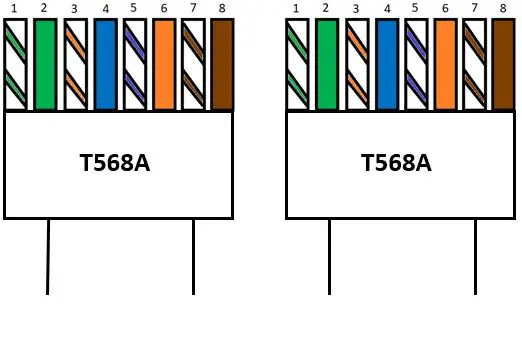
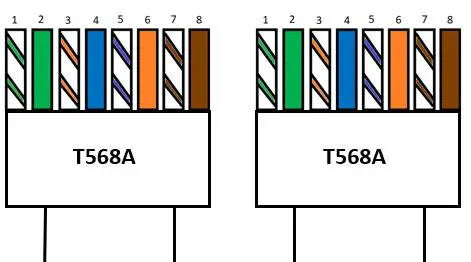
    A straight through cable will either have two T568A pinouts at the ends of the cable:

    Straight through cable T568A wire pinout at both ends

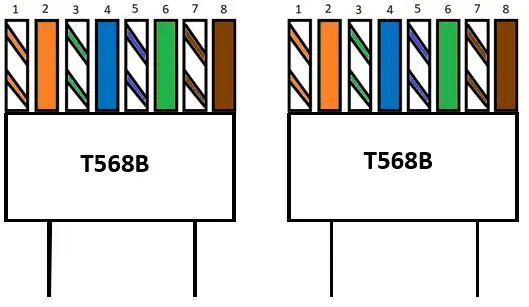
    Or they’ll have two T568B pinout at the ends of the cable:

    Straight through cable T568B wire pinout at both ends

    As you can see, the wires at the end of the cable on the left are in the same positions at the end of the cable on the right. In other words, the wire configuration is the same straight through the cable.

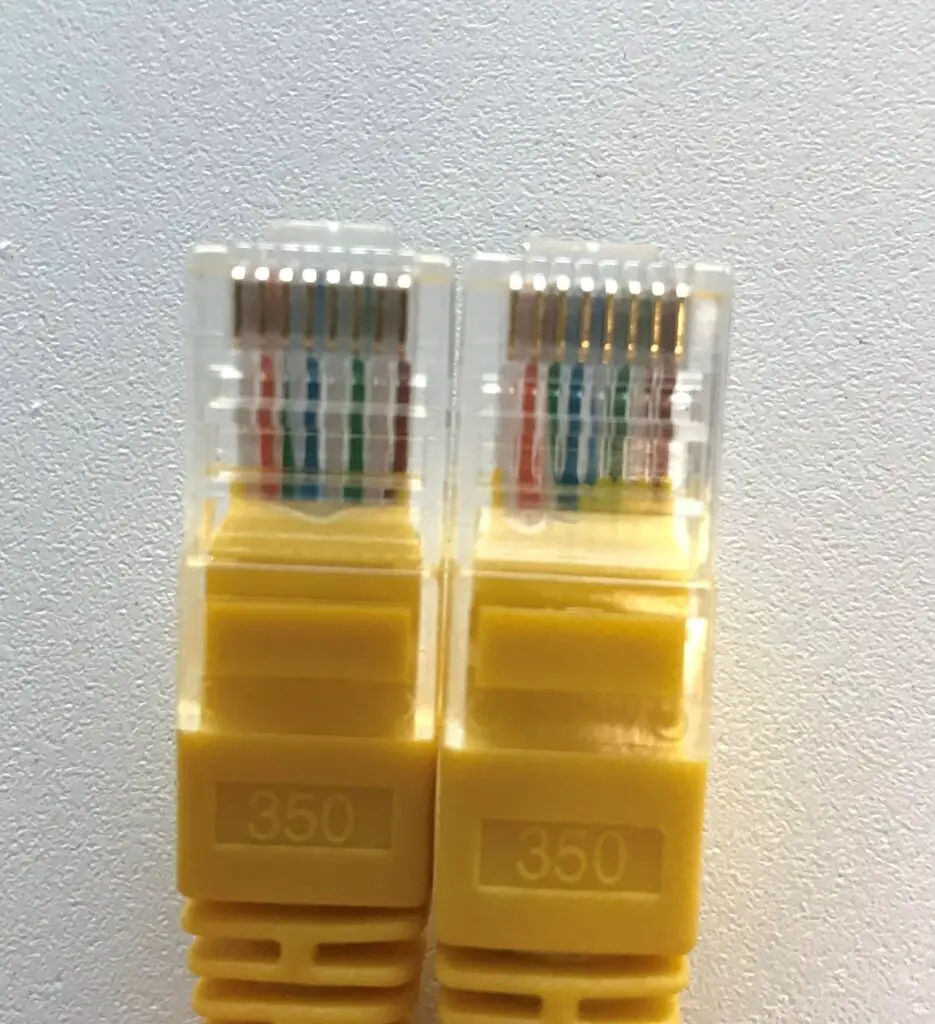
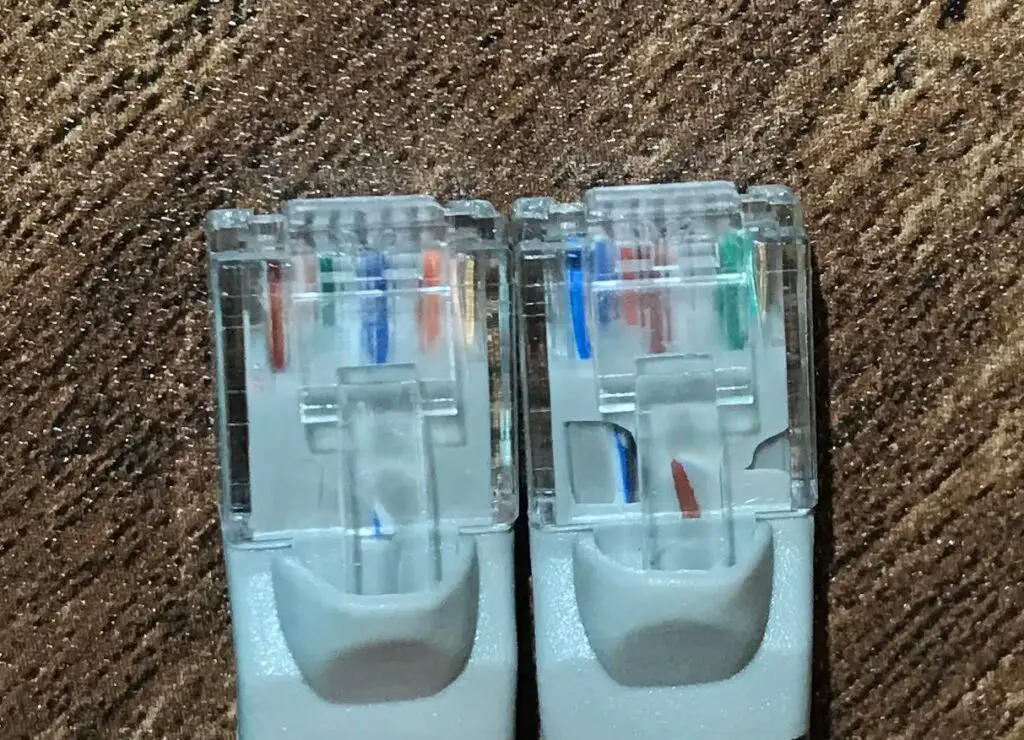
    Here’s what it looks like in real life:

    Comparing the above picture to the pinout diagrams before it, you can see that the above straight through cable has a T568B pinout at both ends.

    It’s safe to say the straight through pinout standard is pretty straightforward (horrible pun intended).

    How is the pinout of a straight through cable different from a crossover cable?

    As mentioned in the previous section, the pinout of a straight through cable differs from the pinout of a crossover cable.

    The difference is pretty easy to notice, as a crossover cable will have a different pinout at each end. In other words, a crossover cable will have one end with a T568A layout, and the other end will have a T568B pinout.

    Here’s what it’ll look like:

    Crossover cable pinout diagram

    Here’s a real life visual:

    Crossover ethernet cable wiring

    In looking at the cable above, it’s easy to see that the blue wire on the left is not in the same position as the blue wire on the right.

    As it’s name suggests, some of the wires inside a crossover cable actually cross over the others. That’s why some wires are in different positions at the different ends of the cable.

    For more information about this, check out my previous post on crossover cables.

    What does each wire do in a straight through cable?

    Let’s refresh our memories before we move forward here.

    If you recall, straight through cables were originally designed to connect two different types of devices such as a:

    • Computer to a router
    • Computer to an ethernet switch
    • Modem to a router

    You may also remember that certain wire positions at the end of the cable are used for different purposes (e.g. transmitting or receiving data).

    The reason this works is that while one type of device may transmit data out of the second wire position, the other device connected to the cable is expecting to receive data from that wire. If both devices were trying to send data to each other over the same wire, it would mess up the messages between the two.

    So how are devices classified into types?

    I’ll keep this at a high level.

    Essentially, any endpoint device (like a computer or printer) is classified as one type of device, while networking equipment (like a switch or router) is classified as another.

    If you want to take a deep dive into this topic, these two device classifications are called medium-dependent interface (MDI) devices and medium-dependent interface crossover (MDIX) devices.

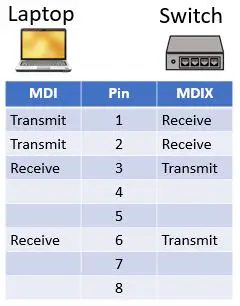
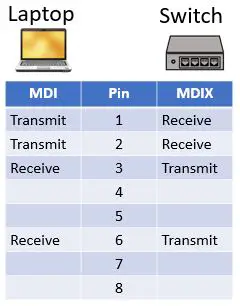
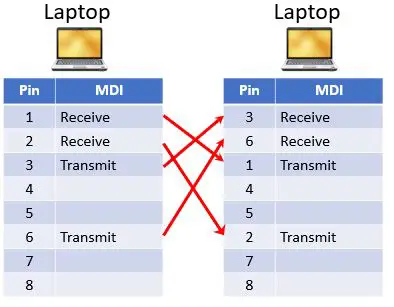
    Here’s an example of how each wire is used when connecting two different types of devices.

    MDI-MDIX connection

    As you can see, straight through cables are perfect for connecting these devices. For each wire that’s used by the computer to send data (pins 1 and 2), the switch uses that same wire to receive data. On the other end of the cable, the switch sends data on pins that the computer expects to receive data on (pins 3 and 6).

    An interesting fact is that wires 4, 5, 7, and 8 in the cable aren’t used to send or receive data. Surprisingly, these wires aren’t used at all.

    When should you use straight through cables?

    Despite the fact that straight through cables were originally designed to connect two different types of devices, they can actually be used to connect any of your devices.

    Yes, you read that correctly.

    You can (and should) use straight through cables for all your ethernet connections.

    You have technology to thank for that. Specifically, I’m referring to auto-MDI/MDIX here.

    Auto-MDI/MDIX is a feature of most modern devices. It allows your devices to recognize the type of the device they’re connected to with an ethernet cable.

    For example, if you use a straight through cable to connect two of the same type of device (e.g. two computers), you’d previously have to use a crossover cable.

    With auto-MDI/MDIX, each computer will automatically recognize the type of device they’re connected to, and transmit and receive data accordingly. In other words, your device will automatically transmit data using the wires that the other device expects to receive data on. This’ll happen regardless if you’re using a straight through cable or crossover cable.

    The main benefit? You get to use whatever ethernet cables you have on hand to connect your devices.

    The bottom line is, you no longer have to think twice about which ethernet cables you need to use when connecting your devices.

    With that said, I still recommend that you use straight through cables instead of crossover cables.

    Why should I use straight through cables instead of crossover cables?

    Although the type of cable you use in your network doesn’t matter, that doesn’t mean there isn’t a certain type of cable that’s better suited for the job.

    That’s right, I’m talking about straight through cables.

    Let me say up front that you won’t experience a difference in performance when it comes to straight through and crossover cables. Both types of cables will get the job done.

    With that said, there are a few reasons why straight through cables are the better choice here.

    Price

    As with most things in life, price is always a factor.

    If you’re looking to buy ethernet cables, you may notice a slight difference in price between straight through and crossover cables.

    In general, straight through cables cost slightly less than crossover cables. This shouldn’t be surprising because straight through cables are less complicated than crossover cables.

    This means straight through cables are easier (and cost less) to make. This usually results in a lower price for the customer.

    Of course, depending upon the manufacturer and inventory at any point in time, you’ll probably be able to find crossover cables that are cheaper than straight through cables. It’ll also depend upon the color, length, and quantity of cables you buy.

    Crossover and straight through ethernet cables are fairly inexpensive, so you won’t be breaking the bank either way here.

    When it comes to deciding which type of cable to buy, the real difference is in the availability of each type.

    Availability

    The biggest difference between straight through and crossover cables is their availability.

    Straight through cables have always been more available than crossover cables. That’s because when it mattered what type of cable you used, most of the time people needed straight through cables.

    Once advancements in technology made crossover cables unnecessary, there was even less reason for companies to carry them.

    As a result, straight through cables are much easier to find.

    That’s not to say that you can’t find crossover cables at your local computer store. It just means that you’ll likely have many more choices in terms of color, length, and quantity if you get straight through cables.

    It’s just best to make it easy on yourself and buy straight through cables for your network.

    If for some reason you have older computer equipment and you still need to use crossover cables in your network, you can even buy crossover cable adapters for your straight through cables.

    All the more reason to buy straight through cables.

    Wrap up

    It should be no mystery to you now. You can use straight through ethernet cables to connect any of the devices in your home.

    If you have any questions about this information, please leave a comment below.

    For more interesting reading on similar topics, check out these other posts I’ve written:

    When to Use a Crossover Cable

    How to Extend an Ethernet Cable

    Shielded vs Unshielded Cables: A Full Comparison
    Can Ethernet Cables Go Bad?

    Does Ethernet Cable Length Affect Network Speed?

  • When to Use a Crossover Cable

    When to Use a Crossover Cable

    When Use Crossover Cable title page

    Ethernet cables used to be a lot more complicated than they are today.

    Depending upon the devices you were connecting, you’d need to use different ethernet cables in order for them to communicate correctly.

    For example, let’s say you had your computer connected to a router with an ethernet cable. Later in the day, if you wanted to connect that computer to another computer, you’d have to use a special type of ethernet cable.

    The special type of cable I’m referring to here is a crossover ethernet cable.

    In order for your network to work properly, you had to know when to use a regular cable and when to use a crossover cable. If you weren’t using the right cable, you’d be out of luck. Your devices wouldn’t be able to communicate with each other.

    Now for the good news. Things have changed when it comes to crossover ethernet cables. It’s not as complicated as it used to be.

    I know what you’re wondering.

    What does that mean when it comes to crossover ethernet cables? When should crossover cables be used today?

    If you have relatively modern equipment in your network, you won’t need to use crossover cables at all. Modern technology has enabled devices to automatically adjust the way they communicate so it doesn’t matter what type of ethernet cable is used to connect them.

    Whether you use a crossover or regular ethernet cable (also called a straight through cable), the device will be able to communicate with the other device it’s connected to.

    What a relief.

    In this post, I’ll explain the details of how crossover cables work, as well as why you probably don’t need to use them anymore.

    What is a crossover ethernet cable?

    Before we dive into how they’re used (or not used) today, let’s take it from the top.

    What are crossover ethernet cables in the first place? What makes them so special compared to a straight through cable?

    This answer might be a buzzkill, but crossover ethernet cables provide the same benefit as straight through cables. They allow devices to communicate through a wire instead of wirelessly.

    The difference is that crossover and straight through cables are designed to work with different devices.

    Let’s break this down.

    Straight through ethernet cables allow two different types of devices to communicate. For example, if you wanted to connect your computer to a router, you’d need to use a straight through cable.

    You’d also need a straight through cable to connect:

    • A computer to an ethernet switch
    • An ethernet switch to a router
    • A router to a modem

    To put it simply, most of the wired connections you’ve made in your life require straight through cables.

    Crossover cables differ in that they’re meant to connect two of the same type of device. This could be:

    • A router to a router
    • An ethernet switch to an ethernet switch
    • A computer to a computer

    Hopefully this makes sense.

    Crossover cables were needed in the first place because of how the above devices communicate. Most of the time, computers, routers, and switches were wired to different device types. As a result, that’s what they were made for.

    Whenever they had to communicate with the same type of device over a wire (e.g. two computers wired together), however, things didn’t go so smoothly.

    It was like trying trying to call yourself on the telephone.

    This is where the crossover cable came in to save the day.

    How do crossover cables work?

    Crossover cables were designed to allow for two of the same type of device to communicate with each other.

    How exactly do crossover cables do that?

    It’s all about the wiring within the cable.

    How is a crossover cable wired?

    Let’s start with the basics to make sure we’re all on the same page here.

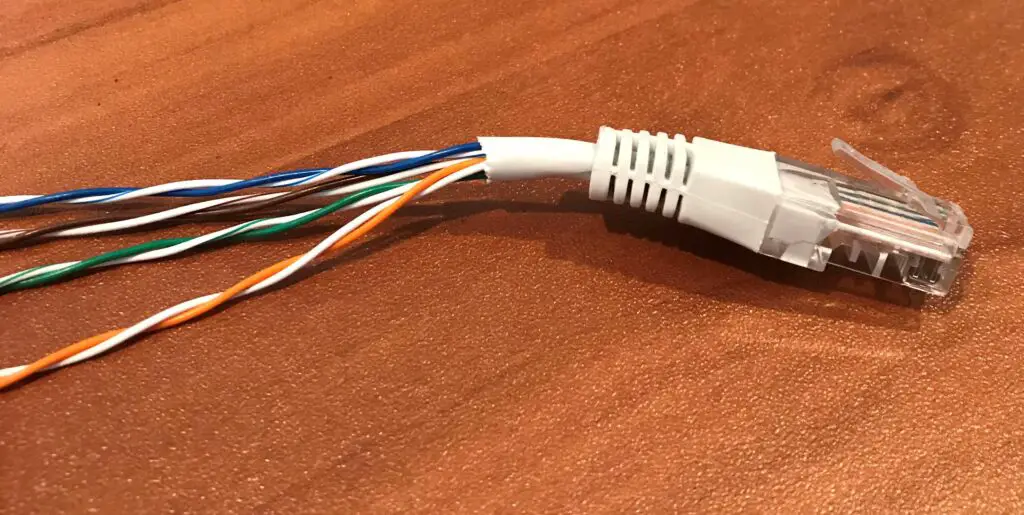
    Inside an ethernet cable, there are generally 8 copper wires that are twisted together in pairs.

    Twisted wires inside ethernet cable
    Twisted wires inside an ethernet cable

    The 8 copper wires are used to transfer data from one device to the other. At each end of the cable, the 8 copper wires are aligned next to each other, where they’re fed into a connector.

    These connectors are called RJ45 connectors.

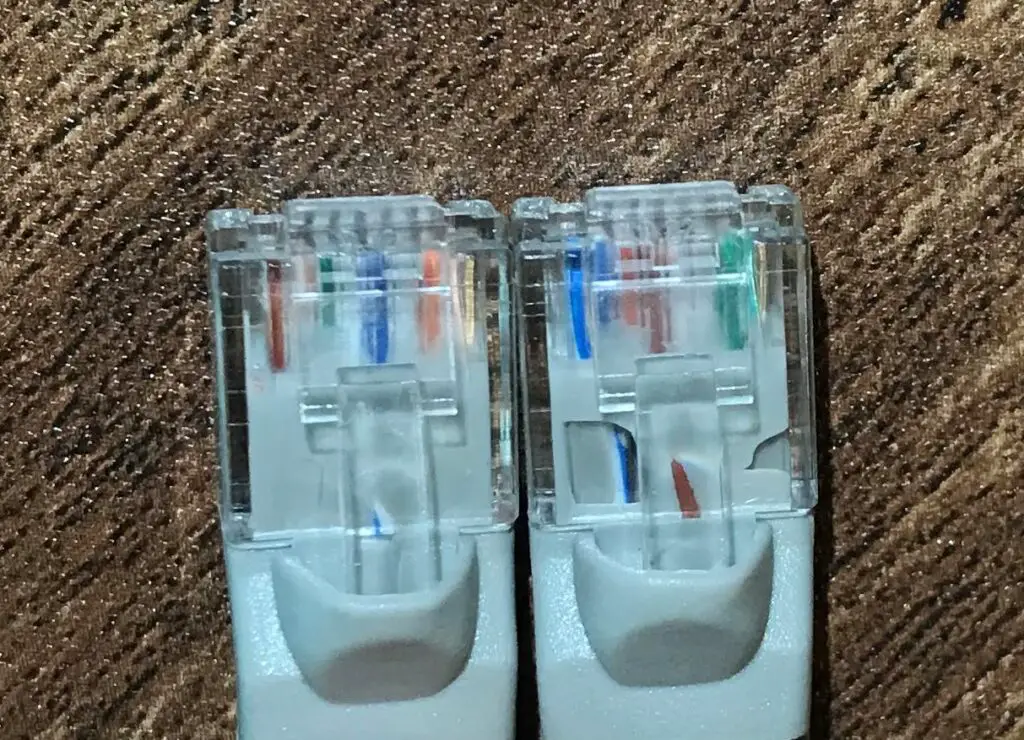
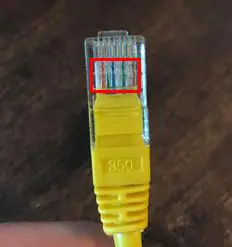
    If you look closely at the end of an RJ45 connector, you can see the colors of the wires going into the connector.

    Ethernet cable wire colors

    Now, if I compare the colors of the wires inside a straight through ethernet cable, both ends will have the same pattern of colors.

    Straight through ethernet cable wiring

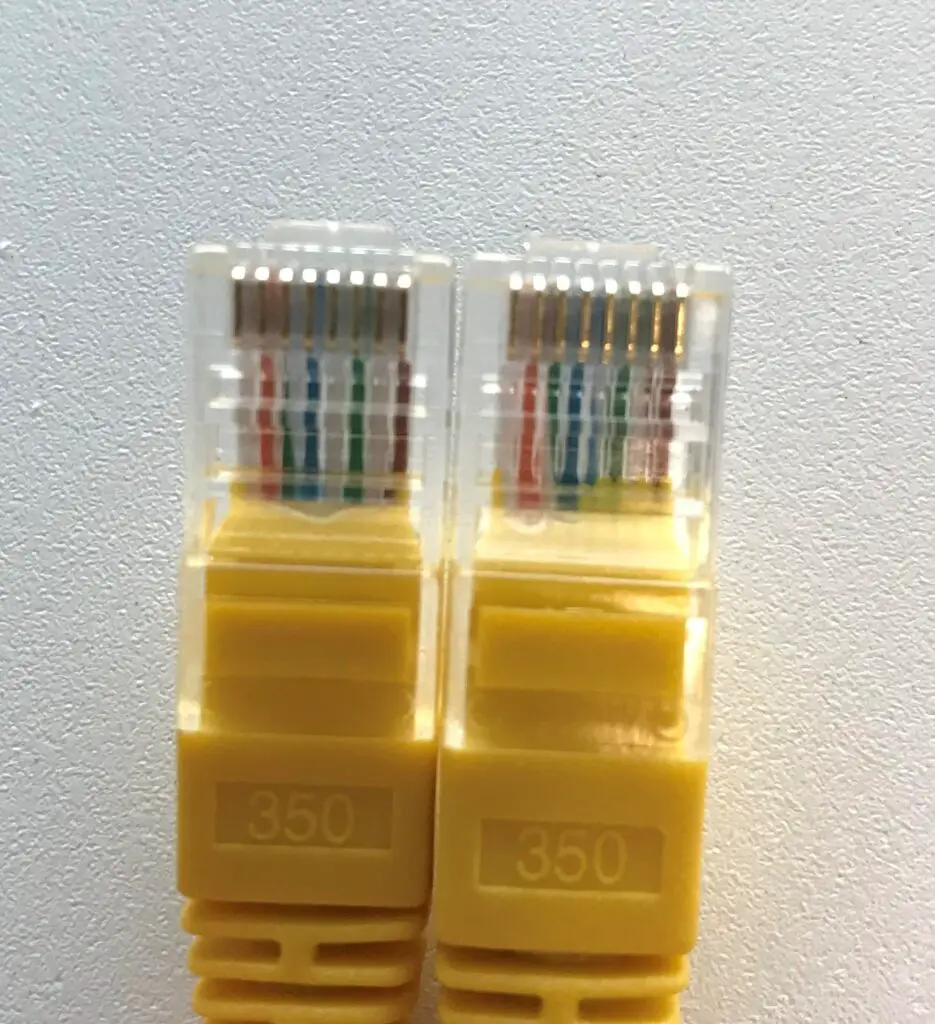
    If I compare the wires inside the ends of a crossover cable, things start to go off the rails.

    Crossover ethernet cable wiring

    What gives? Why are the wires not in the same pattern at both ends?

    That’s because each wire location within an ethernet cable is meant for a specific purpose. Each wire in the cable will have a different role depending upon its position inside the connector.

    For example, some wire positions are meant for sending data to the other device attached to the cable, while others are designed to receive data from the other device attached to it.

    Let’s dive a bit further into this.

    Ethernet cable pinout standards

    When it comes to ethernet cables, there are two standard ways of laying out the wires inside them. These are called wire pinouts.

    The two standard wire pinout options are called T568A and T568B. The purpose of these standards is to ensure that all ethernet cables of a given pinout are made with the same wire configurations. This makes it much easier for the user (you) to determine which cables are needed in different situations.

    Could you imagine if every ethernet cable had a different layout of wires inside it?

    Nightmare city.

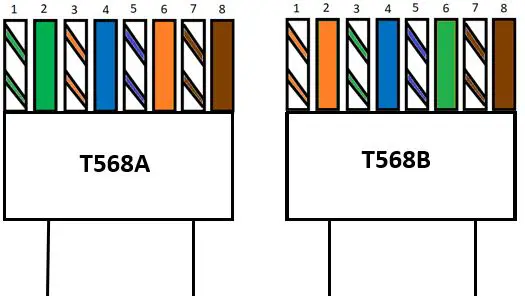
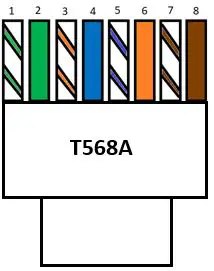
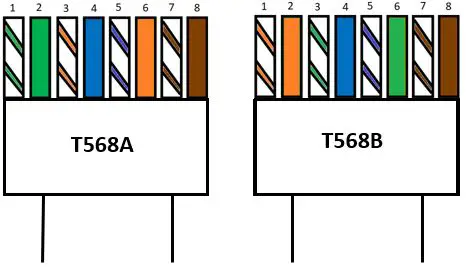
    Here’s how the wires are ordered in a T568A pinout:

    T568A Cable Pinout

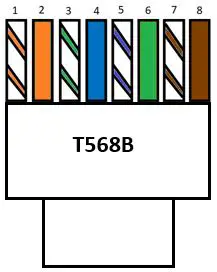
    And here’s what a T568B pinout looks like:

    T568B Cable Pinout

    Can you notice the differences between the two?

    In comparing the two pinouts, you can see that the T568B pinout differs from the T568A pinout in that:

    • The two orange wires (striped and solid) are in positions 1 and 2 in the T568B layout instead of the two green wires (striped and solid) in the T568A pinout
    • The green striped wire is in position 3 in the T568B pinout instead of position 1 in the T568A pinout
    • The solid green wire is in position 6 in the T568B pinout as opposed to position 2 in the T568A standard
    • Wire positions 4, 5, 7, and 8 are the same in both standards. Here’s a fun fact: wires 4, 5, 7, and 8 in an ethernet cable aren’t used

    Crossover ethernet cable pinout

    So why are these pinouts important to crossover and straight through cables?

    As you may have guessed, these two different cable types have different combinations of these pinouts.

    Straight through ethernet cables have a T568A cable pinout on each end of the ethernet cable.

    Straight through ethernet cable pinouts
    What the ends of a straight through cable look like

    Crossover cables are a little different. They have a T568A pinout on one end and a T568B pinout on the other.

    Crossover ethernet cable pinouts
    What the ends of a crossover cable look like

    The reasoning behind this has to do with the types of devices that these cables connect. Each device connected to an ethernet cable is classified based upon the type of device it is.

    Medium-dependent interface classifications

    This can get a little complicated, so I won’t dive too far into the weeds here.

    Basically, a device can have one of two possible classifications. It can either be a medium-dependent interface (MDI) or medium-dependent interface crossover (MDIX) device.

    All you need to know here is that MDI devices are endpoint devices like computers, while MDIX devices are usually networking equipment like switches and modern routers.

    Let’s tie this all together.

    Based upon a device’s classification as an MDI or MDIX device, it’ll expect to receive data on certain pins of the ethernet cable. It’ll also transmit data on certain pins of the ethernet cable based upon this classification.

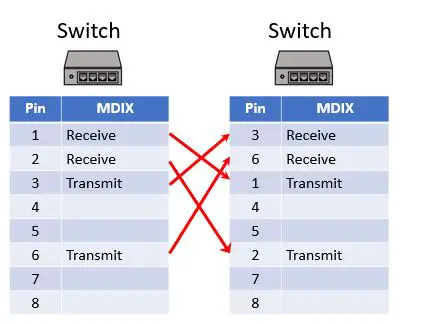
    For example, MDI devices expect to transmit data on pins 1 and 2 of an ethernet cable. MDIX devices expect to receive data on pins 1 and 2 of an ethernet cable.

    MDI devices expect to receive data on pins 3 and 6, while MDIX devices transmit data on pins 3 and 6.

    Do you see where this is going?

    MDI-MDIX connection

    For a connection between an MDI and MDIX device, each device expects to receive data on a pin that the other device transmits data on. This is exactly what we want. It’s also why a straight through cable can be used to connect these devices.

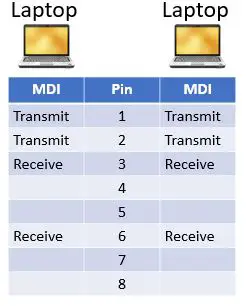
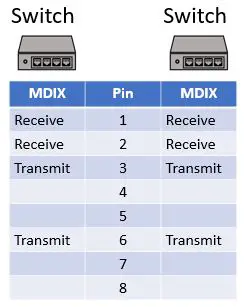
    What if the two devices you need to connect are the same type of device?

    As you can see, this doesn’t work as well.

    Both devices are expecting to send data on the same pins. The same goes for the receiving pins.

    With both devices looking to send and receive data on the same pins, we need to change things up if we want them to be able to communicate.

    That’s where the crossover cable comes in.

    What is a crossover cable used for?

    As its name suggests, a crossover cable will cross the wires inside the cable to allow two of the same type of device to communicate. It does this by connecting the transmit pins of one of the devices with the receiving pins on the other device.

    Here’s what it looks like when you connect the devices with a crossover cable.

    As you can see, whether you have two MDI devices or two MDIX devices, the pin changes required to pair each transmit pin with a receive pin are the same.

    This is why you can use a crossover cable regardless of the classification of the device. As long as you’re connecting two devices that are the same type (either MDI or MDIX), you can use a crossover cable.

    When should I use a crossover cable?

    Crossover cables used to be an essential part of most networks, but thankfully times have changed.

    Over the years, advancements in computing technology have been made to make it easier on us when we’re setting up our networks.

    When it comes to ethernet cables, one major feature that’s been developed is called auto-MDI/MDIX. This feature allows your devices to automatically determine if they’re connected to an MDI or MDIX device.

    From there, your device will decide if it needs to change the pins that it transmits and receives data on. In other words, it’ll automatically make adjustments depending upon the type of device it’s connected to.

    This makes things much easier on you, because you don’t have to worry about what ethernet cable you’re using to connect the devices. Your device will do all the work for you.

    So what does this mean, exactly?

    It means you don’t need to buy crossover cables for your network anymore. You can use straight through ethernet cables to connect all your devices (assuming they’re not more than 20 years old).

    I would recommend you buy straight through ethernet cables for your network instead of crossover cables. They’re generally cheaper than crossover cables, and they’re much more available. It’s not worth the time (or the money) to get crossover cables at this point.

    There’s one last important thing to note.

    If you have really old devices, they may not have the auto MDI/MDIX feature. If this is the case, you’ll still need to use crossover cables to connect two of the same type of device. With that said, chances are all your devices will have the auto MDI/MDIX feature.

    Wrap up

    Hopefully you have a good handle on why crossover ethernet cables were created, and how they were useful at the time. You should also understand why you don’t need to use them anymore in your network.

    Do yourself a favor, buy straight through ethernet cables when you need to connect devices in your network.

    If you have any questions about this material, please drop a comment below. In addition, check out some additional posts I wrote that are related to this topic:

    How to Extend an Ethernet Cable

    Shielded vs Unshielded Cables: A Full Comparison
    Can Ethernet Cables Go Bad?

    How to Tell What Type of Ethernet Cable You Have

    Does Ethernet Cable Length Affect Network Speed?

  • How to Extend an Ethernet Cable

    How to Extend an Ethernet Cable

    Extend ethernet cable title page

    In a home or office network, chances are there are some devices you’d rather connect to the internet with an ethernet cable instead of WiFi.

    For example, if you’re an online gamer or you frequently upload files to the internet, you’ll get a faster and more reliable connection to the internet with an ethernet cable.

    When it comes to providing devices with wired ethernet connections, you may run into some challenges.

    One such challenge is if a device you want to provide with an ethernet connection is far from your router. You may not have an ethernet cable that’s long enough to reach the device.

    To make matters more complicated, there’s a limit to how long an ethernet cable can be before it stops working properly.

    So what’s the solution? Is it possible to extend a shorter cable or link several ethernet cables together?

    Thankfully, the answer is yes.

    An ethernet cable can be extended by using an ethernet coupler or an ethernet switch. These devices allow you to link ethernet cables together without sacrificing network performance.

    In this post, I’ll detail how you can use each of these devices to extend your ethernet cables. I’ll also explain the best use cases for each device.

    Why you need to extend ethernet cables

    Before we get into how to extend your ethernet cables, let’s talk about why you need to extend them in the first place.

    Using the example mentioned above, let’s say your router is far away from the device you want to connect it to.

    You may think the solution here is simple. Why not buy a really long ethernet cable to connect the device to the router?

    This can be a problem for two reasons:

    1. Most ethernet cables will stop working properly if they’re over 328 feet (100 meters) long
    2. You may not want one really long ethernet cable snaking through your house

    Let’s address the first issue first.

    Most ethernet cables won’t work if they are over 328 feet long

    In general, if you’re using a long ethernet cable it won’t affect your network speed.

    There’s a limit to this, however.

    The catch is that this only applies if the cable is less than 328 feet long. If it is longer than 328 feet, the cable won’t transmit data as effectively. In some cases, the cable won’t work at all.

    The good news here is that 328 feet is a really long distance. Most people won’t need an ethernet cable longer than that.

    With that said, it’s often much easier to use many shorter segments of ethernet cable instead of one long one.

    This brings us to the second issue.

    Several shorter ethernet cables are easier to manage than one long one

    There are many advantages to having several ethernet cable segments instead of one long one.

    First of all, having one long ethernet cable is difficult to hide. It can make your house look messy and disorganized.

    Not to mention, it can be a tripping hazard.

    If you have multiple segments of ethernet cable connected by an ethernet coupler or an ethernet switch, it’ll be easier for you to lay out the cable how you want to. In other words, shorter sections of ethernet cable are easier to maneuver around corners and tight spaces.

    In addition, if you have one really long cable traveling throughout your house, it makes it harder if you need to make any changes to it.

    For example, let’s say you have one long ethernet cable in your house already. What if you want to add another device to your network with a wired connection, and the device is far from your router as well?

    Should you run another really long cable to that device?

    Not if you can avoid it.

    If you have several segments of ethernet cable strung together, it’ll make it much easier to add another wired device to your network.

    It’s also easier and faster to replace a shorter ethernet cable segment than a really long cable if one of your cables fails.

    The bottom line here is that ethernet couplers and switches make managing your ethernet cables much easier.

    Let’s find out how each of these devices works.

    Extending an ethernet cable with a coupler

    An ethernet coupler is the easiest way to extend an ethernet cable.

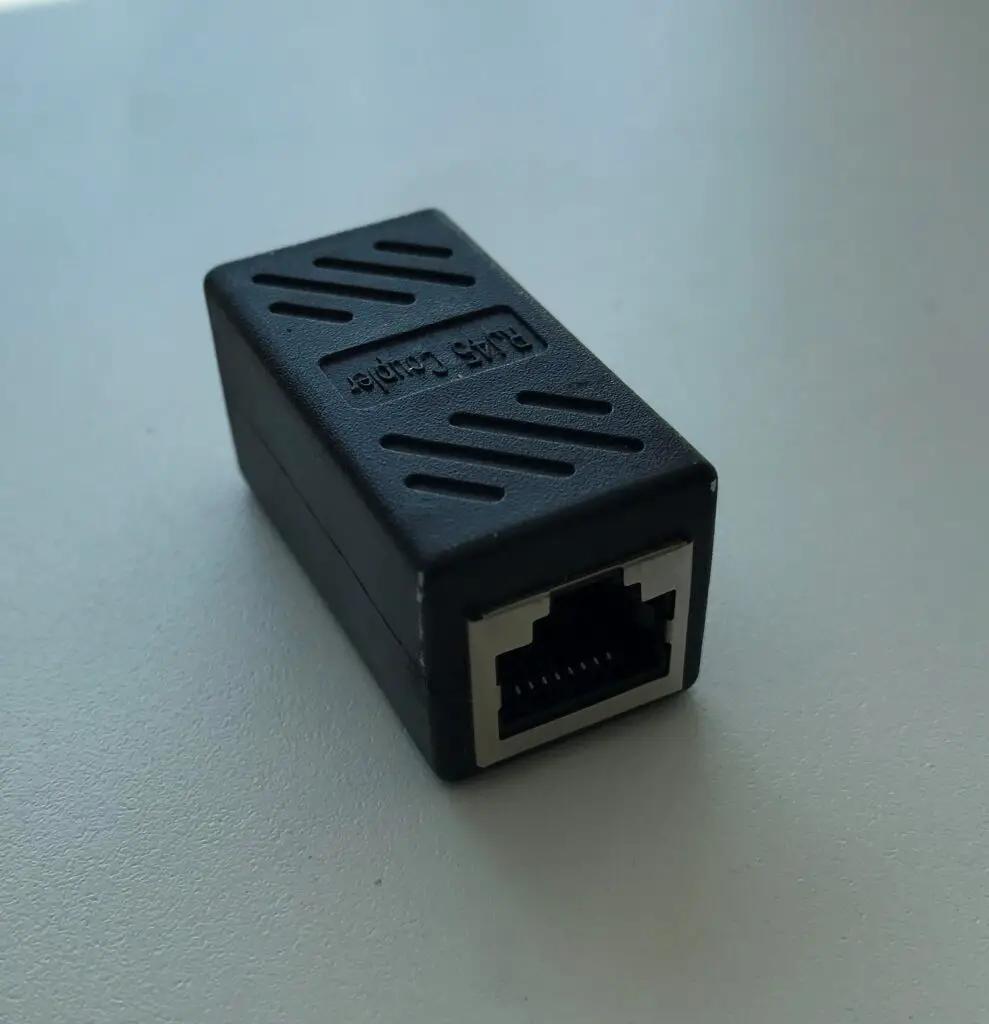
    Does this device look familiar?

    Ethernet coupler

    I’m willing to bet you’ve never seen one of these before. It’s an ethernet coupler (also known as an RJ45 coupler).

    Ethernet couplers are the most basic devices for extending ethernet cables. On each end of the coupler, there’s an ethernet cable jack that you can plug an ethernet cable in to.

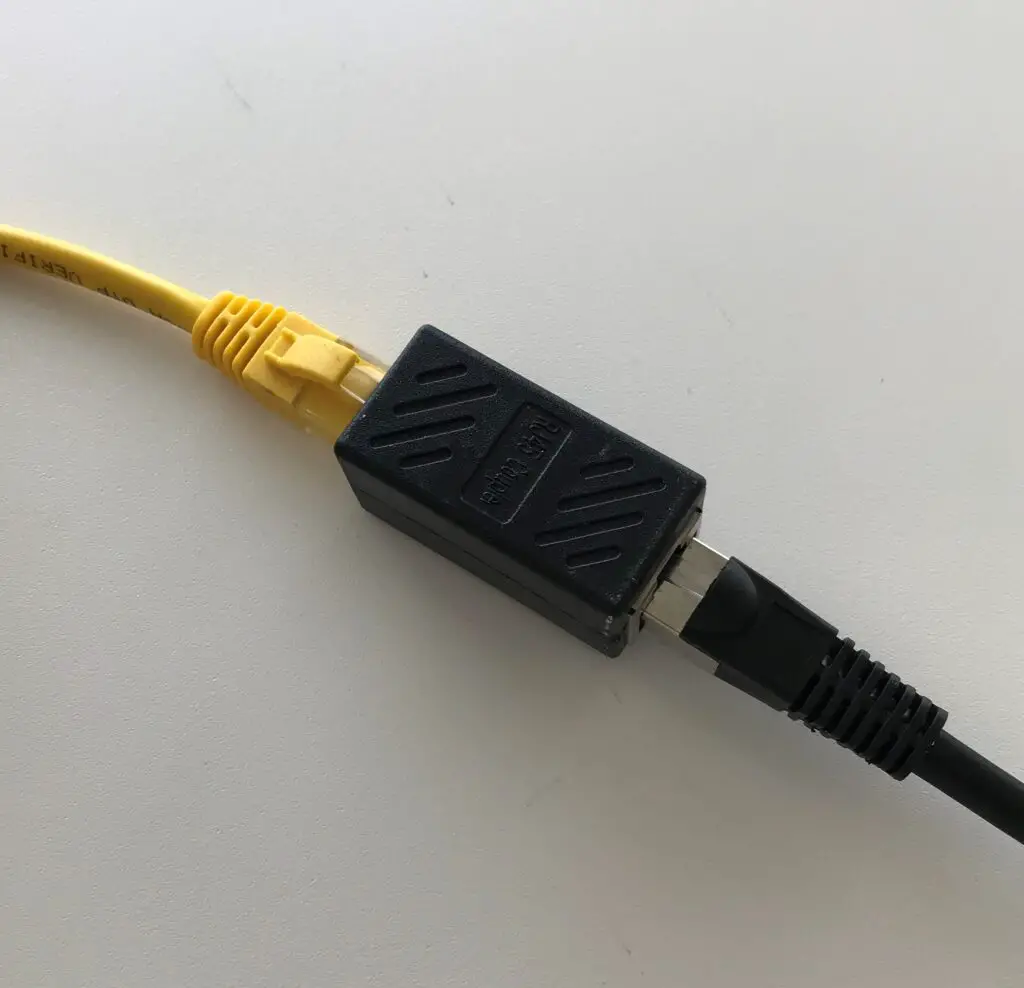
    When you have two ethernet cables plugged into it, the coupler should look like this:

    Ethernet coupler fully connected

    When data is sent through one of the ethernet cables connected to the coupler, the coupler will just pass the data to the other ethernet cable connected to it. As I previously mentioned, this feature lets you link two smaller ethernet cables together to make one longer one.

    If you’re looking to extend one ethernet cable, an ethernet coupler is the best thing for the job.

    Benefits of using ethernet couplers to extend ethernet cables

    Despite their unimpressive appearance, ethernet couplers are actually quite useful. Let’s dive into the main benefits of using a coupler to connect ethernet cables.

    They are small and inexpensive

    One of the best parts about ethernet couplers is how cheap they are. You should be able to find them online for less than $10.

    Their affordable price makes it that much easier to add them to your home networking toolkit without too much hesitation.

    In fact, I’d recommend buying a few so you always have them on hand. I’m sure an opportunity will come up at some point when you need them.

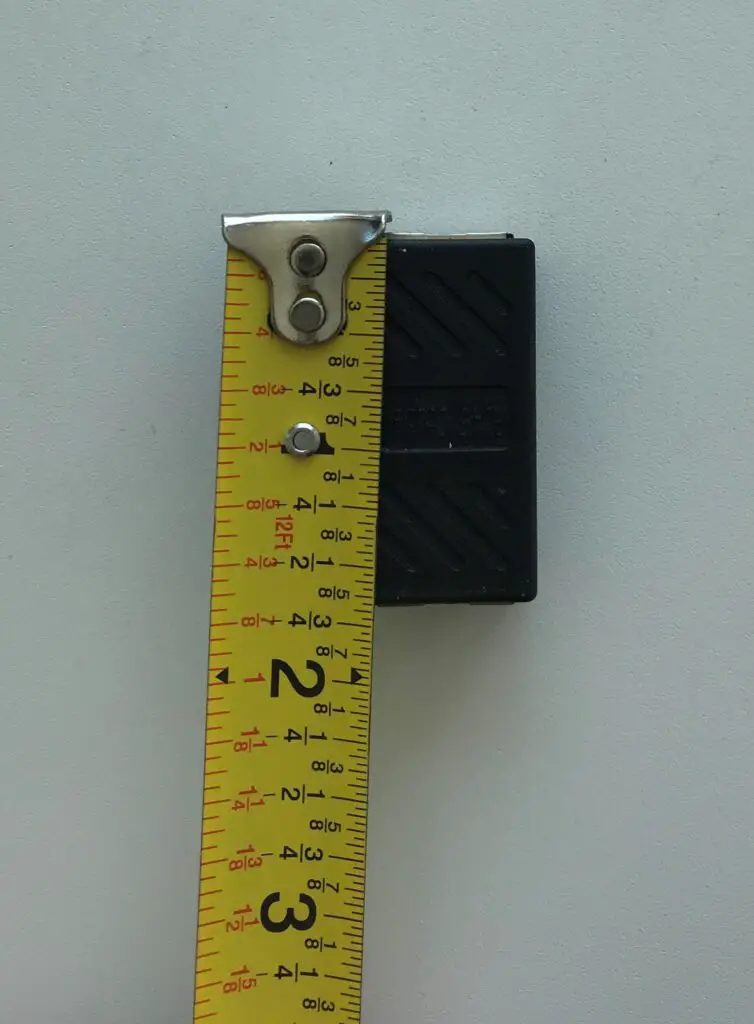
    Even if you don’t end up using them, it’s not like they take up a lot of space. For reference, almost all ethernet couplers will be less than two inches long.

    Ethernet coupler length

    Their small size also comes in handy when you use them. You can connect ethernet cables without worrying about what it’ll look like to visitors in your home.

    Chances are, no one will even notice them.

    They are easy to use

    Another benefit to using ethernet couplers is how foolproof they are. Anyone can use an ethernet coupler to connect two cables. All you have to do is plug an ethernet cable into each end.

    It should take you less than 30 seconds to get an ethernet coupler in place and your connected ethernet cables passing data to each other.

    They don’t require a power source

    Ethernet couplers are also useful because you can use them anywhere. Unlike ethernet switches (which we’ll get to), couplers don’t require a power source for them to work.

    You don’t have to worry about finding an extra outlet or dealing with any additional wires.

    All you have to do is connect two ethernet cables to the coupler and you’re ready to party.

    You can use multiple couplers on one cable to further extend it

    Another good thing about ethernet couplers is that you’re not limited to using one per strand of ethernet cable.

    For example, if you have three short ethernet cables, you can use two couplers to connect them all together.

    The benefit here is that couplers allow you to be that much more flexible with your cables. You can easily add and remove sections of cable as needed.

    I will caution that there’s a limit to this. I’ve read that you shouldn’t use more than three ethernet couplers in the same strand, as it can disrupt the transfer of data in the cable. If you find yourself in this situation, I’d advise getting long enough cables that you only need to use two or three couplers to make the length you need.

    Downsides to using ethernet couplers to extend ethernet cables

    Although ethernet couplers are great, they have some limitations that you should be aware of.

    Ethernet couplers can’t extend a cable over 328 feet (100 meters)

    Although you can connect several long ethernet cables together with couplers, the total length of ethernet cable shouldn’t be extended longer than 328 feet.

    This is due to the fact that ethernet couplers don’t require a power source. They use the existing electric signals in the cable to transfer data from one cable to another. Without amplifying the electric signal of the connected ethernet cables, they’ll stop working properly if the total length is greater than 328 feet.

    As I previously mentioned, most people don’t need an ethernet cable that’s longer than 328 feet, but you should be aware of this if you’re going to use ethernet couplers in your network.

    Both cables connected to the coupler must be the same cable category

    When using a coupler to connect two cables, it’s important that the cables and coupler are rated for the same cable category.

    The category of an ethernet cable will determine the transmission speeds it’s rated for. If you use cables or a coupler that are rated for a different category of cable, it could disrupt the transfer of data between the cables.

    The good news is that many ethernet couplers (like this one) are rated for multiple types of ethernet cable. As a result, your main concern will be using ethernet cables that are the same type.

    Chances are you have Cat5e or Cat6 cables, so just make sure the cables you’re connecting are all one or the other.

    Cheap couplers can result in poor data transmission

    Ethernet couplers are only as good as the connection they provide between the two ethernet cables. If you buy a coupler that’s defective or poorly manufactured, it can disrupt the transfer of data between the two cables.

    The takeaway here is that you should do your best to buy couplers from a company with a good reputation. There are many options for cheap couplers on Amazon, and in some cases they’re poorly made.

    It can be hard to know which couplers are well made and which ones aren’t, so you might want to try buying couplers from a few different manufacturers.

    In summary, I wouldn’t recommend buying the cheapest one you can find. It may cost less for a reason.

    Couplers can only extend one ethernet cable

    The last limitation of ethernet couplers is that they can only extend one cable.

    This makes things difficult when you have one ethernet cable that you want to split so you can connect it to multiple devices.

    Let’s say you have multiple devices in a room that are far from your router and you want to connect them all with an ethernet cable. You might have to run multiple ethernet cables, each with their own ethernet couplers, in order to connect each device individually.

    This is a case where an ethernet switch can come in handy.

    Extending a cable with an ethernet switch

    Although they’re different than ethernet couplers, ethernet switches can be used in a lot of the same ways. In this article, I’m referring to unmanaged switches as opposed to managed switches because they’re more user friendly and easier to implement.

    This device may look more familiar to you:

    Ethernet switch front

    An ethernet switch is a device that allows you to take one ethernet cable and split it into multiple cables. Essentially you can use an ethernet switch to extend one ethernet cable into multiple longer ethernet cables.

    This is especially useful if you have multiple devices in the same room or area that you want to provide with an ethernet connection.

    All you need to do is run one ethernet cable to the area. From there, you can connect the cable to an ethernet switch. Other devices can then be plugged into the other ports of the ethernet switch. By doing this, all the devices you connect to the ethernet switch will share the one ethernet cable that’s connected to your router (or the rest of your network).

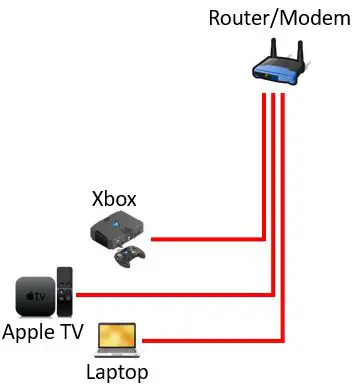
    Here’s a visual of what I just described:

    Ethernet switch example

    In the example above, the one red ethernet cable is the only cable connected to the router. The ethernet switch allows that one red cable to be “split” into three cables, one each for the Xbox, Apple TV, and Laptop.

    If you didn’t have the ethernet switch, you’d have to run an ethernet cable from each of the three devices back to the router.

    Devices connected to router

    Benefits of using network switches to extend ethernet cables

    At this point you probably get the picture (pun intended), but let’s break down the benefits of using an ethernet switch to extend an ethernet cable.

    You can turn one cable into multiple cables

    As I described in the example above, an ethernet switch allows you to connect multiple devices to one ethernet cable.

    This is an advantage that ethernet switches have over couplers. Each coupler can only extend one ethernet cable.

    You can extend an ethernet cable beyond 328 feet

    One major benefit of an ethernet switch is that you can use them to make an ethernet cable longer than 328 feet (or 100 meters).

    As I previously mentioned, ethernet cables will stop working properly if they’re over 328 feet.

    There’s a catch to this, however.

    With an ethernet switch, you can extend the cable as far as you want. You just can’t have a single cable segment longer than 328 feet.

    How’s this possible with a switch and not a coupler?

    If you’ll recall, a coupler doesn’t require a power source.

    An ethernet switch does.

    As I’ll describe shortly, switches require a power source. The benefit of this is that the power to the ethernet switch boosts the signals in the ethernet cables attached to it.

    The boosted electrical signals in the cables make it possible for the data to travel a longer distance in the cable before the signal degrades. As a result, your ethernet cable can be longer than 328 feet (in total) if needed.

    They are not expensive

    Although ethernet switches are more expensive than couplers, they won’t break the bank.

    Considering the added functionality they provide, to me it’s justified that switches cost a little bit more. You should be able to get a good five-port switch (like this one) for less than $30.

    Especially if the choice is between buying multiple couplers or one switch, the prices are even more comparable.

    Downsides to using an ethernet switch to extend ethernet cables

    Using ethernet switches to extend the lengths of your cables is not all rainbows and butterflies. Let’s go over the downsides of using switches as well.

    They require a power source

    One of the main drags about ethernet switches is that they require power.

    This means they need to be used near an electrical outlet. Although this isn’t a problem in most homes, it’s an added variable that can’t be ignored.

    This also means that ethernet switches cost money to run. Although they don’t use a lot of electricity, just be aware that switches are powered on all the time when they’re plugged in.

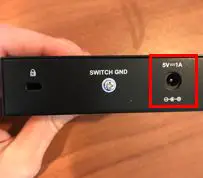
    If you’re curious about it, you can find the power connection on the back of most switches.

    Ethernet switch power connection

    They require more planning to implement

    I alluded to this in the previous section, but switches require more planning than couplers.

    In order to work, they need to be plugged into an outlet. This also means that they’ll have a power cord going from the switch to the wall.

    Depending upon how picky you are about the cleanliness of your home, this can be a big issue.

    On top of that, you’ll probably want your switch out of the way so no one (pets included) trips over it.

    The bottom line is, even though they’re relatively simple devices, they require more planning than couplers.

    They are not as easy to set up as couplers

    To put it simply: switches aren’t as “plug and play” as couplers.

    I don’t want to scare you here.

    Switches are by no means complicated devices. Even the most non-technical people can set them up.

    The fact is, it’ll take you longer to set up a switch than an ethernet coupler. You’ll have to plug in the power cord, find the uplink port, and connect your other devices into the other ports of the switch.

    Once these steps are done, you’re pretty much good to go. No technical configuration should be needed for your switch to work properly.

    You can connect multiple switches, but it’s more of a hassle

    With ethernet couplers, you can quickly and easily use multiple couplers in the same ethernet cable.

    It’s possible to do the same thing with switches. It’s just a little more complicated.

    Along the same lines as the other downsides above, connecting switches to each other adds another degree of difficulty.

    For one, each switch you connect will require a power source. That means you’ll need an open outlet for each switch.

    This is another situation where it’s not very difficult to connect two switches together, it’s just more difficult than using multiple ethernet couplers.

    Should you use a coupler or a switch?

    Should you extend an ethernet cable with a coupler or a switch

    There you have it.

    You now know the good and bad about using ethernet couplers and switches.

    But the question is, when should you use each one?

    You might be expecting me to say “it depends”, but there are actually some pretty clear instances when you’ll want to use each device.

    When to use an ethernet coupler

    Here is my rule of thumb: If you have one ethernet cable to extend, I’d advise using an ethernet coupler.

    Couplers cost less, are faster and easier to implement, and don’t require a power source. I think in this case you’ll find it easier to just use a coupler.

    The catch here is if you want to create a length of ethernet cable longer than 328 feet. If that’s the case, you’ll have no choice but to use a switch.

    When to use an ethernet switch

    There are a couple instances when you’d want to use an ethernet switch instead of a coupler.

    As I mentioned above, ethernet switches are needed when you want to extend an ethernet cable to make it really long. Each segment of cable connected to the switch still can’t be longer than 328 feet, but the overall length of the cable between the devices you’re connecting can be longer than 328 feet.

    You’ll also want to use a switch when you need to take one ethernet cable and connect multiple devices to it. This is much easier than using a handful of couplers to create multiple long cables between the devices.

    Wrap up

    That’s all she wrote.

    You’re now equipped with anything you’d need to know about extending ethernet cables. If you have any questions about this information, please drop a comment below.

    If this post was useful for you, check out these other posts I’ve written on similar topics:

    Shielded vs Unshielded Cables: A Full Comparison
    Does Ethernet Cable Length Affect Network Speed?

    How to Tell What Type of Ethernet Cable You Have

    Can Ethernet Cables Go Bad?

    How to Tell if an Ethernet Cable is Bad

  • Shielded vs Unshielded Cables: A Full Comparison
    Shielded vs Unshielded Cables: A Full Comparison
    Shielded Unshielded Cables title page

    If you’ve miraculously made it to this page, it means you want to know the difference between shielded and unshielded ethernet cables.

    Let’s start with the basics.

    When buying ethernet cables, there are many variables to consider, including:

    Most of the above variables are pretty straightforward, but let’s pump the brakes with the shielded or unshielded part.

    What does this mean, and what impact will it have on your network?

    When comparing shielded vs unshielded cables side-by-side, they look very similar. Despite their similar appearances, they’re actually quite different.

    It’s important to understand the differences between the two. If you don’t, you may end up buying the wrong type of cable, which can slow down your network speed.

    So what are the differences between between the two types?

    The most important differences between shielded and unshielded ethernet cables are as follows:

    1. Shielded cables are much more resistant to electromagnetic interference (EMI) than unshielded cables
    2. Inside of the cable itself, shielded cables have a foil wrapping that unshielded cables don’t have
    3. Unshielded cables are more flexible than shielded cables
    4. Shielded cables cost more than unshielded cables

    In this post I’ll take a deeper dive into the differences between these two types of ethernet cables. I’ll also explain the environments where the two types of cables are most effective.

    Shielded vs unshielded cables: the similarities

    Before we dive into how shielded and unshielded cables are different, let’s talk about how they’re similar.

    The purpose of both types of cables is the same. Their goal is to allow two devices to communicate with each other through the cable.

    But why would you want to use ethernet cables in the first place?

    Ethernet cables are used because wired connections between devices are faster and more reliable than wireless ones.

    For example, if you’re an online gamer, you may want to use an ethernet cable to connect your computer to the internet. You definitely don’t want a slower connection than the players you’re playing against. Worse yet, you don’t want your connection to drop in the middle of a game.

    Using an ethernet cable can help address some of these concerns.

    So when it comes to shielded or unshielded ethernet cables, there’s no difference in the function of the cable. Both cables will pass data from one device to another.

    If these two types of cables do the same thing, why are there different cables in the first place?

    As you’ll see, that’s because both types of cable are made for different operating environments.

    With that, let’s dive into how shielded and unshielded cables are different.

    Shielded vs unshielded cables: the differences

    There are multiple differences between shielded and unshielded ethernet cables, even though they accomplish the same thing.

    In looking at how they’re different, you’ll be able to make smart decisions about which type of cable will suit you best in your network.

    So how do shielded and unshielded cables stack up?

    Let’s find out.

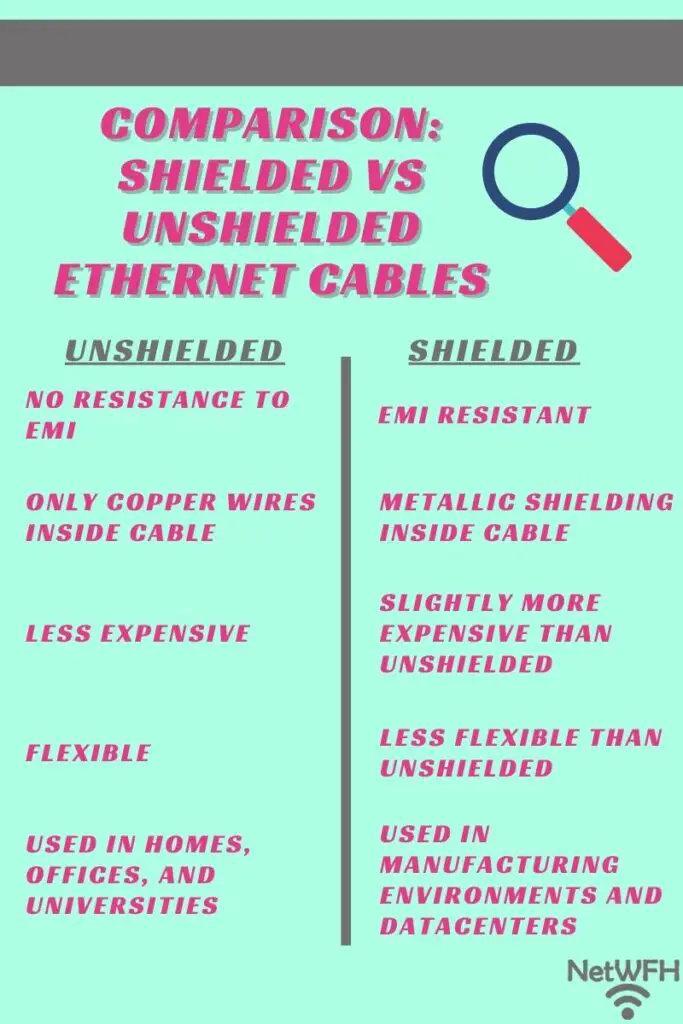
    Shielded and unshielded cables comparison
    Resistance to electromagnetic interference

    The most significant difference between shielded and unshielded cables is their resistance to electromagnetic interference, or EMI.

    EMI you say? What in the world is that?

    Electromagnetic interference is just what it sounds like. It’s interference that’s caused by nearby electromagnetic forces.

    Not so helpful is it? Let’s look at it from the perspective of ethernet cables.

    Essentially, EMI is the disruption of the data going through ethernet cables as a result of electronic equipment in the area.

    Why is this bad?

    It’s bad because EMI will either slow down or distort the information that’s traveling through the cable. If EMI is impacting your ethernet cables, you’ll know because your network performance will drop considerably.

    All electronic devices create some level of EMI, including ethernet cables themselves. With that said, in many household and office devices there isn’t enough EMI in the environment to negatively impact your ethernet cables.

    The equipment that you need to worry about impacting your ethernet cables is more commercial. I’m talking about motors, large air conditioners, power lines, and even fluorescent lights. These devices give off large electromagnetic fields.

    If equipment is giving off a large electromagnetic field and one of your ethernet cables is within that field, it won’t work as it should.

    That’s where shielded ethernet cables come in.

    The purpose of shielded ethernet cables is to reduce the impact of EMI. They’re manufactured differently than unshielded cables (keep reading to find out how), and as a result, they’re better suited for environments with high EMI.

    This is the major difference between shielded and unshielded cables: shielded cables are built for environments with high EMI, while unshielded cables are not.

    How they are manufactured

    As I previously mentioned, shielded ethernet cables are made differently than unshielded cables so they can be more resistant to EMI.

    What’s interesting about this is the fact that although they’re made differently, it’s hard to tell the difference between a shielded and unshielded cable.

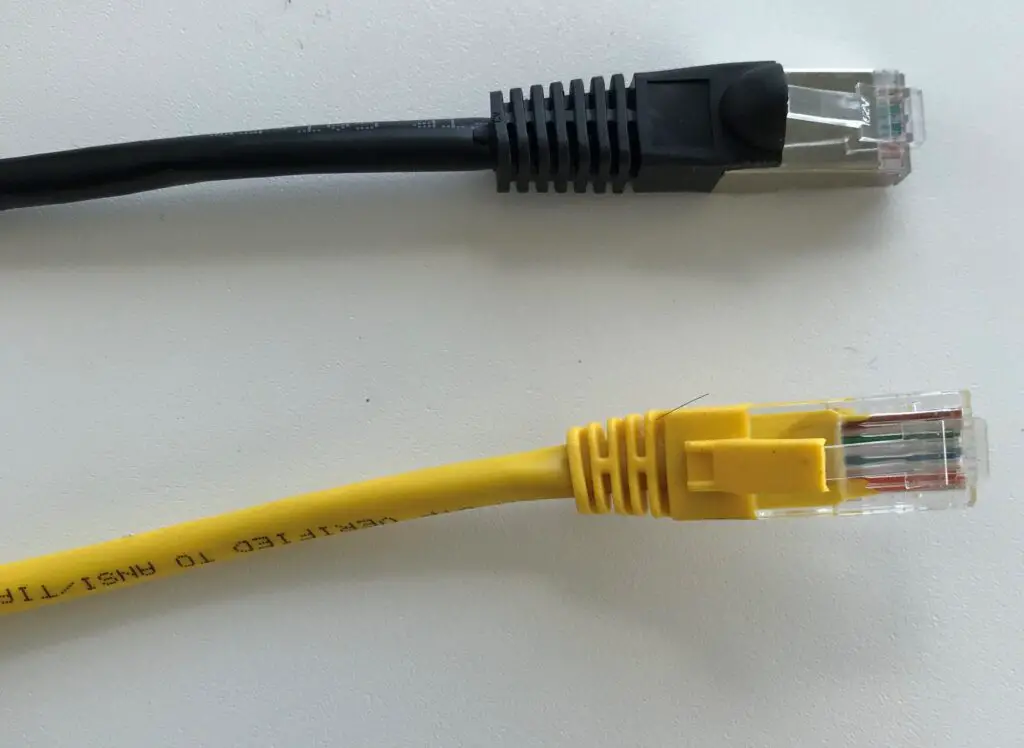
    Here’s a visual to prove my point. There’s one shielded cable and one unshielded cable in the picture below:

    Shielded and unshielded ethernet cable
    The yellow cable is unshielded and the black cable is shielded

    Could you tell the difference between the two?

    I didn’t think so.

    So how are they different?

    We need to look inside the cable for our answer.

    Inside a shielded ethernet cable, you’ll find a metallic foil. The metallic foil wraps around the 4 pairs of copper wires inside the cable. In most ethernet cables, each pair of wires will be twisted together.

    You’ll also have a grounding wire inside the shielded cable, which (if grounded properly), ensures that any EMI doesn’t affect the cable’s performance.

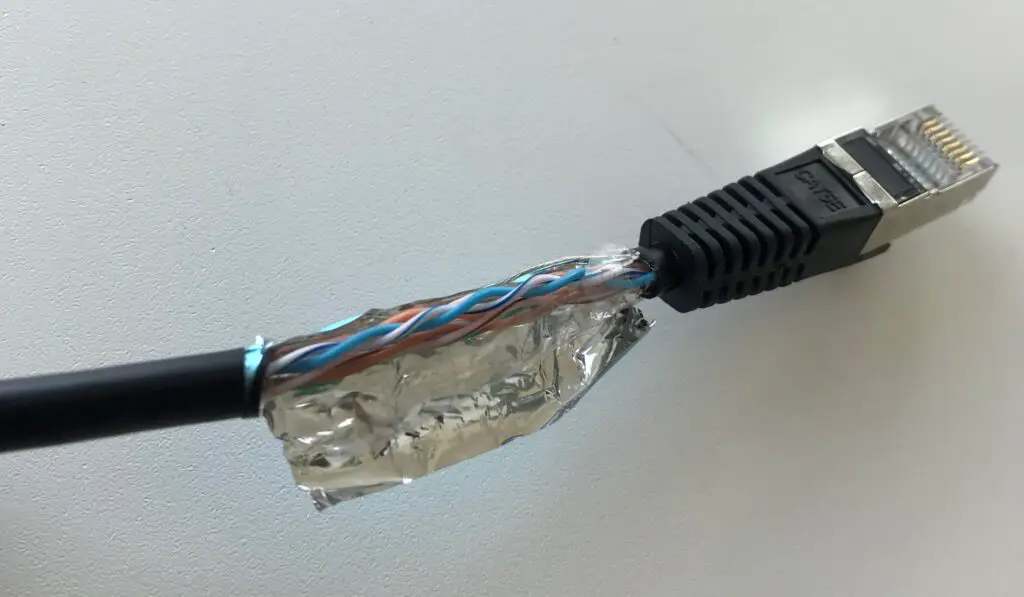
    Here’s what the foil inside a shielded cable looks like:

    Shielded ethernet cable inside

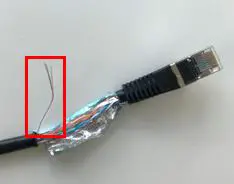
    And here’s the grounding wire:

    Shielded ethernet cable grounding wire

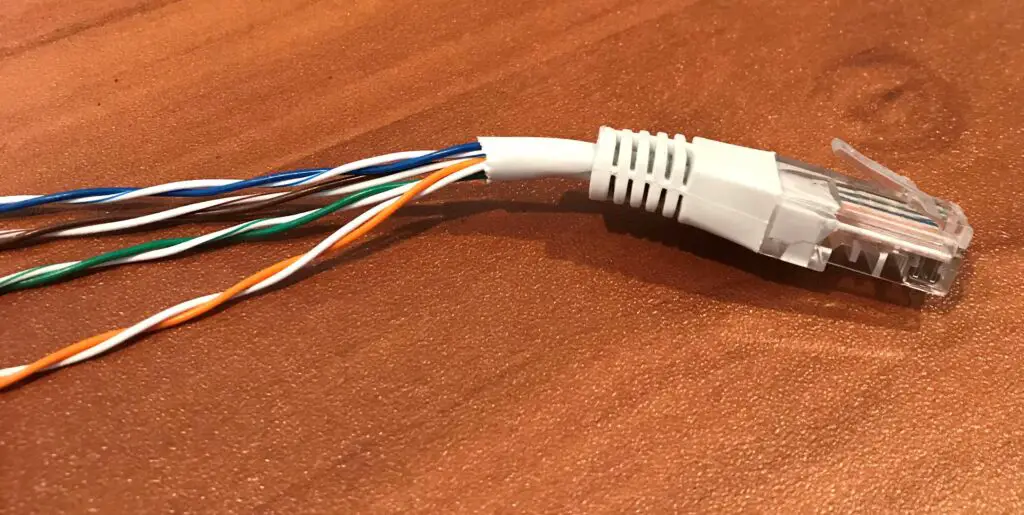
    The difference here is that unshielded ethernet cables don’t have foil or a grounding wire inside them.

    See what I mean?

    Unshielded twisted pair ethernet cable

    As you may have guessed, the foil inside a shielded ethernet cable greatly reduces the impact of EMI on the cable. Any electromagnetic interference that a shielded cable experiences is reflected or absorbed by the shielding.

    This is why shielded and unshielded ethernet cables are constructed differently. Shielded cables need a grounding wire and foil to protect against EMI, while unshielded cables do not.

    Flexibility

    Another difference you’ll find between shielded and unshielded cables has to do with their flexibility.

    Although shielded cables protect against EMI better than unshielded cables, they’re less flexible. That’s because of the foil inside shielded cables. The foil doesn’t bend very well.

    When you look at an unshielded cable, all they have is copper wires (and no foil shielding) inside them. Copper wires are extremely flexible.

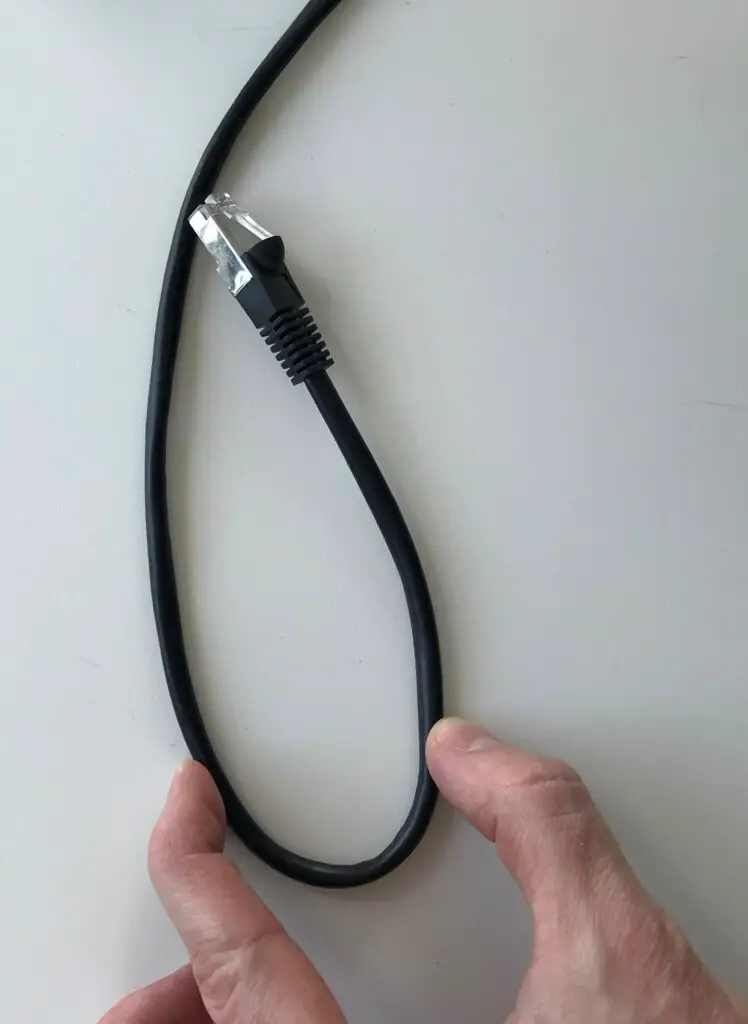
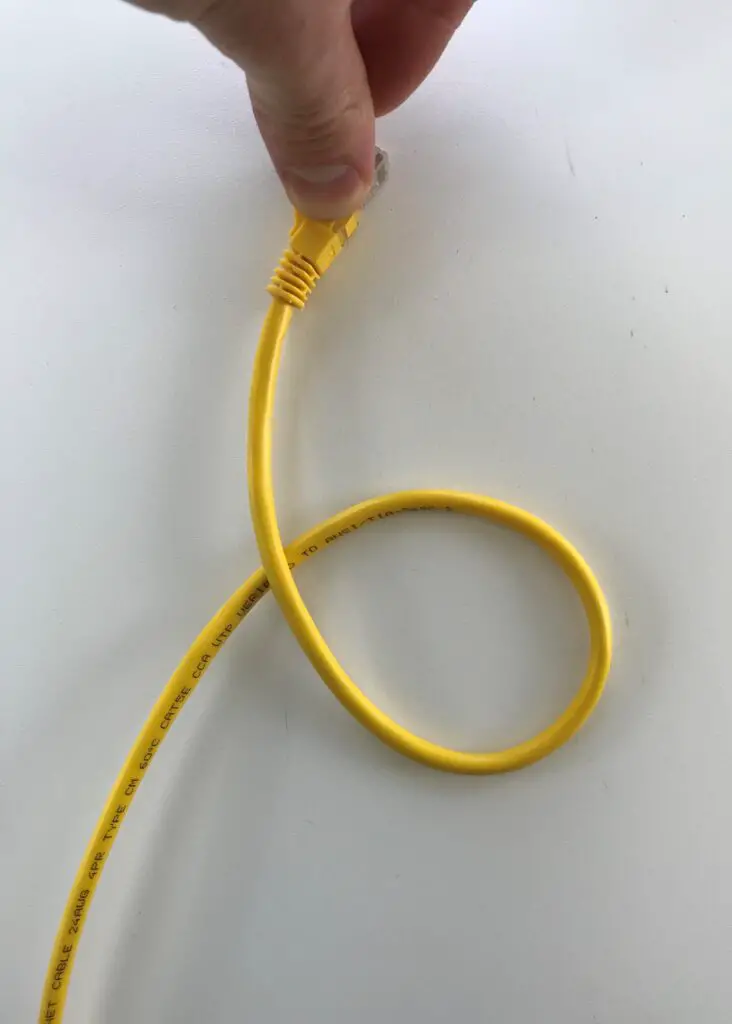
    Here’s a side-by-side comparison of the two types of cables. In the following pictures, the black cable is shielded and the yellow cable is unshielded:
    As you can see, the unshielded cable is much more flexible than the shielded one. The black cable may still look flexible, but I’m putting quite a bit of pressure on it with my fingers in this picture to hold it in place. I didn’t need to do that to bend the yellow unshielded cable.

    So unshielded cables are more flexible. What’s the big deal?

    This is an important difference because the more flexible a cable is, the less likely it is to get damaged.

    If a cable is bent too much, it can damage the copper wires inside the cable. When this happens, your cable will stop working properly. This will greatly reduce your network performance, if not stop your connection entirely.

    This is simply something to keep in mind when using shielded cables.

    If you need to use shielded ethernet cable to protect against EMI, you’ll need to be careful when laying out your cable. You won’t be able to bend it like an unshielded cable. This limited flexibility of shielded cables can add a degree of difficulty in tight spaces where you don’t have a lot of room to maneuver.

    Price

    If you had to guess, which type of cable would be more expensive: shielded or unshielded cables?

    It might not be surprising to hear that shielded ethernet cables are more expensive.

    When you think about it, this makes a lot of sense. More materials (e.g. the metallic shielding) are used to make shielded cables when compared to unshielded cables. With more materials comes higher manufacturing costs, and therefore higher prices for the buyer.

    Although shielded ethernet cables generally cost more than unshielded ones, they still aren’t very expensive.

    For example, this 5 foot shielded ethernet cable is only a few dollars more expensive than this 5 foot unshielded ethernet cable. Both cables cost less than $10, so it’s not like you’re breaking the bank for you ethernet cables.

    The bottom line here is that price shouldn’t be a factor when choosing which type of ethernet cable to use. If you have electromagnetic interference in the environment where your ethernet cables will be used, the slightly higher cost of shielded ethernet cables is worth it.

    I’m sure you’ll agree that it’s not worth sacrificing your network performance for a few dollars.

    When you should buy shielded ethernet cables

    When deciding between shielded and unshielded ethernet cables, it all depends upon where the cables will be used.

    This decision can be broken down pretty easily. If the environment will have high EMI, go with shielded ethernet cables. In other words, you’ll probably want to use shielded ethernet cables in manufacturing environments, datacenters, and in other areas where heavy-duty equipment will be running.

    An important item to note is that shielded ethernet cables shouldn’t be used in areas without high EMI. Some people say “I’ll just buy shielded ethernet cables so I have an extra layer of protection in case there is EMI near the cable”, but this isn’t the best approach.

    That’s because shielded ethernet cables will actually be slower than unshielded cables in environments where there is no EMI.

    If you’re unsure if the environment has enough EMI to affect your ethernet cables, I suggest you run a test. Buy a shielded and an unshielded ethernet cable and try them both. If the unshielded ethernet cable works fine when you test it, you can probably get away with using unshielded cables.

    It’s worth spending a few extra bucks for the test to make sure you get the right cables.

    When you should buy unshielded ethernet cables

    Now that we’ve identified that shielded ethernet cables should be used in high EMI environments, where should unshielded cables be used?

    This is an easy one.

    Unshielded cables should be used just about everywhere else.

    In fact, you can get away with using unshielded cables in the vast majority of applications. You’ll find that unshielded cables are used in most homes, offices, and universities.

    I think it’s safe to say that most of us are looking to get ethernet cables for our homes or offices, so unshielded cables are a safe bet.

    The takeaway here is that the usage of shielded ethernet cables is an exception, and that unshielded cables will fit the bill most of the time.

    Wrap up

    Hopefully you now have a clear understanding of the differences between shielded and unshielded cables, and what you need to consider when deciding which type to buy.

    If you still have questions about which type of cable you should get, or if you want to share your experiences with shielded vs unshielded cables, drop a comment below.

    If you found this information helpful and you want to learn more, check out these related posts:

    Is an Ethernet Cable Faster Than WiFi?

    Can Ethernet Cables Go Bad?

    How to Tell if an Ethernet Cable is Bad

    Does Ethernet Cable Length Affect Network Speed?

    How to Tell What Type of Ethernet Cable You Have

    Can an Ethernet Cable Slow Your Internet Speed?

  • How to Tell if an Ethernet Cable is Bad

    How to Tell if an Ethernet Cable is Bad

    Tell if Ethernet Cable Bad title page

    Let’s say you’re in your house and you want to stream a YouTube video or Netflix episode. You grab your favorite internet device and start navigating to the video you want to watch. At this point, you get a notification saying you can’t stream your video because you don’t have an internet connection.

    You’re confused by this alert, because nothing has changed with your internet connection since the last time you used it.

    Frustrating, isn’t it?

    I get it. We’ve all been in this situation.

    What makes things difficult is that there are many different reasons why your internet connection can drop.

    Loss of internet connection can be caused by:

    • An unplugged modem or router power cord
    • A problem with your internet service provider
    • Overheating of your modem or router
    • Trying to access the internet outside your router’s WiFi range

    These are the common causes that everyone thinks about when they lose an internet connection.

    What most people don’t think about is the fact that an ethernet cable going bad could be the cause of their troubles. In fact, ethernet cable failures are more common than you think.

    But how do you know if a faulty ethernet cable is causing your loss of network connection?

    You can tell if an ethernet cable is going bad by running a few tests. If you think an ethernet cable has gone bad, you can:

    • Visually inspect the cable for damage
    • See if the ethernet port link lights on one of your devices light up when connected to the cable
    • Swap out the cable with another one to see if the network connection is restored
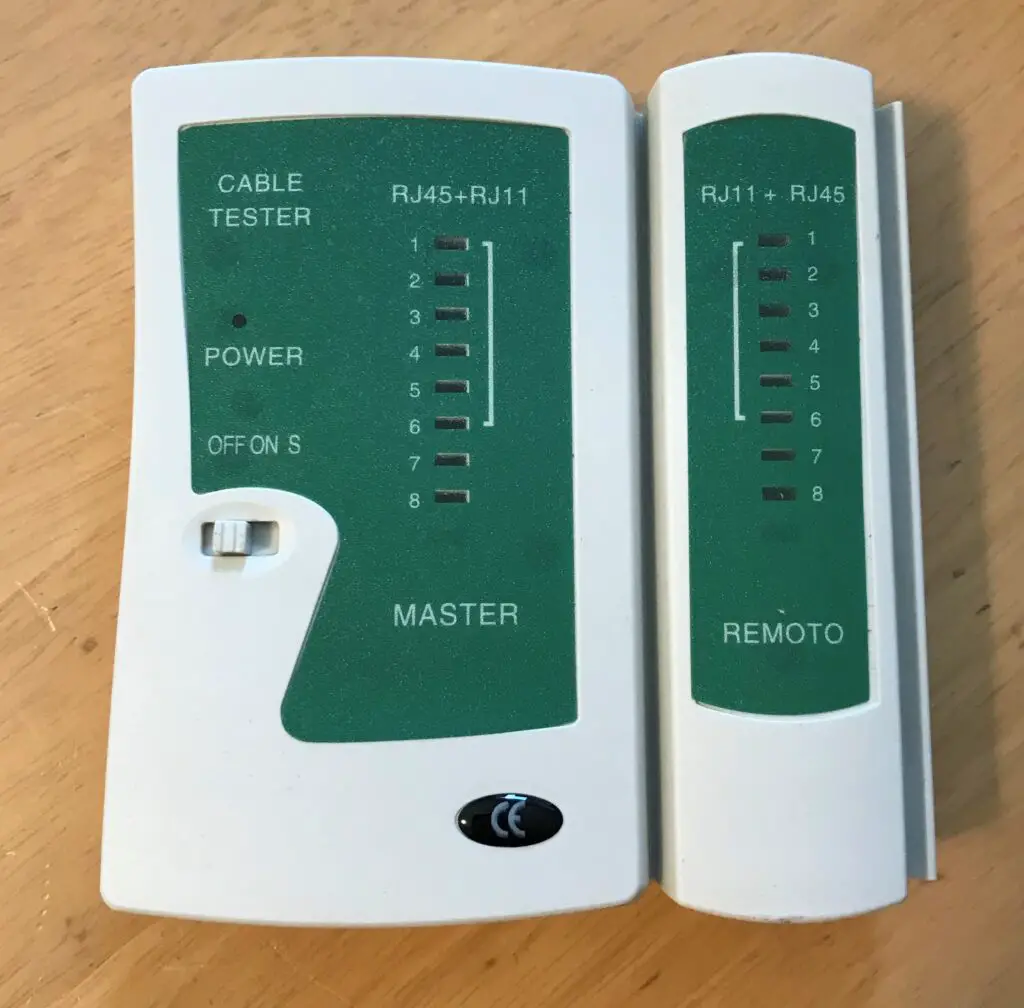
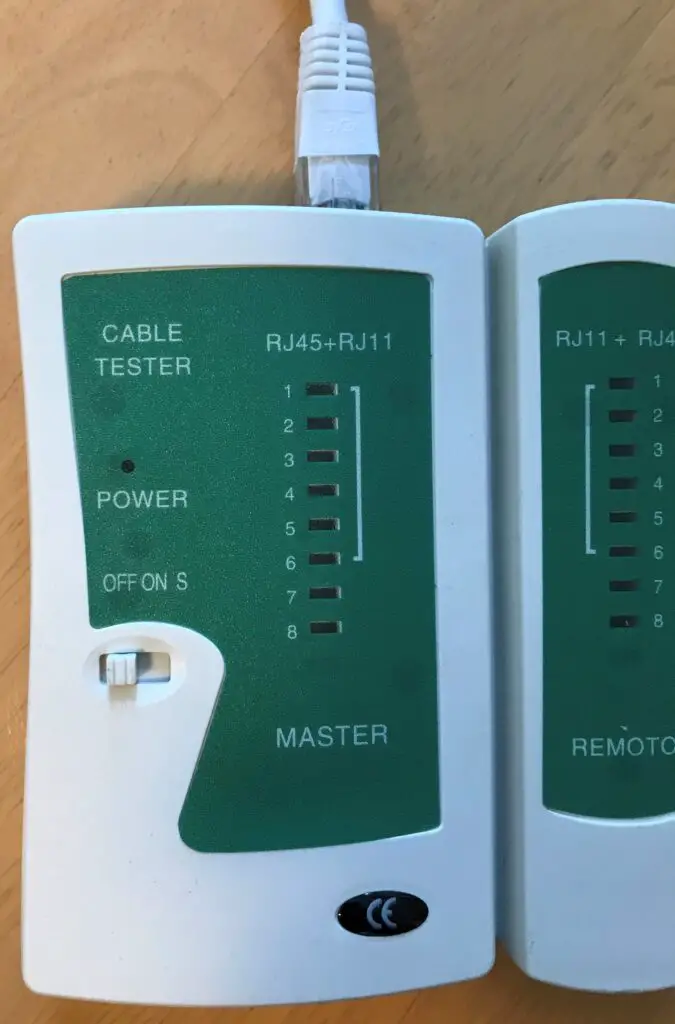
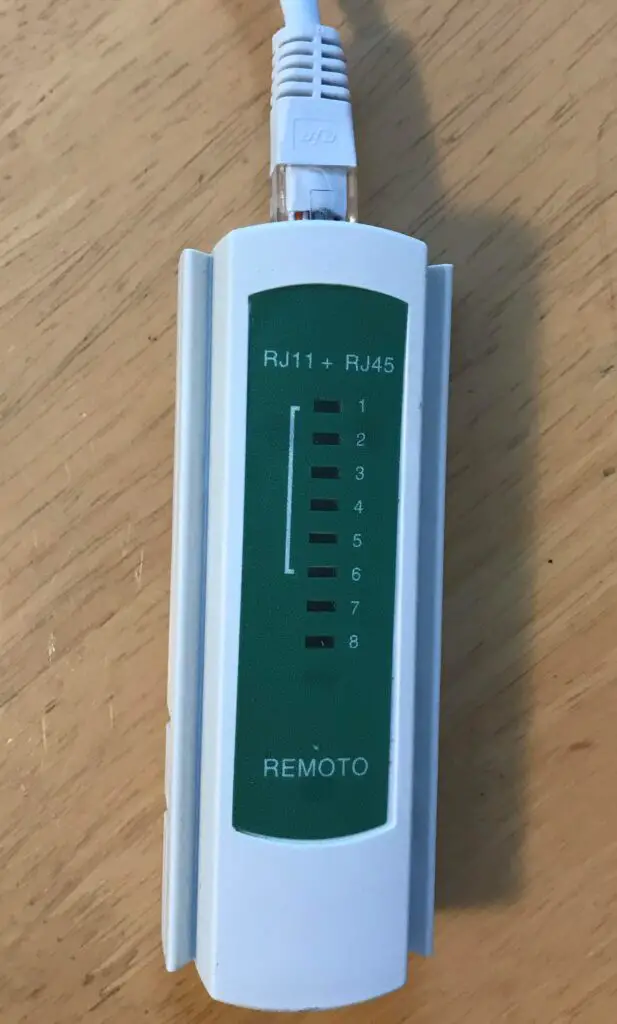
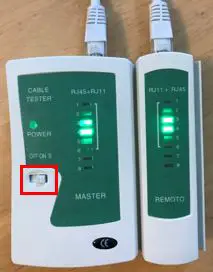
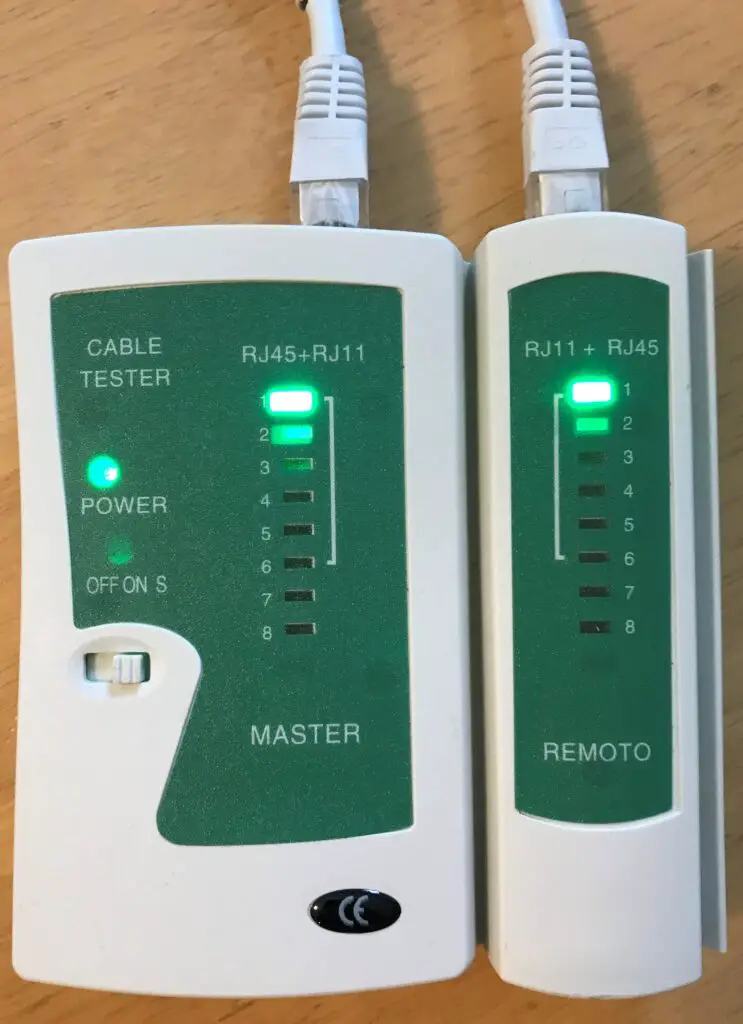
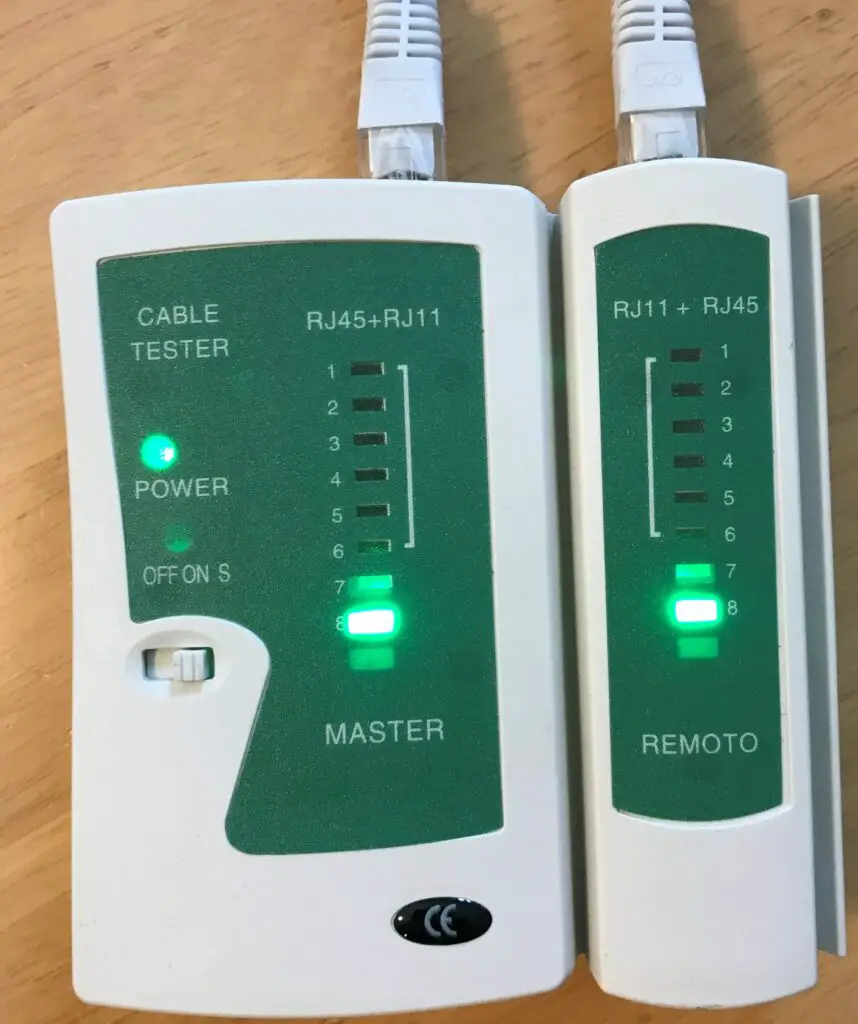
    • Use an ethernet cable tester on the cable

    In this post, I’ll dive into each of these methods and explain what to look for.

    How to find out if an ethernet cable is not working

    If you have a device that’s connected to your network with an ethernet cable and the cable goes bad, you’ll lose your network connection.

    If one (or all) of your devices loses its network connection, you might suspect that a cable has gone bad. The problem is, you don’t know for sure if that’s the cause of your lost connection.

    So what do you do?

    There are a few different steps you can take to see if the ethernet cable you are using has gone bad.

    I recommend that you run these tests on all the ethernet cables in your network if you’re experiencing connectivity issues. You should do this because there may be multiple cables that can affect one device.

    For example, what if your computer is connected to your router with an ethernet cable, and your router is connected to your modem with an ethernet cable? If either one of those ethernet cables goes bad, you’ll lose your internet connectivity.

    It’ll only take a few minutes to inspect all your cables, and you may be surprised by what you find.

    Visually inspect the ethernet cable

    The first thing you should do is inspect the ethernet cable that you think might be going bad. Look at the sheath of the cable for the following:

    • A secure connection to the devices at each end of the cable
    • Cuts or tears in the rubber jacket around the copper wires
    • If the copper wires inside the cable are exposed outside of the rubber jacket
    • Sharp bends or turns in the cable
    • If the cable is crushed by any furniture or other heavy items

    If you see damage to the ethernet cable, that might be the reason it isn’t working properly.

    If the cable passes the visual test and everything looks ok, take a look at the ethernet port link lights on the devices the cable is connected to (if they have them).

    Inspect the ethernet port link lights

    Depending upon the device your ethernet cable is connected to, it might have ethernet port link lights to aid your inspection.

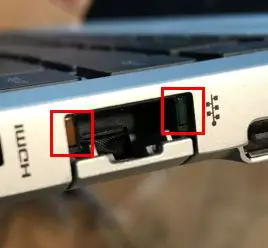
    Ethernet port link lights

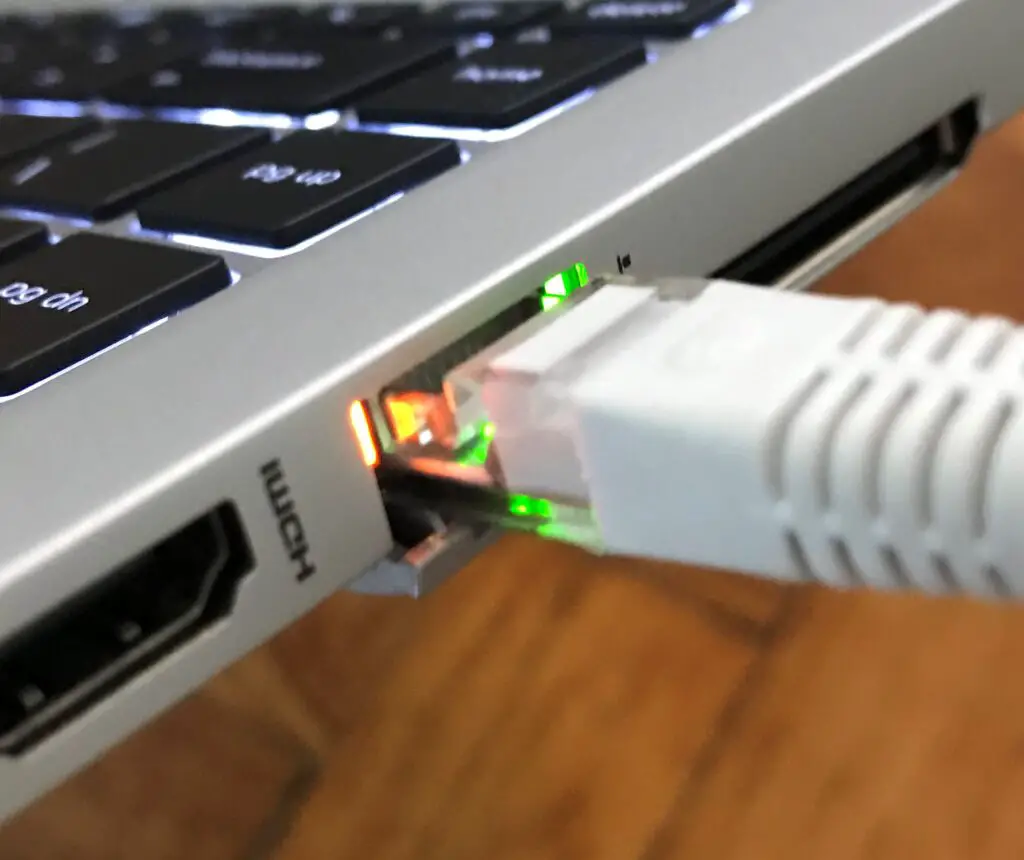
    On devices with link lights, they’ll have two lights on each ethernet port. The lights are located on the sides of the port.

    For example, here are the link lights on the ethernet port of my laptop.

    Link lights on laptop ethernet port

    The link light on the left is orange, while the other link light is green.

    The purpose of ethernet port link lights is to let you know if your ethernet port is working properly. For the devices that have them, they make it really easy when troubleshooting ethernet cable connections.

    When an ethernet cable is plugged into the ethernet port, the green light will be a solid green. This is to indicate that the ethernet cable is successfully connected to the port.

    Whenever data is being sent from one device to another through the ethernet cable, the orange link light will blink. This is to indicate that data is being processed.

    Here’s what it’ll look like if the cable is plugged in correctly and processing data.

    Laptop ethernet port link lights on

    As you can see, both lights are on. You can’t tell by the picture, but the orange light is blinking on and off.

    Using ethernet port link lights to inspect ethernet cables

    If you think an ethernet cable is going bad, the link lights on the ethernet port won’t light up properly. In other words, you may have an ethernet cable connected to two devices, but the link lights might be off.

    Let’s use my laptop as an example.

    In this case, let’s say I’m using an ethernet cable to connect my laptop to my router. I need to make sure both my router and laptop are powered on and the ethernet cable is securely connected to both devices. If everything is working properly, both link lights on my laptop ethernet port should be lighting up.

    I can conclude that something’s wrong with the ethernet cable if the green light isn’t a solid green or the orange link light isn’t blinking.

    If you have any devices in your home with ethernet port link lights, you can use them to troubleshoot your ethernet cables. Take the ethernet cable that you think has gone bad and connect it to the device with the ethernet port link lights.

    If the link lights on the device don’t light up when you connect your ethernet cable to it and power it on, it’s probably time to swap out that ethernet cable.

    Try replacing the cable with another one that works

    The next thing you can do if you have a cable that you think is going bad is simply swap it out.

    If you have another ethernet cable that you know is working, use it to replace the one that you think might be faulty. If you don’t have a spare cable lying around, grab a cat5e or cat6 cable for your test. Ethernet cables are cheap, and it never hurts to have a spare lying around. You never know when you might need it.

    When you replace the potentially faulty cable with the new one, does it restore the connection between the two devices?

    Run a few tests after connecting the two devices with the different cable. If the connection between the two devices is now fast and reliable, it’s safe to say there was something wrong with the other cable.

    Use an ethernet cable tester to check the cable

    When you’re troubleshooting ethernet cables to see if they work, you can save yourself some time by using an ethernet cable tester.

    Ethernet cable testers allow you to quickly tell if an ethernet cable has gone bad or not.

    I got mine as part of an ethernet cable crimping kit because I also wanted to be able to shorten some of my ethernet cables. If you don’t want to mess around with cutting your ethernet cables, I suggest you just get an ethernet cable tester like this one.

    Ethernet cable testers are inexpensive, and I think you’ll find that the time you save by using one is worth it. On top of that, you can say for sure whether your cables are working properly or not.

    Not to mention, I think the tester is fun to use. All my non-technical friends are impressed when I can help them with their internet problems, so that’s a bonus as well.

    How to use an ethernet cable tester

    Ethernet cable testers are very easy to use. All you need is the tester and a 9 volt battery.

    For your reference, here’s what an ethernet cable tester looks like:

    Ethernet cable tester

    As you can see, there are two parts to the tester (the Master and Remote). They can be joined together when you want to test shorter ethernet cables. If you want to test longer ethernet cables, you can separate the two devices.

    To test an ethernet cable, all you have to do is plug each end of the cable into the two different tester devices. Then you just need to power on the tester.

    Let’s take it one step at a time.

    To start, make sure the Master tester has a 9 volt battery plugged into it and it’s powered off. In other words, make sure the switch on the Master device is in the “OFF” position.

    Ethernet cable tester with switch off

    Now all you have to do is plug each end of the ethernet cable into the tester. Start with the Master device first. Plug one end of the cable into the RJ45 port of the Master device.

    Ethernet cable tester master connection

    Next, plug the other end of the ethernet cable into the Remote tester device. As I mentioned, if you have a long ethernet cable feel free to detach the Remote device and bring it to the other end of the cable to plug it in.

    Here’s an example of what it would look like if I detached the Remote tester.

    Ethernet cable tester remote connection

    Now that the cable is attached to both ends of the tester, move the switch on the Master device to the “ON” position. When you do, you’ll see the lights numbered 1 through 8 start to light up.

    Ethernet cable tester power on

    What to expect when testing a cable

    The lights numbered 1 through 8 will light up one at a time on both your Master and Remote tester. The lights will light up in order starting with light 1:

    Ethernet cable tester light 1
    The Master and Remote ethernet cable tester devices with the 1 light lit up

    The last light to light up will be light 8. After light 8, the cycle will start over again.

    Ethernet cable tester light 8
    The Master and Remote ethernet cable tester devices with the 8 light lit up

    The 8 lights on the device refer to the 8 copper wires that are inside your ethernet cable. Each copper wire in the cable is individually tested to make sure it’s working properly.

    If the cable you’re testing is really long or you can’t bring the two ends of the cable to the same place, you might need two people to verify that the same lights are lighting up on the two test devices at the same time.

    When you watch the lights on your tester, it’ll continue testing each copper wire until you turn it off. If you’ve watched the tester test all 8 copper wires and they all light up green at the same time on both tester devices, you know your ethernet cable is in good shape.

    However, your ethernet cable has problems if any of the following situations occur:

    • Any of the lights turn red
    • If the same numbered Master and Remote lights don’t light up at the same time (e.g. light 1 on the Master and light 4 of the Remote tester light up at the same time)
    • If any of the lights are “skipped” or do not light up at all during testing (e.g. during the cycle, light 4 on the Master and Remote tester doesn’t light up on the test devices)

    If any find any of the situations above while testing your cable, it’s time to find a replacement.

    Wrap up

    Now that you can tell if an ethernet cable is bad, it makes troubleshooting your network a lot easier. If all your ethernet cables are working properly, you can narrow down the cause of any network connection problems you experience.

    The best part is if you find a bad ethernet cable, it’s a quick and easy fix to replace it.

    If you have any questions about the above information or you’d like to share your ethernet cable troubles, post a comment below.

    If you found this information helpful, here are some other resources that might be useful as well:

    Can Ethernet Cables Go Bad?

    Does Ethernet Cable Length Affect Network Speed?

    How to Tell What Type of Ethernet Cable You Have

    Can an Ethernet Cable Slow Your Internet Speed?

    Is an Ethernet Cable Faster Than WiFi?

  • What Router Do I Have? How to Find Out

    What Router Do I Have? How to Find Out

    What router do I have how to find out

    Setting up your internet router can be quite overwhelming.

    In some cases, your router is separate from your modem and needs to be set up individually. Other times, your router is combined with your modem into one device.

    Sometimes, it’s hard to even tell the difference between your modem and router.

    With all this confusion surrounding your internet devices, how do you determine if you have the right router or not?

    It all starts with finding out its make and model. The good news is, there are multiple ways to determine your router’s manufacturer and model number.

    The easiest way to identify a router’s make and model is to look at the sticker on the bottom of the device. The sticker will detail both the manufacturer and the model number of the router. This information can also be determined by logging in to the router’s settings portal.

    In this post, I’ll provide detailed instructions for determining your router’s make and model. I’ll also provide important background information to ensure you’re looking at the right device.

    Why a Router’s Make and Model Is Important

    You may be wondering why you should know the manufacturer and model number of your router in the first place.

    The truth is, if you want to get the most out of your internet connection, you need to know what equipment you have.

    If you’re not sure what router you have, you won’t know if it’s a good fit for your internet plan. For example, if your router can’t support the speeds provided by your internet plan, you’ll experience slower internet. The last thing you want is to be paying for a fast internet plan that you can’t fully use.

    Once you determine your router’s model, you can look up its technical capabilities. This includes the internet speed it supports and the features it offers. To make the most of your internet plan, make sure your router can support the speed offered by your plan.

    On top of that, knowing your router’s capabilities helps you customize your home internet to your unique situation. If you don’t even know what router you have, chances are you’re not using all its features. If you’re going to pay good money for a router, you might as well get the most out of it.

    How to Tell a Router From a Modem

    In order to identify the make and model of your router, you first need to know which device is your router.

    For those who are not very technical, this may not be as easy as it sounds.

    If you only have one internet device in your home (and your internet is working), it means you have a modem router combination device. For reference, it may look something like this:

    Modem router combo device
    A modem and router combination device

    A modem and router combination device makes things easy for you because you don’t need to know the difference between a modem and router. In this case, they’re the same device.

    Let’s say you don’t have a modem and router combo device. How do you tell the difference between your modem and router?

    There are a few key features to look for that’ll help you identify your router. In addition, your router and modem should have stickers on them that detail what type of device it is.

    Things to Look For on a Router

    Your modem and router have different responsibilities when it comes to your home internet. As a result, there’ll be some differences between how the two devices look. This makes it a little easier to tell them apart.

    A Router Will Have Antennas

    One key feature of your router is that it’s responsible for providing WiFi to your home. In other words, you wouldn’t be able to get wireless internet without your router.

    Your router provides WiFi to your home by broadcasting an internet signal over radio waves. In order to send out the internet signal, it uses antennas like an old-fashioned radio. These antennas allow your router to communicate with the wireless internet devices in your home.

    Here’s what the antennas on your router will look like. They should be pretty obvious.

    Router antennas

    The antennas on your router make it stand out when compared to your modem. Your modem doesn’t broadcast a WiFi signal, so it won’t have any antennas.

    Here’s an example of what your modem will look like.

    Modem no antennas

    See? No antennas on your modem.

    That’s probably the easiest way to tell the difference between your modem and router. By comparing the two photos above, it’s easy to tell which device is your router and which device is your modem.

    A Router Will Have More Ethernet Ports

    Another way to tell the difference between your modem and router is by comparing the backs of the two devices.

    Your router will have multiple ethernet ports on it. These ports allow your internet devices to connect to the internet with a wired connection as opposed to using WiFi.

    This is what the back of your router should look like:

    Router ethernet ports

    Most routers will have four ethernet ports, meaning up to four of your devices can have a wired connection to the internet. As you can see above, my router has four ethernet ports.

    On the other hand, your modem should only have one ethernet port. Your modem only needs one ethernet port because the only device that’s connecting to it with an ethernet cable is your router. Your internet devices don’t plug directly into your modem.

    Let’s see what the ethernet port on a modem looks like:

    By putting your modem and router side-by-side and looking at the back of the devices, there should be a clear difference between the two.

    Not only will your router have more ethernet ports, it’ll have other ports on it as well (USB ports, a WAN port, etc.). The back of your modem should be very simple and straightforward.

    The Sticker on A Router Will Identify It

    Still not sure what device is your router? This last method should remove any doubts you may have.

    I’m talking about the sticker on the bottom of your router.

    If you think you know which device your router is, pick it up.

    Now look at the bottom of the device.

    It should have a sticker on it similar to this one.

    Router information sticker

    You’ll see that this sticker has a lot of different information on it. Somewhere on the sticker, it should tell you if the device is a modem or a router.

    Taking a closer look at the sticker on my device, I can see that it identifies my device as a router.

    Router sticker device description

    Looks like I found my router.

    Even if I picked up the wrong device, it wouldn’t be a big deal. Your modem should have a sticker on the bottom of it as well.

    Modem information sticker

    Just like your router, the sticker on your modem should tell you what type of equipment it is.

    Modem sticker device description

    Even if you picked up your modem, you know the other internet device is your router. If this is what happened to you, just think of it as process of elimination.

    Once you can tell the difference between your modem and router, you’re way more than halfway there.

    How to Determine A Router’s Make and Model

    How to determine router make and model

    Now that you’re looking at the right device. It should be really easy from here.

    Why’s that?

    Because you’ve already done most of the work. To find out your router’s make and model, look again at the sticker on the bottom of the device.

    The make and model of the device will usually be provided in large letters.

    Determining the Model of a Router

    Let’s start with finding the model of your device. To provide a reference, here’s where the model information is listed on my router’s sticker.

    Router model information

    As you can see, the model information is part of the information we looked at earlier to confirm that the device was my router.

    My router’s model is an Archer A7. The information below it (AC1750 Wireless Dual Band Gigabit Router) can also be used to identify the model of the device. In fact, the more descriptive label (AC1750) is actually listed on the front of the device.

    Router model label

    Now that we have the model squared away, let’s look for the manufacturer of the device.

    Determining a Router’s Manufacturer

    Your router’s manufacturer should be easier to find than the model information. That’s because it’s usually listed all over the device. You just need to be able to recognize it.

    In my case, the manufacturer’s name and logo is clearly displayed on the top of my router.

    Router manufacturer label

    Just by looking at the device, it’s pretty obvious that my router’s manufacturer is TP-Link.

    If that’s not enough for you, the manufacturer can also be found on the sticker we looked at to get the model information.

    Router manufacturer information

    Another Way to Find a Router’s Make and Model

    If you need further convincing, or you still aren’t sure what your router’s make and model is, there’s another way to get this information.

    You can find this information by logging in to your router’s settings.

    Determining a Router’s Make and Model by Logging in to the Router’s Settings

    To access your router’s settings, you’ll first need to open an internet browser of your choice.

    In the browser’s search bar, enter your router’s IP address (e.g. 192.168.0.1) or default access location (e.g. http://tplinkwifi.net). If you aren’t sure what your router’s default access location is, you can usually find it on the sticker on the router or by searching for it online.

    Router default access location

    Entering your router’s IP address or default access location into your browser will take you to your router’s login page. On this page, enter the username and password you created for your router.

    Router settings login page

    If you haven’t created a custom password for your router, you should be able to log in with your router’s default password.

    If you aren’t sure what your router’s default password is, you can usually find the it in the device’s owner’s manual or by searching for it online.

    As a side note, if you’re using your default password to log in to your router, make sure to change it to a custom password as soon as possible.

    It’s extremely insecure to keep the default password on your router. If you can look up your router’s password online, so can the bad guys. It’s worth taking the few extra minutes to secure your device.

    Finding the Make and Model Information of the Router

    Once you’ve logged into your router, the rest should be easy.

    The settings page should show the make and model of your router. For my router, the make and model is on the main settings page.

    As you can see, the manufacturer’s logo isn’t very subtle:

    Router manufacturer on settings page

    My router’s model is a little harder to find, but it’s also located on the main settings page.

    Router model on settings page

    If you know your router’s IP address and login password, this method can be even easier than looking at the sticker. In fact, you may not even have to get off the couch.

    Wrap Up

    At this point you should be able to determine which device in your home is your router. You should also be able to tell what model your router is, as well as its manufacturer.

    If you’re still having trouble identifying your router’s make and model, please leave a comment below and I’ll see if I can help.

    If you found this post helpful, here are some similar topics that might also be useful to you:

    Does a Router Affect Your WiFi Speed?

    Does Any Router Work With Any Internet Provider?

    How to Connect a Computer to a Router

    What is a Modem Router Combo?

    What Do My Router Lights Mean?

  • Can Ethernet Cables Go Bad?

    Can Ethernet Cables Go Bad?

    Ethernet Cables Go Bad title page

    Ethernet cables are a critical part of your home network. They enable fast and reliable connections between your devices. They can also play a large role in your home’s connection to the internet. If you’re not careful when selecting cables for your home network, they can limit the internet speed for all the devices.

    Despite how important ethernet cables are, they’re often overlooked and poorly treated.

    What many people don’t realize is that ethernet cables can go bad if they aren’t taken care of.

    In fact, there are many different ways an ethernet cable can fail. Some common causes for ethernet cable failure include:

    • A bent, cut, or damaged cable
    • Improper connecting/disconnecting of the cable
    • Poor manufacturing
    • Exposure to ultraviolet (UV) rays and harsh conditions
    • Long periods of tension on the cable

    In this post, I’ll detail all the common causes of ethernet cable failure and what you can do to prevent your cables from going bad.

    Symptoms of a bad ethernet cable

    Before we dive into how you can prevent ethernet cables from going bad, let’s start at square one.

    How can you tell if an ethernet cable is going bad in the first place?

    When an ethernet cable starts to fail, you’ll most likely know about it. That’s because a bad ethernet cable will have a serious impact on your home network.

    If you think one of your ethernet cables is going bad, there are a few steps you can take to find out for sure.

    Unstable internet connection

    One common result of a faulty ethernet cable is an unpredictable internet connection.

    As an example, let’s say your ethernet cable is used to connect your internet device to your router.

    When looking at your computer or device, it might look like it’s repeatedly connecting and disconnecting from the internet without you doing anything.

    You might also find that if the cable is positioned a certain way it’ll have a good connection, but if you move the cable, you’ll lose the connection.

    This is troubling because ethernet cable connections are known for their reliability. Especially when an ethernet connection is compared to a wireless (WiFi) connection. This is why an unstable connection is a telltale sign that something might be going on with the cable itself.

    No internet connection

    The other possible result of a bad ethernet cable is a little more drastic. A failed ethernet cable can result in you losing your internet connection entirely.

    Similar to the previous scenario, let’s say your computer is connected to your router with an ethernet cable. You turn on your device, but it says you don’t have an internet connection.

    You double check to make sure the cable is securely plugged into your router and your computer, but still no luck.

    On top of that, when you look at the lights on your modem and router, everything looks fine.

    In this case, your ethernet cable might be the cause of your problems.

    There are other reasons why you may have lost your internet connection, but it’s possible that a bad ethernet cable is the cause.

    If you think one of your ethernet cables has gone bad, there are some steps you can take to find out if your cable is the reason you don’t have a good connection.

    What causes an ethernet cable to go bad?

    Now that we know what happens when an ethernet cable fails, let’s dig into why they fail in the first place.

    There are many possible reasons why an ethernet cable may stop working. In most cases, either the cables are treated poorly, or the wrong type of cable is used in a given situation.

    Let’s break down each of these possible causes.

    Causes of ethernet cable failure

    The cable is bent, cut, or crushed

    This is one of the more common reasons why ethernet cables fail. It’s also one of the most easily avoided.

    That’s because it all starts with how well you take care of your cables.

    Ethernet cables have twisted pairs of copper wire inside them. There are usually 4 pairs of copper wires, meaning there are 8 copper wires in each cable.

    Here are the 8 copper wires inside an ethernet cable after they’ve been untwisted:

    Ethernet cable copper wires
    Copper wires inside a cat5e ethernet cable

    Ethernet cables use the copper wire to transport information from one location to another. If a system at one end of the cable wants to send information to the system on the other end of the cable, it creates a data message for the other system.

    This message is translated into electrical pulses, which are sent through the copper wires. When the electrical pulses reach the other end of the cable, the system on that end of the cable translates the electric signals back into the original message from the other system.

    That’s the basics of how ethernet cables work.

    Now that you know how ethernet cables function, you need to understand what happens if one of these copper wires is damaged.

    If something happens to the copper wires inside the cable, the electrical pulses won’t be able to make it from one end of the cable to the other. If the electric signals have trouble traveling through the ethernet cable, it’ll distort the data that’s being sent. When this happens, the connection between the two systems will be lost and the cable won’t work as it should.

    When an ethernet cable is bent, cut, or crushed, it increases the chances that the copper wires inside the cable are damaged.

    The cable is incorrectly unplugged

    Another common cause of ethernet cable failure has to do with how carefully they’re unplugged. This is another case where poor treatment of your cables is usually the root cause.

    The difference is that in this situation, we’re more focused on the connectors at the end of the cable.

    Ethernet cables have connectors on the end of them that allow you to plug them into computers and other devices. They’re called RJ45 connectors.

    I’m sure you’ll recognize this:

    RJ45 connector with boot
    RJ45 connector on an ethernet cable

    RJ45 connectors are important because they connect the 8 copper wires inside the cable to the computer or system they’re plugged in to. There are designated channels within the RJ45 connector that each of the 8 wires is designed to fit in.

    If you look closely, you can see there are gold-plated pins of the RJ45 connector.

    RJ45 connector pins

    As you can imagine, there is one pin for each copper wire in the ethernet cable. As expected, there are 8 pins on the RJ45 connector.

    The challenge with this is if one of the 8 copper wires loses its contact with its RJ45 pin, the cable will stop working properly.

    This usually happens when an ethernet cable is repeatedly yanked or tugged. Over time, it creates tension on the copper wires in the cable and pulls them away from their RJ45 pins.

    For example, yanking an ethernet cable out of your router instead of pressing the tab on the RJ45 connector and carefully removing the cable will result in unnecessary stress on the copper wires inside the cable.

    Tension on the cable

    It’s not good for your ethernet cable if it’s supporting a device that’s gently pulling on it.

    What I’m talking about here is if a device (like your modem) is hanging off the floor and your ethernet cable is what’s holding it up. Even though your modem probably isn’t heavy, gravity will cause it to gently pull on your ethernet cable.

    Here’s an example of what I’m talking about:

    Tension on ethernet cable
    Over time, the suspended modem will create tension on the yellow ethernet cable

    Over a long period of time, the hanging modem can stress the copper wires inside the yellow ethernet cable.

    Poor manufacturing or quality

    This next cause of ethernet cable failure has nothing to do with how you treat them. It actually has everything to do with where you buy them from.

    Ethernet cables are used in most homes and businesses. As a result, it seems like everyone is trying to sell them.

    The trouble here is that not every manufacturer makes a quality product. There are many knockoff brands and cheaply made cables out there. You need to be careful where you get them from.

    When you buy a knockoff ethernet cable, it may not have been made to the same standards that the quality cables are made to. This increases the likelihood that the ethernet cable will fail before it should. In fact, it may even be defective at the time you buy it.

    It’s also possible that a good manufacturer will make a faulty cable from time to time. They make so many ethernet cables that they’re bound to have a few bad ones make it out of their manufacturing plants.

    This may not seem like a common cause for ethernet cable failure, but I think you’d be surprised. It happens more often than you think.

    Ultraviolet light damage and extreme conditions

    The last common cause for ethernet cable failure has to do with using the wrong type of cable.

    If an ethernet cable is exposed to ultraviolet (UV) light from the sun, it’ll damage the cable. UV light will slowly degrade the plastic sheath on the cable. If the cable is exposed to enough sunlight, it’ll eventually stop working.

    UV damage is usually the cause of ethernet cable failure when a regular indoor cable is used outdoors.

    Not only is UV light bad for your cables, but harsh conditions are as well. Some examples of harsh conditions include:

    • Extreme temperatures
    • High humidity environments
    • Heavy rainfall or groundwater
    • Moist environments

    All these environments will degrade the performance of an ethernet cable over time.

    Thankfully, certain types of ethernet cables are designed to work well in poor conditions. You just need to pick the right type of cable depending upon where it’ll be used.

    You’ll find out more about this later.

    How to prevent ethernet cables from going bad

    When it comes to making sure your ethernet cables last a long time, the rules are pretty simple.

    First and foremost, you need to make sure you treat your cables the right way. The best thing you can do is put your cables in a position where they don’t need to move and they won’t be tripped on.

    Let’s take a look at all the measures you can take.

    Make sure the cable isn’t bent at sharp angles

    This one is pretty straightforward.

    Sharp angles can cause the copper wires inside the cable to bend. This can disrupt the connection between the devices at either end of the cable.

    The bottom line is: don’t bend or fold your ethernet cables. Make sure any bends in the cable are gradual.

    Gently coil any excess cabling

    This method goes hand-in-hand with the previous one. If you have excess ethernet cable, don’t just throw it on the floor in an unorganized mess.

    Make sure that any excess cabling is gently coiled. Use cable ties to secure the bundles of excess ethernet cable. Not only will this help protect your cables, but it’ll make your home appear much more organized as well.

    Another option here may be to just buy shorter ethernet cables that better fit your home.

    Keep heavy items off the cables

    This is pretty self-explanatory as well.

    Make sure that your ethernet cables aren’t crushed by heavy items like furniture. If your cables are laid under furniture like a couch, make sure the legs of the couch aren’t sitting on top of the cable.

    Properly use the RJ45 clips on the cable

    When unplugging your ethernet cables from devices, be gentle. Press the lever on the RJ45 clip before removing the cable.

    Being rough while unplugging your cables can cause the RJ45 clip to break or the copper wires to pull away from the RJ45 connector. In both cases, it’ll make it more likely that your cable won’t connect to your device’s ethernet ports properly.

    Make sure your cable doesn’t have tension on it

    Make sure your ethernet cables are connected to devices that’re sitting on top of flat surfaces.

    Don’t use your ethernet cables to support hanging devices. This’ll ensure there’s no extra tension on the cable.

    Try to buy your cables from quality vendors

    This one might easier said than done.

    If you can, buy your ethernet cables from companies with good reputations.

    This can be especially hard with sites like Amazon.com where there are so many vendors to choose from. Even after looking at the reviews for a cable, it can be hard to tell which cables are the best quality.

    You may find that the best method is to try a new vendor each time you need to get an ethernet cable. Once you find a quality cable that lasts you a long time, continue to buy from that vendor.

    You may even find that multiple companies make ethernet cables that you like.

    Make sure you use the right type of cable

    This last method of preserving your ethernet cables is most applicable to outdoor environments. The bottom line is, if you’re going to be using a cable outside, make sure you get a cable that’s designed to do so.

    I previously mentioned how UV rays and harsh environments can cause cables to fail. If you need a cable for these situations, don’t get an indoor ethernet cable.

    Regular indoor ethernet cables usually aren’t exposed to harsh conditions. As a result, they aren’t made to withstand much abuse.

    Waterproof and UV protected cables are made to be much more durable than your typical indoor ethernet cable. That’s because outdoor ethernet cables are waterproof and more resistant to UV rays. If you need an ethernet cable that’ll be used outdoors, grab a cable like this one.

    Outdoor ethernet cables are more expensive than indoor ones, but that’s because they’re made of more durable materials. It’s well worth the extra cost to ensure your ethernet cable won’t fail in an outdoor environment.

    Wrap up

    Hopefully you’re now armed with all the information you need to ensure your ethernet cables last as long as possible. A little prevention goes a long way with ethernet cables. If you treat them properly and use the right cables, they should last you a long time.

    If you have any questions about this material, or you’d like to share your experiences with failed ethernet cables, drop a line below.

    If you found this information useful, here are some other topics that might interest you:

    Does Ethernet Cable Length Affect Network Speed?

    How to Tell What Type of Ethernet Cable You Have

    Is an Ethernet Cable Faster Than WiFi?

    Can an Ethernet Cable Slow Your Internet Speed?

    What is an Ethernet Switch Used for?

  • Does Ethernet Cable Length Affect Network Speed?

    Does Ethernet Cable Length Affect Network Speed?

    Ethernet Cable Length Affect Speed title page

    When buying an ethernet cable, there are several factors to consider. For example, there are multiple categories of cable to choose from, and each of these cable types comes in many different lengths. You can even buy kits that allow you to make ethernet cables as long as you want.

    When making these decisions, it’s important to understand the impact that each may have on your network. The last thing you want to do is buy an ethernet cable that limits your internet speed.

    A common question I’ve seen has to do with the length of the ethernet cable you use, and how the length of an ethernet cable will affect the speed of your network.

    For the most part, this is an easy answer:

    In general, the length of an ethernet cable doesn’t affect the speed of your network as long as it’s less than 328 feet (100 meters) long. If an ethernet cable is longer than 328 feet, its data transfer speed will be significantly reduced and it will restrict the performance of your network.

    With that said, the type of ethernet cable you’re using will also come into play. Some types of ethernet cables (like category 6, 7a, and 8 cables) are designed to support different speeds at different lengths. You need to know the speeds that these cables support at different lengths to make sure you’re using the right one for your network.

    In this post, I’ll provide you with all you need to consider when it comes to the length of ethernet cables and their impact on your network speed.

    How does an ethernet cable transmit data?

    First things first.

    Understanding how ethernet cables send data will help you understand how the length of an ethernet cable impacts the speed of your network.

    After all, that’s the whole purpose of ethernet cables in the first place. To move data from one device to another so the devices can communicate with each other.

    So how do ethernet cables transmit data?

    Ethernet cables are made up of pairs of copper wires that are twisted together inside the cable. Here’s a picture of what the inside of an ethernet cable looks like:

    Twisted Pair Ethernet Cable Wiring
    Twisted pairs of copper wire inside an ethernet cable

    When provided with an electrical signal, these wires send electric pulses from one end of the cable to the other.

    If a system on one end of the cable needs to send data to the system on the other end, it’ll convert the data it wants to send into a series of electric pulses. These electric pulses are sent to the other system through the cable.

    When the signals reach the receiving system, they’re translated back into the original data that the sending computer sent.

    This is how data is transmitted using ethernet cables.

    How fast does an ethernet cable transmit data?

    Now we know how ethernet cables transmit data.

    But how fast does this happen?

    Fast. Really fast.

    Think about what’s happening here. The data being transferred by the ethernet cable has been converted to electric current. This electric current travels through the copper wires in the cable at about 64% as fast as the speed of light.

    To be exact, that means data is traveling on the ethernet cable at around 192 kilometers per second (km/s). This is how fast data moves on all types of ethernet cables.

    Yeah, I’d say that’s pretty fast.

    Keep this information in mind as it’s important for the next section.

    As a side note, if you’re wondering why data can move so fast on ethernet cables but different cables support different transmission speeds, it has to do with the amount of data a cable can transfer at a given time. This term is called the cable’s frequency, which is related to the thickness of the copper wires inside the cable.

    Does the length of an ethernet cable affect its speed?

    Now that I’ve given you all this background information, hopefully I can make it clear why it’s important.

    So the question we’re trying to answer is if an ethernet cable’s length affects its data transmission speed.

    To answer this question, let me refer you back to what we just talked about. Once data is translated into an electric signal, it travels over an ethernet cable at the speed of 192 km/s.

    With data traveling that fast, do you think it makes a difference how long the cable is?

    The answer here is no.

    The electrical signals on an ethernet cable travel so fast that it doesn’t matter if you’re using a really long cable. When it comes to ethernet cables, there are no disadvantages to using long cable lengths.

    On the other hand, are there advantages to using short ethernet cables?

    Are shorter ethernet cables faster?

    Spoiler alert: there are no advantages to using a shorter ethernet cable.

    Due to the fact that electricity is traveling at very fast speeds along the copper wire of the cable, you won’t be able to notice a difference if one ethernet cable is shorter than the other.

    Let’s use an extreme case to illustrate this.

    In our imaginary experiment we’ll use one category 5e ethernet cable that is 300 feet long and another that is 1 foot long.

    In this test let’s say you have two computers that are exactly the same. One computer is connected to your router with the 300 foot long cat 5e cable. The other is connected to your router with the 1 foot cat 5e ethernet cable.

    Long and short ethernet cable experiment

    If you used both computers to navigate to YouTube and started streaming the same video, you wouldn’t notice a difference in performance between the two computers.

    Technically, the internet data you requested (i.e. the YouTube video) would reach the computer with the 1 foot ethernet cable faster. However, data travels so fast over ethernet cables that the data would reach the computer with the shorter ethernet cable fractions of a second ahead of the computer connected with the long cable.

    From your perspective, the internet experience on both computers would be the same.

    For another visual, look at the picture below. Using the cable on the left will provide the same performance as the cable on the right.

    Ethernet cable length comparison
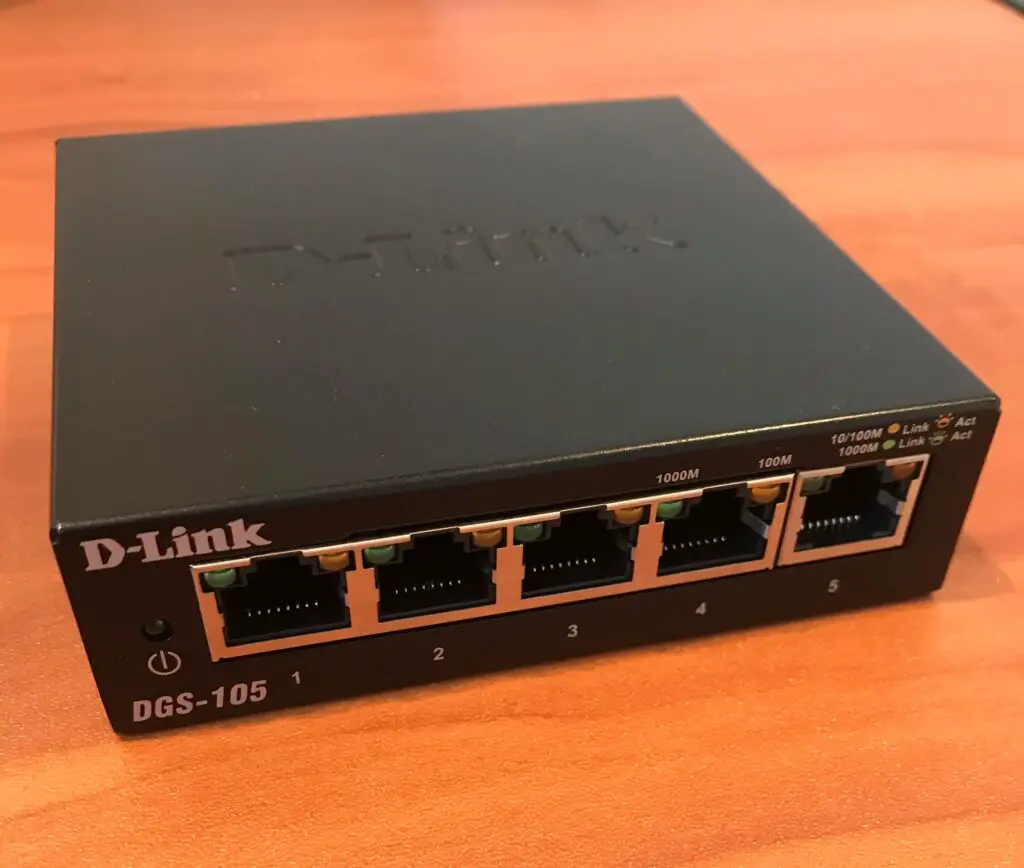
    These ethernet cables will support the same transmission speeds

    Sounds great, doesn’t it? There really aren’t any disadvantages to using long ethernet cables are there?

    Unfortunately it’s not as straightforward as it may seem. That’s because there’s a limit to the length that an ethernet cable can be before its speed is affected.

    There are two things to consider here:

    1. All ethernet cables will experience much slower speeds if they’re too long
    2. Some ethernet cables are designed to support different speeds at different lengths

    Let’s take a closer look at both of these situations.

    Ethernet cable performance degrades at long lengths

    As I previously mentioned, in most cases the length of your ethernet cables doesn’t affect their speed.

    Unfortunately there’s a limit to this. That’s because the performance of almost all ethernet cables degrades when the cable is about 328 feet (100 meters) or longer.

    Let’s say you have a standard cat5e ethernet cable. These cables generally support data transmission speeds up to 1 gigabit per second (Gbps).

    If that cable is 200 feet long, it won’t have any trouble supporting speeds up to 1 Gbps. Add another 128 feet or so to that cable, and it’s an entirely different story.

    Although I’ve never tried it myself, I’ve read that data transmission speeds of cat5e ethernet cables can drop to around 10-15 megabits per second (mbps) when the cable is longer than 328 feet.

    According to my calculations, that’s about a 98% drop in performance. I think you’d notice the difference.

    But why does this happen? Why do cables get much slower at about 300 feet long?

    This is due to the fact that ethernet cables have resistance.

    The longer the ethernet cable is, the more resistance the cable has to the flow of electricity. In other words, the longer the cable is, the harder it is for the electric pulses to travel from one end of the cable to the other.

    At around 328 feet, the resistance of the cable becomes too much for the electricity running through the cable, greatly slowing it down. This could actually happen at shorter lengths than 328 feet if there are sources of electromagnetic interference affecting the cable.

    The good news is, most people don’t need ethernet cables that are longer than 328 feet. If you do, just buy two shorter cables and connect them with an ethernet coupler.

    Some ethernet cables are designed to support different speeds at different lengths

    The other factor to be aware of when it comes to ethernet cable performance has to do with the type of ethernet cable you have. That’s because some ethernet cable types support different speeds depending upon how long they are.

    Ethernet cable supported speed breakdown

    Let’s start with the most common ethernet cables. These are category 5e and category 6 cables.

    Do these cable types supports different speeds at different lengths?

    Category 5e cables will support the same speed for any length up to 328 feet. The same can’t be said for cat 6 ethernet cables.

    Cables that support different speeds at different lengths

    A category 6 ethernet cable will support speeds of 10 Gbps for up to 180 feet (55 meters). At distances longer than 180 feet and less than 328 feet, a cat 6 cable supports speeds up to 1 Gbps.

    Chances are, you won’t need an ethernet cable longer than 180 feet. Even if you did, 1 Gbps should cover any of your data transmission needs.

    To put it simply, this information probably won’t change the type of ethernet cable you use. You’d only need a cable that supports faster speeds if you’re using it in some sort of data center.

    Speaking of data centers. That’s exactly what these next cables are used for.

    The other ethernet cables that support different speeds at different lengths are the category 7a and category 8 cables.

    A cat 7a ethernet cable supports speeds of 40 Gbps up to 164 feet (50 meters). For cat 7a cables between 164 and 328 feet, they support data transmission speeds up to 10 Gbps.

    Category 8 cables are a little different. Both types of cat 8 cables (8.1 and 8.2), support high data transmission rates of 25 Gbps and 40 Gbps, respectively. What’s unique about these cables is that they’re designed to be a maximum length of 98 feet. So although they don’t support different speeds at different lengths, their maximum length is much shorter than other ethernet cables.

    All other types of ethernet cable will support the same speed for any length up to 328 feet. So if you have a cat 5e ethernet cable, you don’t have to think twice about the speed it supports.

    Wrap up

    As long as your ethernet cables aren’t longer than 328 feet and they aren’t cat 6, cat 7a, or cat 8 cables, it doesn’t matter how long they are. They’ll support the same data transmission speeds.

    This’ll make things easier when you’re setting up your internet connections. You’ll have the freedom to use the length of ethernet cable that best fits your situation.

    In fact, most people don’t use ethernet cables longer than 20 or 30 feet. Cables of that length will all support the maximum possible data transmission rate of the cable, even for cat 6, cat 7a, and cat 8 cables.

    For the most part, there’s really not much to worry about when it comes to ethernet cable lengths and the speeds they support. Odds are, you’re using a cable that’s well within its performance limits.

    If you have any questions about this information or you’d like to share your personal experiences with ethernet cables, please drop a comment below.

    If this was useful information for you, check out some of my other posts on similar topics:

    How to Tell What Type of Ethernet Cable You Have

    Can an Ethernet Cable Slow Your Internet Speed?

    Is an Ethernet Cable Faster Than WiFi?

    What is an Ethernet Switch Used for?

    What Router Make and Model Do I Have?

  • How to Tell What Type of Ethernet Cable You Have

    How to Tell What Type of Ethernet Cable You Have

    Tell type of ethernet cable title page

    I wish I could tell you that all ethernet cables are the same.

    Unfortunately that’s not the case. Even though they all might look the same, they can actually be quite different.

    An ethernet cable’s performance will depend upon how it’s made and the specifications it’s built to. Thankfully, ethernet cable standards have been developed to separate the different types of ethernet cables into categories, which I’ll get in to later.

    So if ethernet cables all look the same, how do you know what type of cable you have?

    In general, ethernet cables can be identified by looking at the labeling on the side of the cable. The outer sheath of an ethernet cable usually provides information about the configuration of the cable, including the type (or category) of the cable, its frequency, and the standards it was made to.

    In this post, I’ll detail exactly what to look for when it comes to identifying your ethernet cables. I’ll also explain what types of ethernet cables you should be using in your home.

    Why It’s Important to Know the Type of Ethernet Cables You Have

    This might be surprising, but the ethernet cables you use can make a difference in your network’s performance.

    There are multiple reasons why you should be paying attention to the ethernet cables you have. We’ll dive into each of these reasons in detail.

    Ethernet Cables Provide Better Performance Than WiFi

    Let’s start with the basics here.

    What are ethernet cables used for?

    To put it simply, ethernet cables are used to move data between devices.

    Inside an ethernet cable, there are 4 pairs of copper wires (8 wires in total). Your devices send electric signals over these wires in order to transmit data to other devices. The device on the other end of the connection receives these signals and translates them into meaningful messages for the end user.

    Keep in mind that ethernet cables aren’t the only way to connect devices. Devices can also be connected wirelessly using WiFi technology. Although these methods accomplish the same thing, there are advantages to using ethernet cables.

    Ethernet cables transfer data more reliably than a WiFi connection because there’s a physical connection between the two devices. In a wireless connection, signals can get interrupted and distorted as they travel through the air.

    In addition, when using an ethernet cable, there’s less delay when sending data between the two devices compared to a wireless connection. I’ve tested the differences between WiFi and ethernet connections on my own to prove this out. I wrote an article on my findings if you’re curious to see what I discovered.

    These advantages will only benefit you if you’re using the right ethernet cable for your environment.

    The Wrong Cable Category Can Limit Your Internet Speed

    The biggest reason to pay attention to your ethernet cables is because of the impact they can have on your internet speed.

    If you’re using the wrong cable in your home network, it can limit your internet speed. For your reference, I’ve previously written about how ethernet cables can limit your internet speed if you’d like to dive into the details of why this happens.

    Imagine spending a lot of money on an internet plan only to have it restricted by an ethernet cable that costs less than $10. Yeah, I wouldn’t want that either.

    The key here is to make sure your ethernet cable can support the speeds provided by your internet plan. The category (or CAT) of the cable will tell you this information.

    Here’s a summary detailing the internet speeds that each category of ethernet cable can support:

    Ethernet cable category comparison
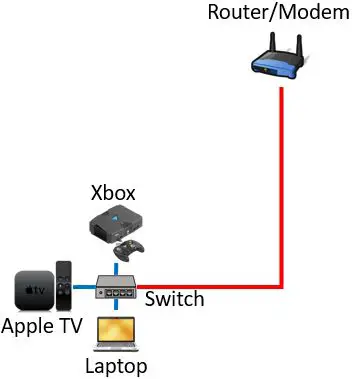
    It’s very important that you use an ethernet cable category that supports speeds faster than your internet plan. If you don’t, it’ll limit the internet speed on your network. Data can only move through your environment as fast as your ethernet cables allow.

    You Should Use Different Cables Depending Upon the Environment

    The environment surrounding your ethernet cables will have an impact on the type of cable you should use.

    In order to pick the best ethernet cable for your situation, you’ll need to look at the environment it’ll be used in. This is because some environmental factors can impact the transfer of data through your ethernet cables.

    Specifically, I’m talking about electromagnetic interference (EMI).

    When machines and electrical equipment are powered on, they generate magnetic fields that can impact the performance of your ethernet cables. In most cases, the EMI generated by household electronic equipment is minimal and you don’t have to worry about it.

    With that said, some equipment that generates high EMI and can impact your ethernet cables are:

    • Power generators
    • Commercial air conditioners
    • Large motors
    • High-power radios

    In other words, if your ethernet cables will be used in a manufacturing or production environment, you need to account for this. In your home or an office setting, you shouldn’t have to worry about EMI impacting your ethernet cables.

    So how does this impact the ethernet cable you buy?

    Shielded vs. Unshielded Twisted Pair Cables

    If you’ll be using your ethernet cables in an environment with heavy machinery, you’ll want an ethernet cable that reduces the impact of EMI on the cable.

    There’s a special type of ethernet cable for this application. These are called shielded twisted pair (STP) cables. They include a foil shielding around the copper wires in the ethernet cable. This reduces the impact of EMI on the cable.

    If you don’t have to worry about EMI, you can use an unshielded twisted pair (UTP) cable. These cables don’t come with the shielding that STP cables have, and they cost less as a result.

    If you’re interested in learning more about STP and UTP cables, check out this article I wrote detailing the differences between shielded and unshielded cables.

    For your reference, the “twisted pair” portion of these configurations just means that the wires inside the cable are twisted in pairs of two. Twisting the pairs of cables makes the transmission of data more reliable. It also prevents low EMI environments from impacting the transfer of data through the cable.

    Where Are Ethernet Cables Used?

    Ethernet cables are most often used to connect your modem and router together (if they’re separate devices).

    For example, here’s the ethernet cable connecting my modem and router in my home network.

    Ethernet cable connecting modem and router
    An ethernet cable connecting a modem and router

    Additionally, you may use ethernet cables to connect your computers or gaming system to your router with a wired internet connection.

    If your modem and router are combined into the same device, it’s possible you may not have any ethernet cables in your home network. With that said, most homes are using at least one.

    Additionally, you’ll likely see ethernet cables in many office environments. Due to the fast and reliable connections ethernet cables provide, they’re often used to connect all of an office’s computers to the internet.

    How to Tell What Type of Ethernet Cables You Have

    Let’s say you have an ethernet cable but you’re not sure what type it is.

    How do you find this information?

    The good news is it’s pretty easy to find this information. You just need to know what to look for.

    The first thing you need to do is look along the length of the cable. Do you notice there are a bunch of symbols and numbers on the side?

    The vast majority of ethernet cables will have these labels printed on them.

    Label on Cat5e ethernet cable
    The label on the side of an ethernet cable

    Here’s where we need to take a closer look.

    The problem is, all these words and numbers can be confusing. From all of this information, there are two parts of it that you really need to care about.

    Identifying the Category of Cable

    The first thing you want to look for on your cable label is what category it is. This is most important for making sure your cable can support the speed of your internet plan.

    This should be pretty easy to find, because the label will start with “CAT”. The number after “CAT” will indicate what category it is. As a reminder, you can review the table from the previous section that details the speed that each category of ethernet cable supports.

    Here’s an example from one of my ethernet cables.

    Ethernet cable category label

    This ethernet cable is a CAT5e cable. Using the table above, I know that this cable can support 1 gigabit per second (Gbps) of data transmission. That’s way faster than the speed of my internet plan, so I know this cable won’t restrict the speed of my home network.

    Identifying if the Cable Is Shielded Twisted Pair or Unshielded Twisted Pair

    The next thing you want to look for is whether the cable is shielded or not. This will tell you if the cable is meant for a high EMI environment.

    On the label of your cable, this is usually listed right before the category identified. It’ll show either UTP for an unshielded twisted pair cable, or STP for a shielded twisted pair cable.

    Going back to our example:

    Ethernet cable shielding label

    This cable has an unshielded twisted pair configuration. This is perfect because I’m using it my home and don’t have to worry about electromagnetic interference.

    If your ethernet cable is being used in a heavy machinery or production environment, you might find that the label says “STP” because it’s shielded.

    What Does the Other Information on the Label Mean?

    With all that information on the label, why are we only interested in a portion of it?

    The reason for this is because the other parts of the label are informational in nature. In other words, they provide information that doesn’t really impact if the cable is a good fit for your network or not.
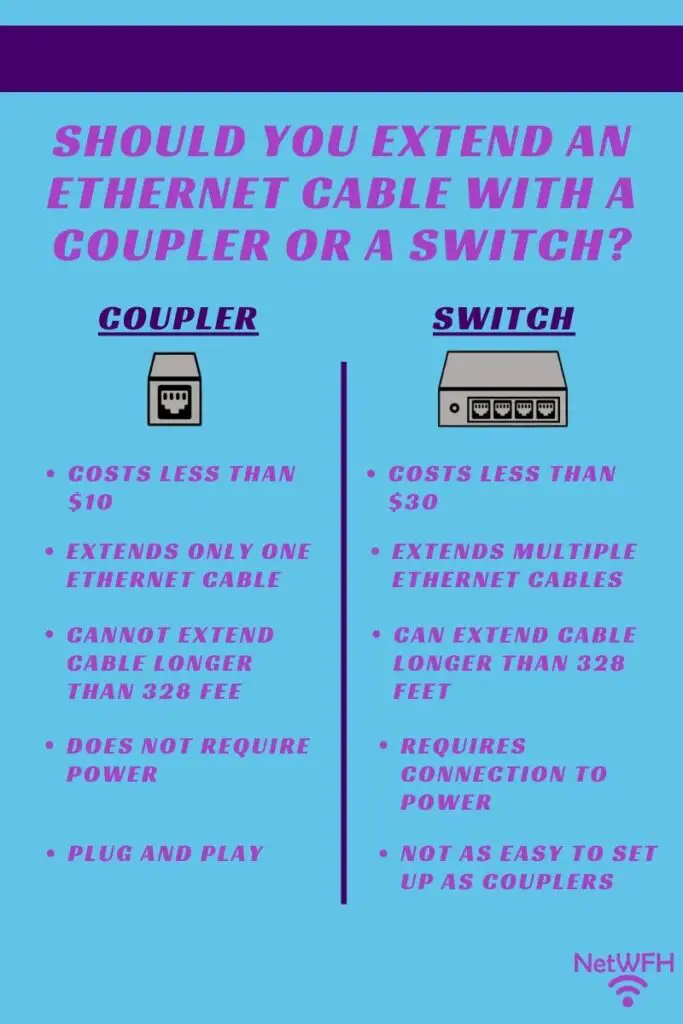
    For example, some of the other information on the label may include:
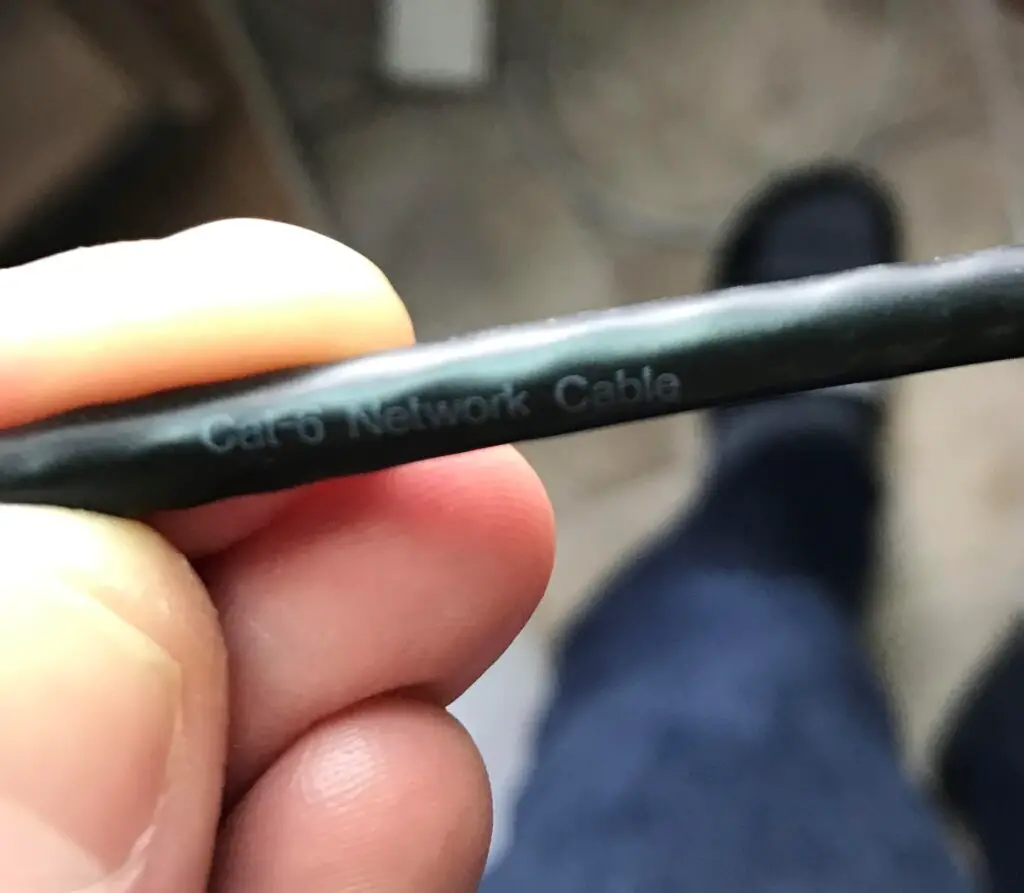
    • The manufacturer of the cable
    • The bandwidth of the cable. This will usually be the same for all cables in the same category.
    • The number of twisted pairs in the cable. This is almost always 4.
    • The highest temperature that the cable is rated for. I’ve seen these ratings between 60-75 degrees Celsius (or 140-167 degrees Fahrenheit).
    • The wire gauge: this is simply the size of the wires in the cable and is the same for ethernet cables in the same category. For CAT5e cables, it’ll show as 24AWG.
    • If the cable has been certified: this will indicate if the cable is compliant with a set of published standards.

    As you can see, you don’t really have to worry about most of the other information on the ethernet cable. You’ll only need to take this information into consideration if the cable will be used in a unique environment.

    In most situations, you only need to worry about the category and if the cable is shielded or not.

    What if Your Ethernet Cable Doesn’t Have a Label on the Side?

    There are some cases where your ethernet cable might not have a complete label on its side.

    Unfortunately, this makes things a little more challenging.

    This is actually the case with one of the cables I bought online. On the side of the cable it only lists “CAT-6 Network Cable”. It doesn’t identify if the cable is shielded twisted pair or unshielded twisted pair.

    Cat6 network cable
    An ethernet cable with an incomplete label

    I have an easy way out here because I bought the cable myself. When I bought it, I made sure it was an unshielded twisted pair cable. If I ever need to confirm this information, I can look back at my purchase history or the receipt from the purchase.

    If you have an ethernet cable without a complete label and you’re not sure where it came from, you have less options. You could try to run some speed tests with it to see if it supports the speeds you want, but even that might not be worth the trouble.

    It might be worth buying another cable to make sure it has the specifications you want. You can find them online for less than $10.

    What Type of Ethernet Cable Should I Have?

    Now that you can identify what types of ethernet cables you’re using, you can make smart decisions about which ones you need to replace.

    For the vast majority of people and applications, unshielded twisted pair CAT5e cables will do the trick. If you want to get really crazy, you can even pick up a UTP CAT6 cable for a similar price.

    The only catch with CAT6 cables is that they only support speeds of 10 Gbps for up to 164 feet. At distances greater than 164 feet, they support the same speeds as CAT5e cables (1 Gbps). With that being said, most people don’t need ethernet cables longer than 164 feet anyway.

    Either way, with a CAT5e or CAT6 cable you shouldn’t have to worry about your ethernet cable slowing your internet speed.

    If any of the cables you’re currently using are lower than CAT5e (i.e. CAT4 or below), you should probably replace them.

    On the other hand, let’s say you’re using shielded twisted pair ethernet cables in a home or office environment where EMI isn’t a risk. If this is the case in your situation, you can probably continue using them so long as you’re not experiencing any issues.

    The disadvantages of shielded twisted pair cables are that they’re less flexible than unshielded cables and they cost more. If you’ve already bought the cables and they’re working well, there’s no need to replace them. Using an STP cable in a non-EMI environment won’t impact the speed of data transfer through the cable.

    Wrap Up

    It’s important for you to be able to identify the ethernet cables you’re using. It only takes a few minutes, and it can greatly impact the internet speed in your home. Especially when you consider that ethernet cables are inexpensive, it’s well worth your time to make sure you have the right ones.

    If you have any questions about which cables you should be using, please feel free to drop a comment below.

    If you found this information useful, check out some of these other posts that might be helpful as well:

    Is an Ethernet Cable Faster Than WiFi?

    Can an Ethernet Cable Slow Your Internet Speed?

    What is an Ethernet Switch Used for?

    What Router Make and Model Do I Have?

    What is a Modem Router Combo?